

Give the Gift of Choice!
Too many options? Treat your friends and family to their favourite stores with a Bayshore Shopping Centre gift card, redeemable at participating retailers throughout the centre. Click below to purchase yours today!Purchase HereHome
Pluriverse (Routledge Revivals): An Essay the Philosophy of Pluralism
Coles
Loading Inventory...
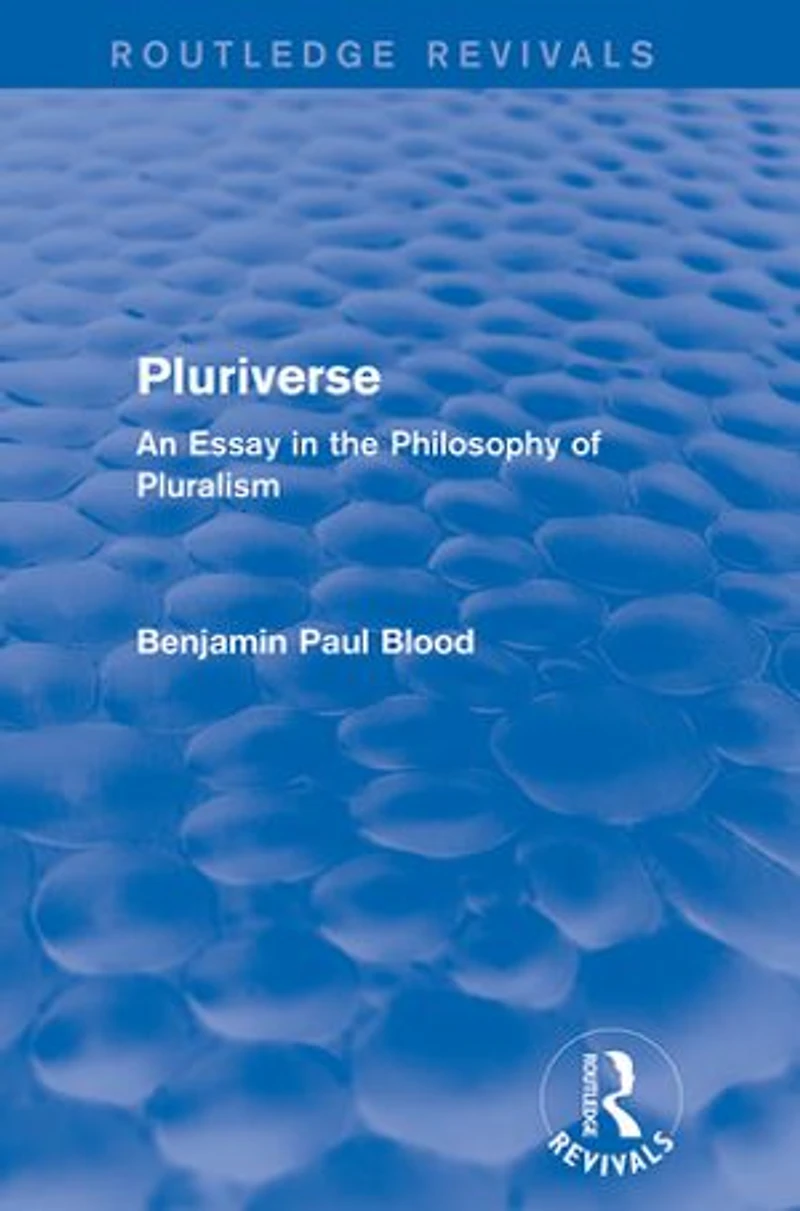
Pluriverse (Routledge Revivals): An Essay the Philosophy of Pluralism in Ottawa, ON
Current price: $78.71

Pluriverse (Routledge Revivals): An Essay the Philosophy of Pluralism in Ottawa, ON
Current price: $78.71
Loading Inventory...
Size: Kobo eBook
*Product information may vary - to confirm product availability, pricing, shipping and return information please contact Coles
Pluriverse , the final work of the American poet and philosopher Benjamin Paul Blood, was published posthumously in 1920. After an experience of the anaesthetic nitrous oxide during a dental operation, Blood came to the conclusion that his mind had been opened, that he had undergone a mystical experience, and that he had come to a realisation of the true nature of reality. This title is the fullest exposition of Blood's esoteric Christian philosophy-cum-theology, which, though deemed wildly eccentric by commentators both during his lifetime and later in the twentieth century, was nonetheless one of the most influential sources for American mystical-empiricism. In particular, Blood's thought was a major inspiration for William James, and can be seen to prefigure the latter's concept of Sciousness directly.
Pluriverse , the final work of the American poet and philosopher Benjamin Paul Blood, was published posthumously in 1920. After an experience of the anaesthetic nitrous oxide during a dental operation, Blood came to the conclusion that his mind had been opened, that he had undergone a mystical experience, and that he had come to a realisation of the true nature of reality. This title is the fullest exposition of Blood's esoteric Christian philosophy-cum-theology, which, though deemed wildly eccentric by commentators both during his lifetime and later in the twentieth century, was nonetheless one of the most influential sources for American mystical-empiricism. In particular, Blood's thought was a major inspiration for William James, and can be seen to prefigure the latter's concept of Sciousness directly.
You May Also Like












More About Coles at Bayshore Shopping Centre
Coles is renowned for its outstanding customer service and great selection of books. Along with the vast array of magazines, stationary, audio-books, children's literature, fiction, non-fiction and reference books, you can find accessories to make your reading experience more pleasurable. We can recommend the very best in reading today. We will help you search our titles for exactly what you need, and if we do not have it in stock, we will order it for you.
100 Bayshore Dr, Nepean, ON K2B 8C1, Canada
Find Coles at Bayshore Shopping Centre in Ottawa, ON
Visit Coles at Bayshore Shopping Centre in Ottawa, ON