

Give the Gift of Choice!
Too many options? Treat your friends and family to their favourite stores with a Bayshore Shopping Centre gift card, redeemable at participating retailers throughout the centre. Click below to purchase yours today!Purchase HereHome
Population Genetics the Neotropics
Coles
Loading Inventory...
Population Genetics the Neotropics in Ottawa, ON
Current price: $160.95

Population Genetics the Neotropics in Ottawa, ON
Current price: $160.95
Loading Inventory...
Size: Hardcover
*Product information may vary - to confirm product availability, pricing, shipping and return information please contact Coles
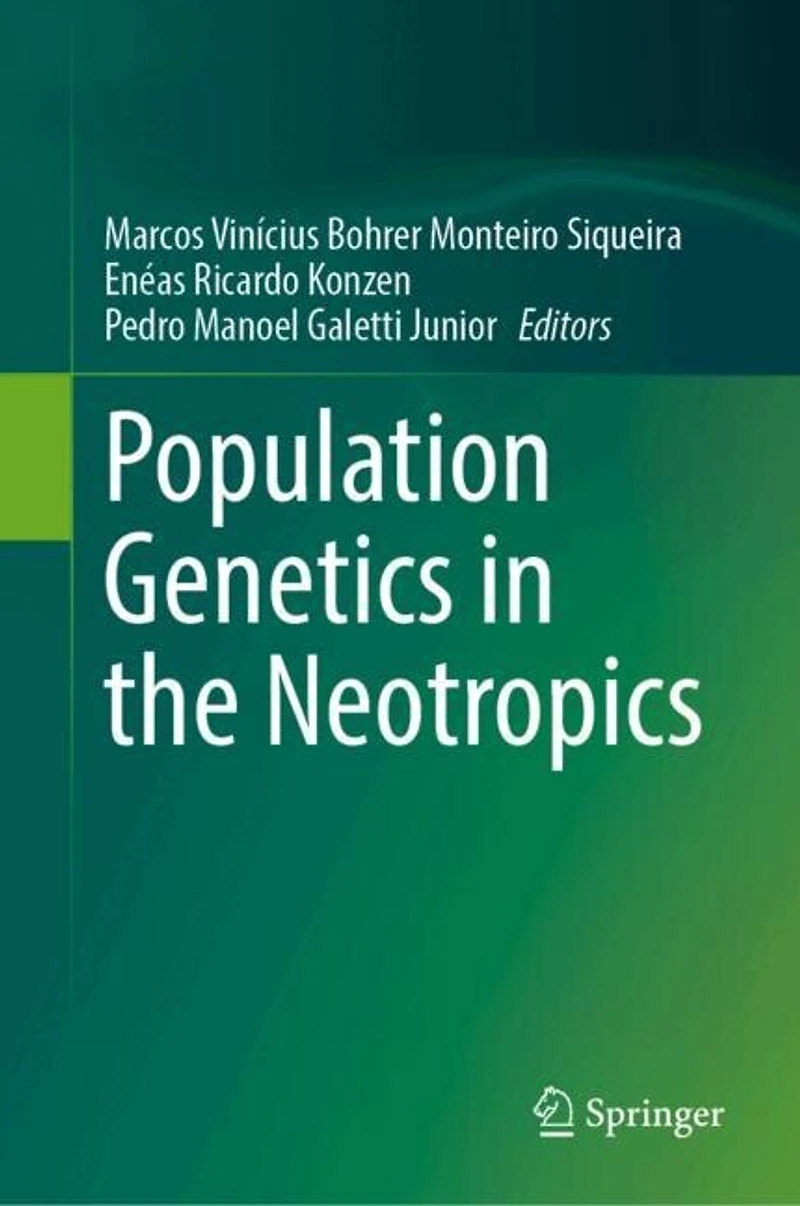
The Neotropics hold high levels of biodiversity, figuring among the essential hotspots for conservation on Earth. Invaluable genetic resources of this biogeographic dominion must deserve attention of conservationists, as well as of breeders. This project is aimed at producing a book on population genetics directed to an audience of undergraduate and graduate students but not limited to those. In a distinct approach, we seek to develop a material devoted to population genetics in the Neotropics, contextualizing examples of several animal and plant species belonging to this highly diverse dominion. Traditional books available in the subject of population genetics commonly deal with organisms that are native to North America and Europe, while neotropical organisms are lacking in the context, so our book comes forth as an initiative towards covering that. Among several subjects, this textbook addresses studies on molecular evolution and phylogenetics, genetic structure at broad and fine spatial scales, landscape genetics, niche modeling and climate change, conservation genetics and quantitative variation and its genetic components in hotspots of biodiversity such as the Amazon, the Brazilian Savanna and the Atlantic Rain Forest. It should provide an easy going reading, with the main concepts being presented and contextualized within the Neotropical dynamics of plants and animal populations. Basic mathematical foundations of population genetics theory are provided, but no further details on deductions and advanced algebra are given, for the purpose of simplicity. The application of the studies on conservation and breeding is also addressed. The chapters were planned to be brief, describing the main concepts, processes and case studies. Invited authors were encouraged to describe examples from their own research in the Neotropics. Altogether, this project may offer students with a textbook with concepts and ideas of the Neotropical genetic diversity, bringing awareness and stimulating endeavors towards the continuance of conservation of endangered species in their environments of origin.
The Neotropics hold high levels of biodiversity, figuring among the essential hotspots for conservation on Earth. Invaluable genetic resources of this biogeographic dominion must deserve attention of conservationists, as well as of breeders. This project is aimed at producing a book on population genetics directed to an audience of undergraduate and graduate students but not limited to those. In a distinct approach, we seek to develop a material devoted to population genetics in the Neotropics, contextualizing examples of several animal and plant species belonging to this highly diverse dominion. Traditional books available in the subject of population genetics commonly deal with organisms that are native to North America and Europe, while neotropical organisms are lacking in the context, so our book comes forth as an initiative towards covering that. Among several subjects, this textbook addresses studies on molecular evolution and phylogenetics, genetic structure at broad and fine spatial scales, landscape genetics, niche modeling and climate change, conservation genetics and quantitative variation and its genetic components in hotspots of biodiversity such as the Amazon, the Brazilian Savanna and the Atlantic Rain Forest. It should provide an easy going reading, with the main concepts being presented and contextualized within the Neotropical dynamics of plants and animal populations. Basic mathematical foundations of population genetics theory are provided, but no further details on deductions and advanced algebra are given, for the purpose of simplicity. The application of the studies on conservation and breeding is also addressed. The chapters were planned to be brief, describing the main concepts, processes and case studies. Invited authors were encouraged to describe examples from their own research in the Neotropics. Altogether, this project may offer students with a textbook with concepts and ideas of the Neotropical genetic diversity, bringing awareness and stimulating endeavors towards the continuance of conservation of endangered species in their environments of origin.
You May Also Like











More About Coles at Bayshore Shopping Centre
Coles is renowned for its outstanding customer service and great selection of books. Along with the vast array of magazines, stationary, audio-books, children's literature, fiction, non-fiction and reference books, you can find accessories to make your reading experience more pleasurable. We can recommend the very best in reading today. We will help you search our titles for exactly what you need, and if we do not have it in stock, we will order it for you.
100 Bayshore Dr, Nepean, ON K2B 8C1, Canada
Find Coles at Bayshore Shopping Centre in Ottawa, ON
Visit Coles at Bayshore Shopping Centre in Ottawa, ON