

Give the Gift of Choice!
Too many options? Treat your friends and family to their favourite stores with a Bayshore Shopping Centre gift card, redeemable at participating retailers throughout the centre. Click below to purchase yours today!Purchase HereHome
Predictive Coding Guru's Guide: Technology, Statistics, and Workflows
Coles
Loading Inventory...
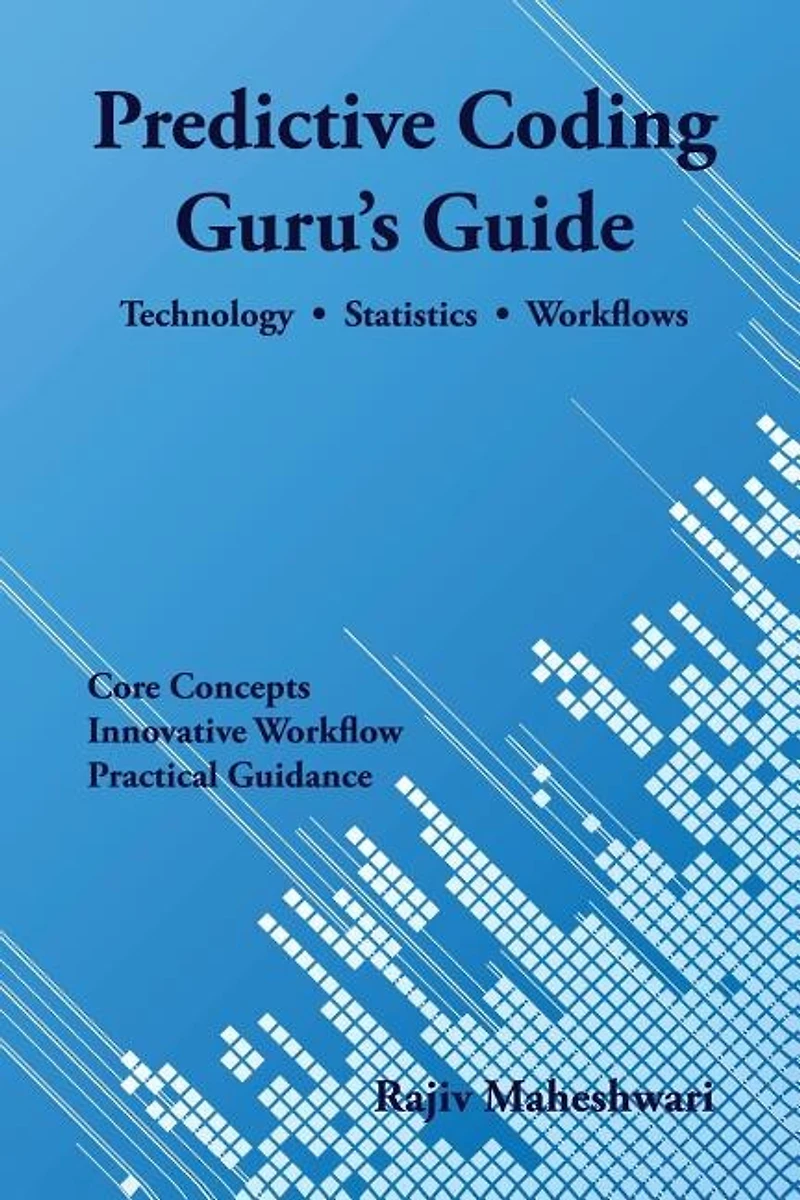
Predictive Coding Guru's Guide: Technology, Statistics, and Workflows in Ottawa, ON
Current price: $30.95

Predictive Coding Guru's Guide: Technology, Statistics, and Workflows in Ottawa, ON
Current price: $30.95
Loading Inventory...
Size: Paperback
*Product information may vary - to confirm product availability, pricing, shipping and return information please contact Coles
Predictive Coding is the process of training supervised machine-learning algorithms on pre-coded example documents, and then using the trained machine to automatically predict the coding of new documents collected in the legal eDiscovery process. While supervised machine-learning has been used for over 15 years in several applications (such as detecting spam in emails, disease in patients, human faces in pictures, likely customers from a marketing database, etc.), its adoption in eDiscovery has been slow. The key reasons include insufficient understanding of the technology (often perceived as a black box), improper use of statistics (often doubted for its applicability to natural language documents), and confusion around workflows currently used in the industry (often resulting in dissatisfactory results). This book intends to challenge the status quo with: Easy to understand explanation of fundamental concepts of predictive coding technology including the vector space model, feature selection, and general framework used by most predictive coding algorithms. Detailed explanation of the three most common algorithms used for predictive coding - k Nearest Neighbors (kNN), Support Vector Machines (SVM), and Latent Semantic Analysis (LSA) - in plain English. Walk-through of core concepts essential for applying and interpreting statistics correctly. Practical guidance on avoiding common errors and pitfalls. Lucid step-by-step explanation of the two general workflow approaches - Technology Assisted Review and Technology Suggested Review - currently used in the industry in several derivative forms. A new workflow - the Greedy Workflow - that delivers better results, and offers flexibility and other properties useful in the context of eDiscovery. In addition, the book contains detailed results of testing the greedy workflow on two real eDiscovery datasets. The first dataset contained 216,594 documents excluding Excel files. The greedy workflow predictively coded 76% of the documents with 100% precision and 87% recall. The second dataset contained 93,982 Excel files only. The greedy workflow predictively coded 50% of the Excel files with 100% precision and 76% recall.
Predictive Coding is the process of training supervised machine-learning algorithms on pre-coded example documents, and then using the trained machine to automatically predict the coding of new documents collected in the legal eDiscovery process. While supervised machine-learning has been used for over 15 years in several applications (such as detecting spam in emails, disease in patients, human faces in pictures, likely customers from a marketing database, etc.), its adoption in eDiscovery has been slow. The key reasons include insufficient understanding of the technology (often perceived as a black box), improper use of statistics (often doubted for its applicability to natural language documents), and confusion around workflows currently used in the industry (often resulting in dissatisfactory results). This book intends to challenge the status quo with: Easy to understand explanation of fundamental concepts of predictive coding technology including the vector space model, feature selection, and general framework used by most predictive coding algorithms. Detailed explanation of the three most common algorithms used for predictive coding - k Nearest Neighbors (kNN), Support Vector Machines (SVM), and Latent Semantic Analysis (LSA) - in plain English. Walk-through of core concepts essential for applying and interpreting statistics correctly. Practical guidance on avoiding common errors and pitfalls. Lucid step-by-step explanation of the two general workflow approaches - Technology Assisted Review and Technology Suggested Review - currently used in the industry in several derivative forms. A new workflow - the Greedy Workflow - that delivers better results, and offers flexibility and other properties useful in the context of eDiscovery. In addition, the book contains detailed results of testing the greedy workflow on two real eDiscovery datasets. The first dataset contained 216,594 documents excluding Excel files. The greedy workflow predictively coded 76% of the documents with 100% precision and 87% recall. The second dataset contained 93,982 Excel files only. The greedy workflow predictively coded 50% of the Excel files with 100% precision and 76% recall.
You May Also Like
















More About Coles at Bayshore Shopping Centre
Coles is renowned for its outstanding customer service and great selection of books. Along with the vast array of magazines, stationary, audio-books, children's literature, fiction, non-fiction and reference books, you can find accessories to make your reading experience more pleasurable. We can recommend the very best in reading today. We will help you search our titles for exactly what you need, and if we do not have it in stock, we will order it for you.
100 Bayshore Dr, Nepean, ON K2B 8C1, Canada
Find Coles at Bayshore Shopping Centre in Ottawa, ON
Visit Coles at Bayshore Shopping Centre in Ottawa, ON