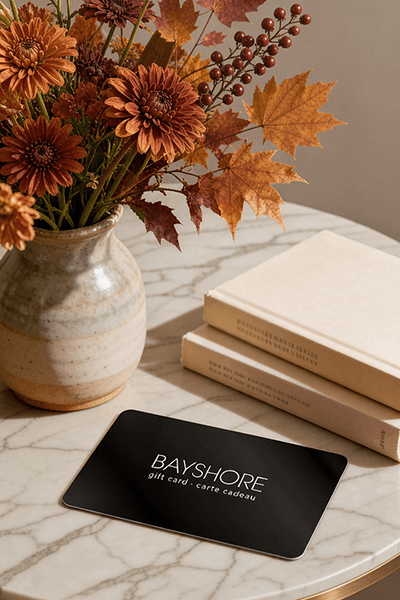
Too many options? Treat your friends and family to their favourite stores with a Bayshore Shopping Centre gift card, redeemable at participating retailers throughout the centre. Click below to purchase yours today!Purchase Here
Coles Proceedings of the Boston Area Colloquium in Ancient Philosophy: Volume XXXI (2015) at Bayshore Shopping Centre in Ottawa, ON
*Product information may vary - to confirm product availability, pricing, shipping and return information please contact Coles
This volume, the thirty-first year of published proceedings, contains five papers and commentaries presented to the Boston Area Colloquium in Ancient Philosophy during academic year 2014-15. Paper topics include: the volatility of ἔρως in the Symposium as not self-directed to good or bad; the ‘analytical’ reading of the tripartite soul as autonomous sub-agents and whether it resembles neuroscience; holiness in the Euthyphro as misconstrued by the difficulty translating finite passives and passive participles in English; evil in Proclus as an indefinite nature redefined by privation, subcontrary and parypostasis, contrary to Plotinus’ identification of matter and evil; Plato’s literary reworking of the encounter of Odysseus with the Cyclops in the Sophist and of his struggle with the suitors in the Statesman .
This volume, the thirty-first year of published proceedings, contains five papers and commentaries presented to the Boston Area Colloquium in Ancient Philosophy during academic year 2014-15. Paper topics include: the volatility of ἔρως in the Symposium as not self-directed to good or bad; the ‘analytical’ reading of the tripartite soul as autonomous sub-agents and whether it resembles neuroscience; holiness in the Euthyphro as misconstrued by the difficulty translating finite passives and passive participles in English; evil in Proclus as an indefinite nature redefined by privation, subcontrary and parypostasis, contrary to Plotinus’ identification of matter and evil; Plato’s literary reworking of the encounter of Odysseus with the Cyclops in the Sophist and of his struggle with the suitors in the Statesman .
Coles is renowned for its outstanding customer service and great selection of books. Along with the vast array of magazines, stationary, audio-books, children's literature, fiction, non-fiction and reference books, you can find accessories to make your reading experience more pleasurable. We can recommend the very best in reading today. We will help you search our titles for exactly what you need, and if we do not have it in stock, we will order it for you.