

Give the Gift of Choice!
Too many options? Treat your friends and family to their favourite stores with a Bayshore Shopping Centre gift card, redeemable at participating retailers throughout the centre. Click below to purchase yours today!Purchase HereHome
Progress Fibrin Sealing
Coles
Loading Inventory...

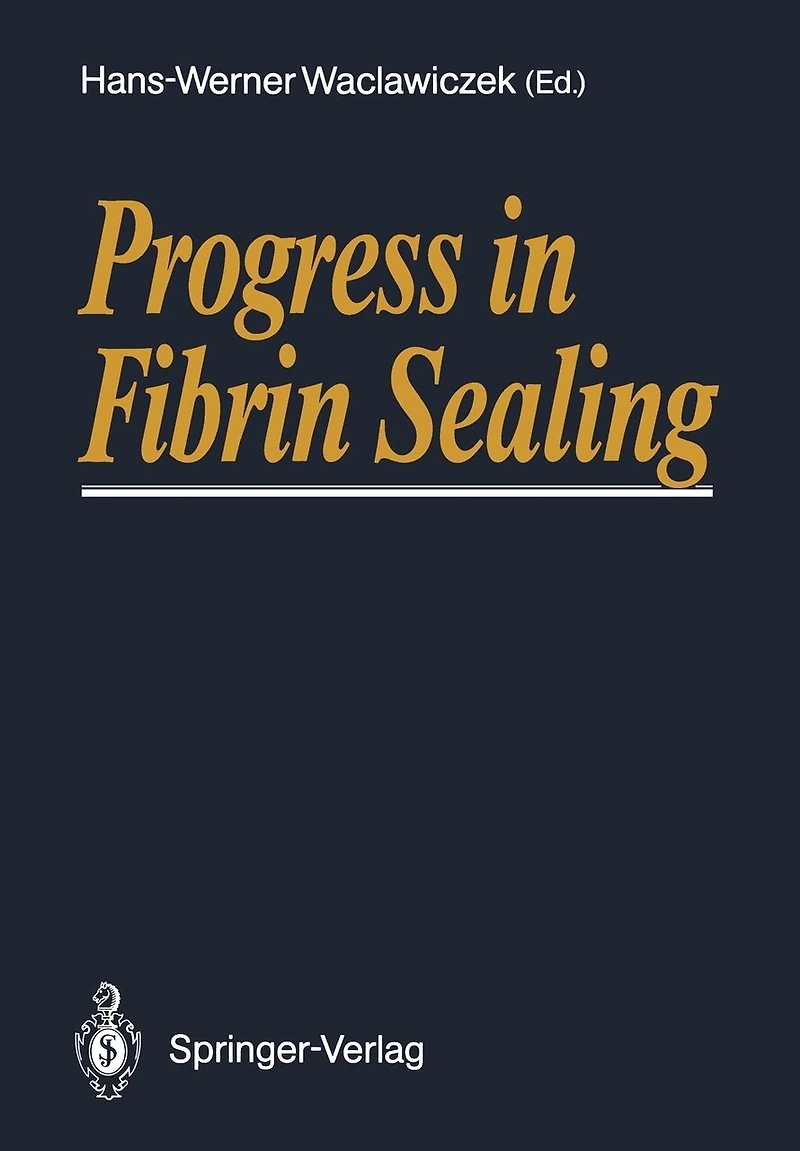
Progress Fibrin Sealing in Ottawa, ON
Current price: $116.09
Original price: $145.12

Progress Fibrin Sealing in Ottawa, ON
Current price: $116.09
Original price: $145.12
Loading Inventory...
Size: Kobo eBook
*Product information may vary - to confirm product availability, pricing, shipping and return information please contact Coles
Fibrin plays a central role in wound healing. It has a hemostatic effect by forming a temporary wound closure and assists in neovascularization and fibroblast prolifera tion. It therefore makes the repair of injured or severed parts of the human body by simple glueing possible, a notion that men have dreamed of since ancient times. The first modern attempts in this direction, using clotting substances derived from human blood to achieve hemostasis, were reported by Bergel (in 1909), Grey (in 1915), and Harvey (in 1916), who used fibrin powder or fibrin patches to control bleeding from parenchymatous organs. Two decades later Young and Medawar (1940) and Cronkite (1944) used blood plasma or fibrin solutions, adding thrombin to seal nerve anastomoses and to fix skin grafts in humans. Due to the poor adhesive strength of the fibrinogen the results were unsatisfactory. In 1972 a new era in fibrin sealing was initiated by Matras. By using highly concentrated fibrinogen in combination with factor XIII (fibrin-stabilizing factor) and by delaying fibrinolysis with a fibrinolysis inhibitor (aprotinin), a method was developed which after satisfactory results in animals, soon began to be applied in humans."
Fibrin plays a central role in wound healing. It has a hemostatic effect by forming a temporary wound closure and assists in neovascularization and fibroblast prolifera tion. It therefore makes the repair of injured or severed parts of the human body by simple glueing possible, a notion that men have dreamed of since ancient times. The first modern attempts in this direction, using clotting substances derived from human blood to achieve hemostasis, were reported by Bergel (in 1909), Grey (in 1915), and Harvey (in 1916), who used fibrin powder or fibrin patches to control bleeding from parenchymatous organs. Two decades later Young and Medawar (1940) and Cronkite (1944) used blood plasma or fibrin solutions, adding thrombin to seal nerve anastomoses and to fix skin grafts in humans. Due to the poor adhesive strength of the fibrinogen the results were unsatisfactory. In 1972 a new era in fibrin sealing was initiated by Matras. By using highly concentrated fibrinogen in combination with factor XIII (fibrin-stabilizing factor) and by delaying fibrinolysis with a fibrinolysis inhibitor (aprotinin), a method was developed which after satisfactory results in animals, soon began to be applied in humans."
You May Also Like


















More About Coles at Bayshore Shopping Centre
Coles is renowned for its outstanding customer service and great selection of books. Along with the vast array of magazines, stationary, audio-books, children's literature, fiction, non-fiction and reference books, you can find accessories to make your reading experience more pleasurable. We can recommend the very best in reading today. We will help you search our titles for exactly what you need, and if we do not have it in stock, we will order it for you.
100 Bayshore Dr, Nepean, ON K2B 8C1, Canada
Find Coles at Bayshore Shopping Centre in Ottawa, ON
Visit Coles at Bayshore Shopping Centre in Ottawa, ON