

Give the Gift of Choice!
Too many options? Treat your friends and family to their favourite stores with a Bayshore Shopping Centre gift card, redeemable at participating retailers throughout the centre. Click below to purchase yours today!Purchase HereHome
Quantifying and Managing Disruption Claims
Coles
Loading Inventory...
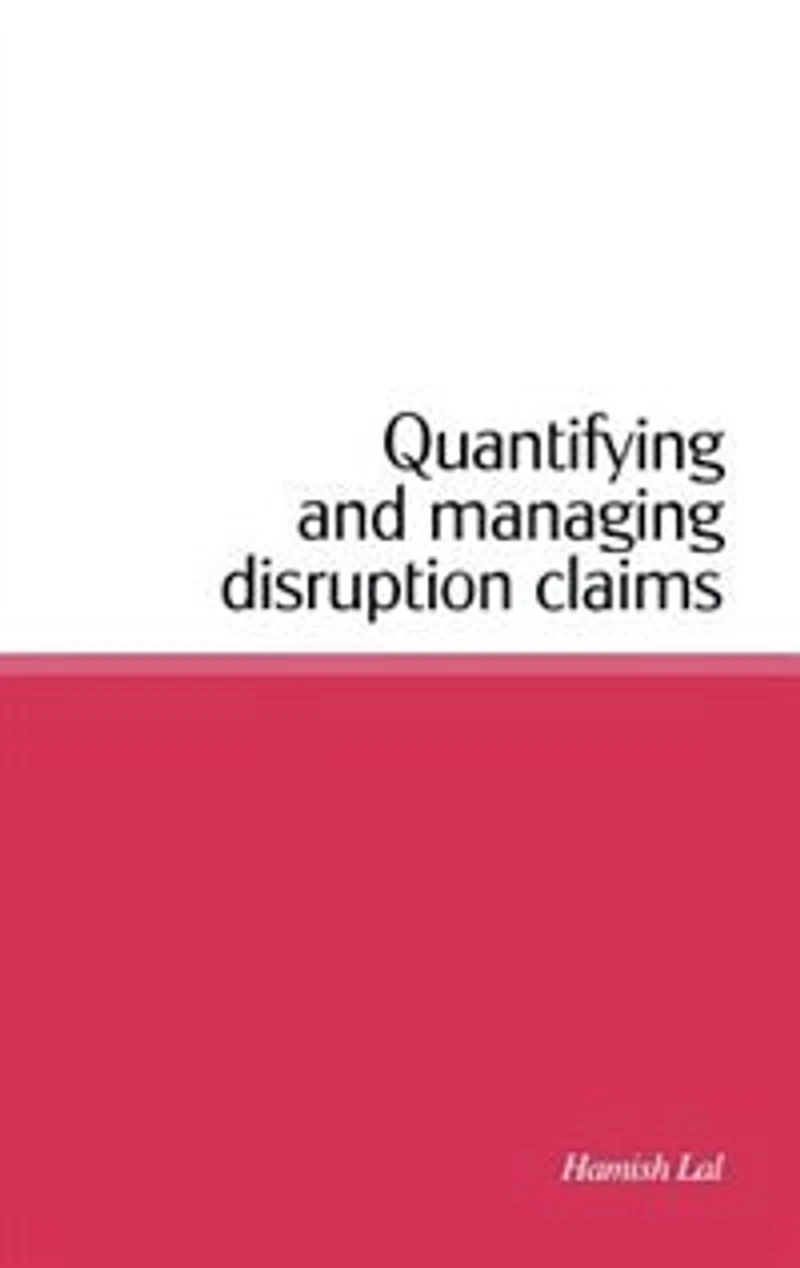
Quantifying and Managing Disruption Claims in Ottawa, ON
Current price: $185.99

Quantifying and Managing Disruption Claims in Ottawa, ON
Current price: $185.99
Loading Inventory...
Size: Hardcover
*Product information may vary - to confirm product availability, pricing, shipping and return information please contact Coles
Claims involving disruption are commonly accepted to be the most difficult to quantify. Disruptions that occur during a working day can lead to productivity loss which, in turn, can lead to time and cost overruns. If the disruption consumes the entire float in an activity, then disruption can cause a delay to project completion and lead to claims for extensions of time. Contractors of all tiers, concerned that they have lost money, troubled by the threat of liquidated damages or simply because the conditions of contract allow, submit claims for loss/expense and (in the worst case scenarios) extensions of time. The accurate quantification of the time and cost effects of such disruption is typically prevented because the role of labour/resource productivity is not fully recognised, site labour productivity is not correctly measured (if at all) and, finally, because the relationship between, in practice, the bill of quantities items (cost) and programme activities (time) is not direct or transparent.
The solution proposed in this book integrates cost and time in order to develop a site labour productivity measurement system whereby claims involving disruption can be objectively and automatically quantified. It is a practical text that challenges the current construction industry cost and time estimating methods, demystifies the measurement of site labour/resource productivity and – in line with the Society of Construction Law Delay and Disruption Protocol launched in October 2002 – puts forward a rational and sufficiently accurate method of quantifying the effects of disruption in terms of both cost and time. Through the use of the solution on four very different demonstration construction projects, this book provides worked examples and tangible evidence of how the solution is designed to operate in practice.
Disruption claims often impact on the whole of the construction industry and so this book has been specifically written for anyone who is involved in submitting, evaluating, awarding, managing and resolving disruption claims.
Claims involving disruption are commonly accepted to be the most difficult to quantify. Disruptions that occur during a working day can lead to productivity loss which, in turn, can lead to time and cost overruns. If the disruption consumes the entire float in an activity, then disruption can cause a delay to project completion and lead to claims for extensions of time. Contractors of all tiers, concerned that they have lost money, troubled by the threat of liquidated damages or simply because the conditions of contract allow, submit claims for loss/expense and (in the worst case scenarios) extensions of time. The accurate quantification of the time and cost effects of such disruption is typically prevented because the role of labour/resource productivity is not fully recognised, site labour productivity is not correctly measured (if at all) and, finally, because the relationship between, in practice, the bill of quantities items (cost) and programme activities (time) is not direct or transparent.
The solution proposed in this book integrates cost and time in order to develop a site labour productivity measurement system whereby claims involving disruption can be objectively and automatically quantified. It is a practical text that challenges the current construction industry cost and time estimating methods, demystifies the measurement of site labour/resource productivity and – in line with the Society of Construction Law Delay and Disruption Protocol launched in October 2002 – puts forward a rational and sufficiently accurate method of quantifying the effects of disruption in terms of both cost and time. Through the use of the solution on four very different demonstration construction projects, this book provides worked examples and tangible evidence of how the solution is designed to operate in practice.
Disruption claims often impact on the whole of the construction industry and so this book has been specifically written for anyone who is involved in submitting, evaluating, awarding, managing and resolving disruption claims.
You May Also Like













More About Coles at Bayshore Shopping Centre
Coles is renowned for its outstanding customer service and great selection of books. Along with the vast array of magazines, stationary, audio-books, children's literature, fiction, non-fiction and reference books, you can find accessories to make your reading experience more pleasurable. We can recommend the very best in reading today. We will help you search our titles for exactly what you need, and if we do not have it in stock, we will order it for you.
100 Bayshore Dr, Nepean, ON K2B 8C1, Canada
Find Coles at Bayshore Shopping Centre in Ottawa, ON
Visit Coles at Bayshore Shopping Centre in Ottawa, ON