

Give the Gift of Choice!
Too many options? Treat your friends and family to their favourite stores with a Bayshore Shopping Centre gift card, redeemable at participating retailers throughout the centre. Click below to purchase yours today!Purchase HereHome
Radar Cross Section of Dipole Phased Arrays with Parallel Feed Network
Coles
Loading Inventory...
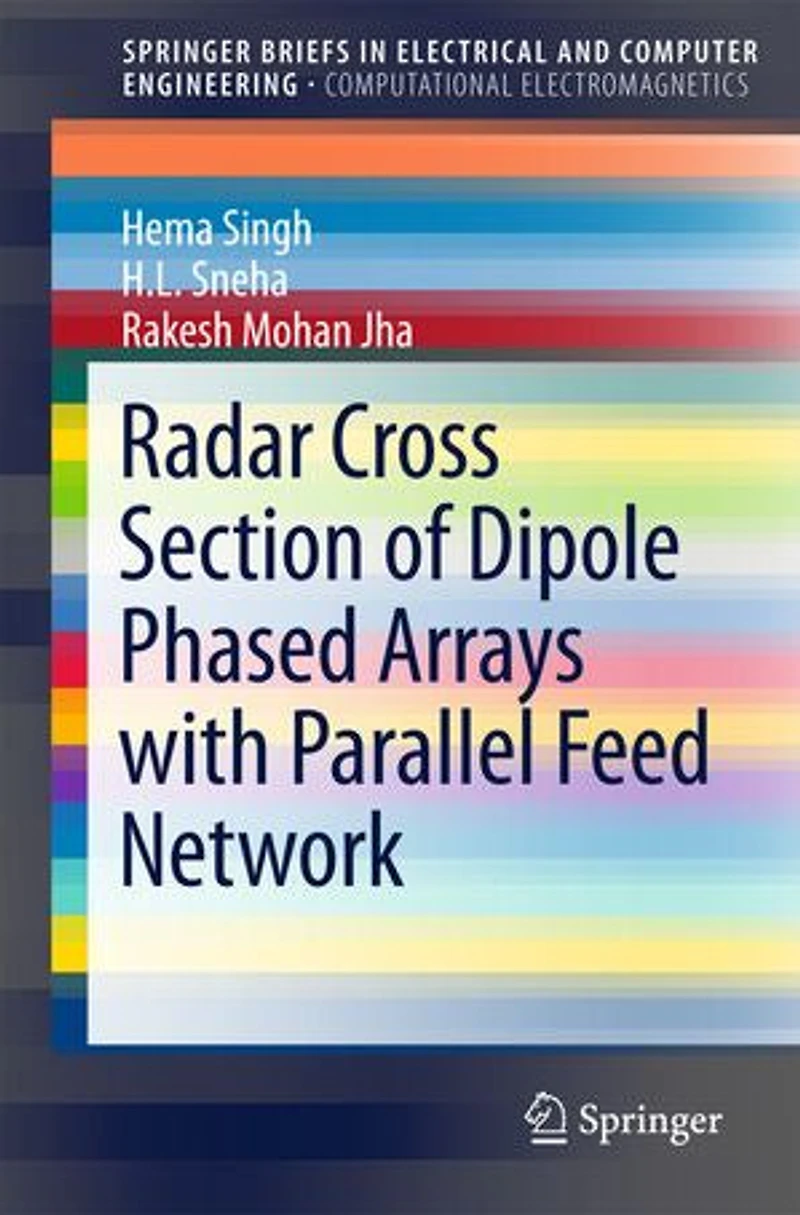
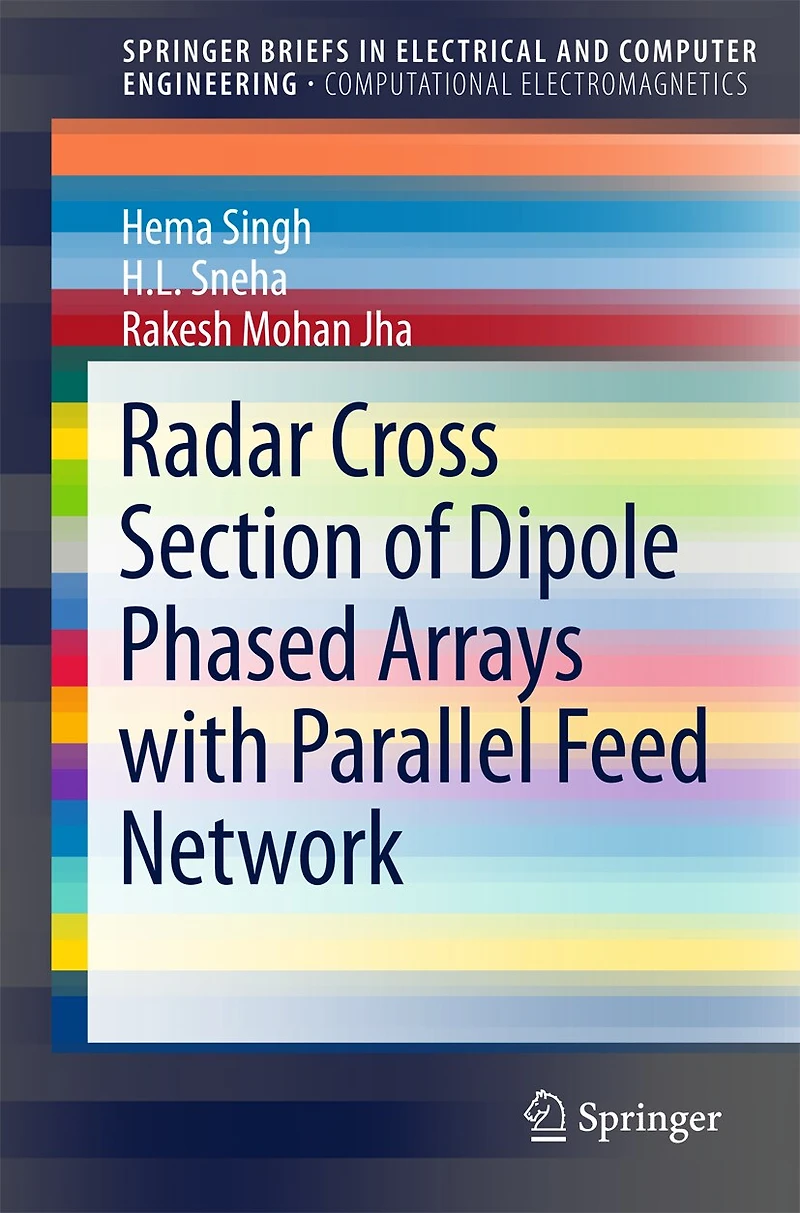
Radar Cross Section of Dipole Phased Arrays with Parallel Feed Network in Ottawa, ON
Current price: $64.49
Original price: $80.62

Radar Cross Section of Dipole Phased Arrays with Parallel Feed Network in Ottawa, ON
Current price: $64.49
Original price: $80.62
Loading Inventory...
Size: Kobo eBook
*Product information may vary - to confirm product availability, pricing, shipping and return information please contact Coles
This book presents the detailed analytical formulation for the RCS of parallel-fed linear dipole array in the presence of mutual coupling. The radar cross section (RCS) of an object represents its electromagnetic (EM) scattering properties for a given incident wave. The analysis of scattered field is critical in military and defence arenas, especially while designing low-observable platforms. It is well-known that the presence of an antenna/array on the target influences its echo area significantly. The primary cause for such scattering of the incident signals is reflection that occurs within the antenna aperture and its feed network. In this book, the RCS estimation is done based on the signal path within the antenna system. The scattered field is expressed in terms of array design parameters including the reflection and transmission coefficients. The computed results show the variation in the RCS pattern with and without mutual coupling. The effect of finite dipole-length, inter-element spacing, scan angle, array configuration, amplitude distribution and terminating load impedance on the RCS pattern is studied. It is shown that the array RCS can be controlled by choosing optimum design parameters, including terminating impedance and geometric configuration. This book explains each step of the RCS estimation and analysis of dipole array with detailed schematics, tables and illustrations. Moreover, it includes parametric analysis of RCS estimation and control. This book provides an insight into the phenomenon of scattering within the phased array system.
This book presents the detailed analytical formulation for the RCS of parallel-fed linear dipole array in the presence of mutual coupling. The radar cross section (RCS) of an object represents its electromagnetic (EM) scattering properties for a given incident wave. The analysis of scattered field is critical in military and defence arenas, especially while designing low-observable platforms. It is well-known that the presence of an antenna/array on the target influences its echo area significantly. The primary cause for such scattering of the incident signals is reflection that occurs within the antenna aperture and its feed network. In this book, the RCS estimation is done based on the signal path within the antenna system. The scattered field is expressed in terms of array design parameters including the reflection and transmission coefficients. The computed results show the variation in the RCS pattern with and without mutual coupling. The effect of finite dipole-length, inter-element spacing, scan angle, array configuration, amplitude distribution and terminating load impedance on the RCS pattern is studied. It is shown that the array RCS can be controlled by choosing optimum design parameters, including terminating impedance and geometric configuration. This book explains each step of the RCS estimation and analysis of dipole array with detailed schematics, tables and illustrations. Moreover, it includes parametric analysis of RCS estimation and control. This book provides an insight into the phenomenon of scattering within the phased array system.
You May Also Like












More About Coles at Bayshore Shopping Centre
Coles is renowned for its outstanding customer service and great selection of books. Along with the vast array of magazines, stationary, audio-books, children's literature, fiction, non-fiction and reference books, you can find accessories to make your reading experience more pleasurable. We can recommend the very best in reading today. We will help you search our titles for exactly what you need, and if we do not have it in stock, we will order it for you.
100 Bayshore Dr, Nepean, ON K2B 8C1, Canada
Find Coles at Bayshore Shopping Centre in Ottawa, ON
Visit Coles at Bayshore Shopping Centre in Ottawa, ON