

Give the Gift of Choice!
Too many options? Treat your friends and family to their favourite stores with a Bayshore Shopping Centre gift card, redeemable at participating retailers throughout the centre. Click below to purchase yours today!Purchase HereHome
Raiders, Rulers, and Traders: the Horse Rise of Empires
Coles
Loading Inventory...
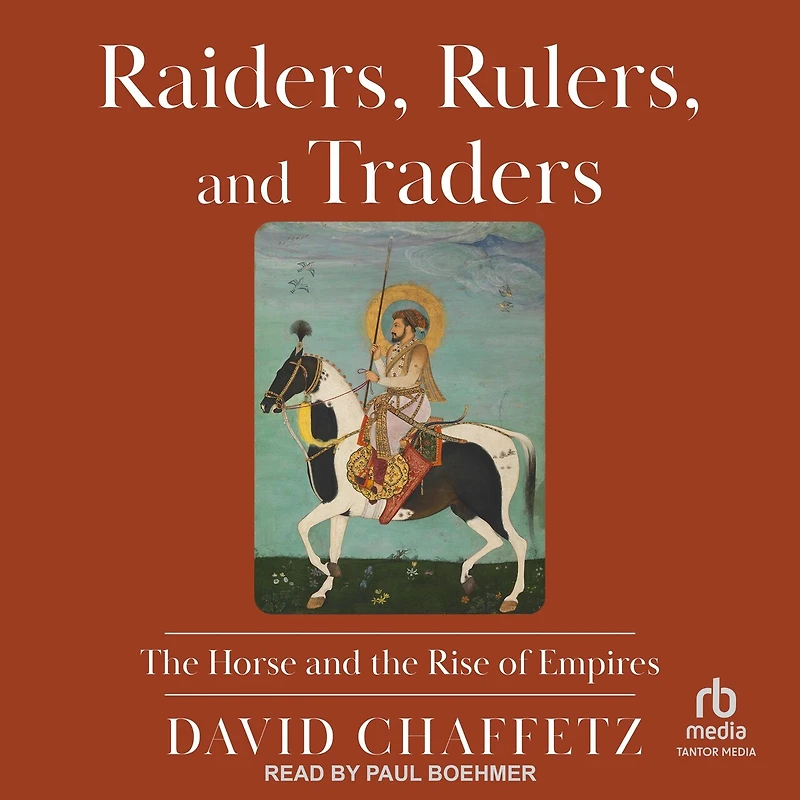
Raiders, Rulers, and Traders: the Horse Rise of Empires in Ottawa, ON
Current price: $72.95

Raiders, Rulers, and Traders: the Horse Rise of Empires in Ottawa, ON
Current price: $72.95
Loading Inventory...
Size: Audiobook (2024 A)
*Product information may vary - to confirm product availability, pricing, shipping and return information please contact Coles
No animal is so entangled in human history as the horse. The thread starts in prehistory, with a slight, shy animal, hunted for food. Domesticating the horse allowed early humans to settle the vast Eurasian steppe. Later, their horses enabled new forms of warfare, encouraged long-distance trade routes, and ended up acquiring deep cultural and religious significance. Over time, horses came to power mighty empires in Iran, Afghanistan, China, India, and, later, Russia. Genghis Khan and the thirteenth-century Mongols offer the most famous example, but from ancient Assyria and Persia, to the seventeenth-century Mughals, to the high noon of colonialism in the early twentieth century, horse breeding was indispensable to conquest and statecraft. Scholar of Asian history David Chaffetz tells the story of how the horse made rulers, raiders, and traders interchangeable, providing a unique explanation for the turbulent history of the “Silk Road,” which might be better called the Horse Road. Drawing on recent research in fields including genetics and forensic archeology, Chaffetz presents a lively history of the great horse empires that shaped civilization.
No animal is so entangled in human history as the horse. The thread starts in prehistory, with a slight, shy animal, hunted for food. Domesticating the horse allowed early humans to settle the vast Eurasian steppe. Later, their horses enabled new forms of warfare, encouraged long-distance trade routes, and ended up acquiring deep cultural and religious significance. Over time, horses came to power mighty empires in Iran, Afghanistan, China, India, and, later, Russia. Genghis Khan and the thirteenth-century Mongols offer the most famous example, but from ancient Assyria and Persia, to the seventeenth-century Mughals, to the high noon of colonialism in the early twentieth century, horse breeding was indispensable to conquest and statecraft. Scholar of Asian history David Chaffetz tells the story of how the horse made rulers, raiders, and traders interchangeable, providing a unique explanation for the turbulent history of the “Silk Road,” which might be better called the Horse Road. Drawing on recent research in fields including genetics and forensic archeology, Chaffetz presents a lively history of the great horse empires that shaped civilization.
You May Also Like








More About Coles at Bayshore Shopping Centre
Coles is renowned for its outstanding customer service and great selection of books. Along with the vast array of magazines, stationary, audio-books, children's literature, fiction, non-fiction and reference books, you can find accessories to make your reading experience more pleasurable. We can recommend the very best in reading today. We will help you search our titles for exactly what you need, and if we do not have it in stock, we will order it for you.
100 Bayshore Dr, Nepean, ON K2B 8C1, Canada
Find Coles at Bayshore Shopping Centre in Ottawa, ON
Visit Coles at Bayshore Shopping Centre in Ottawa, ON