

Give the Gift of Choice!
Too many options? Treat your friends and family to their favourite stores with a Bayshore Shopping Centre gift card, redeemable at participating retailers throughout the centre. Click below to purchase yours today!Purchase HereHome
Reconsidering Habermas's Colonization Thesis: A Critical Theory of Neoliberalism
Coles
Loading Inventory...
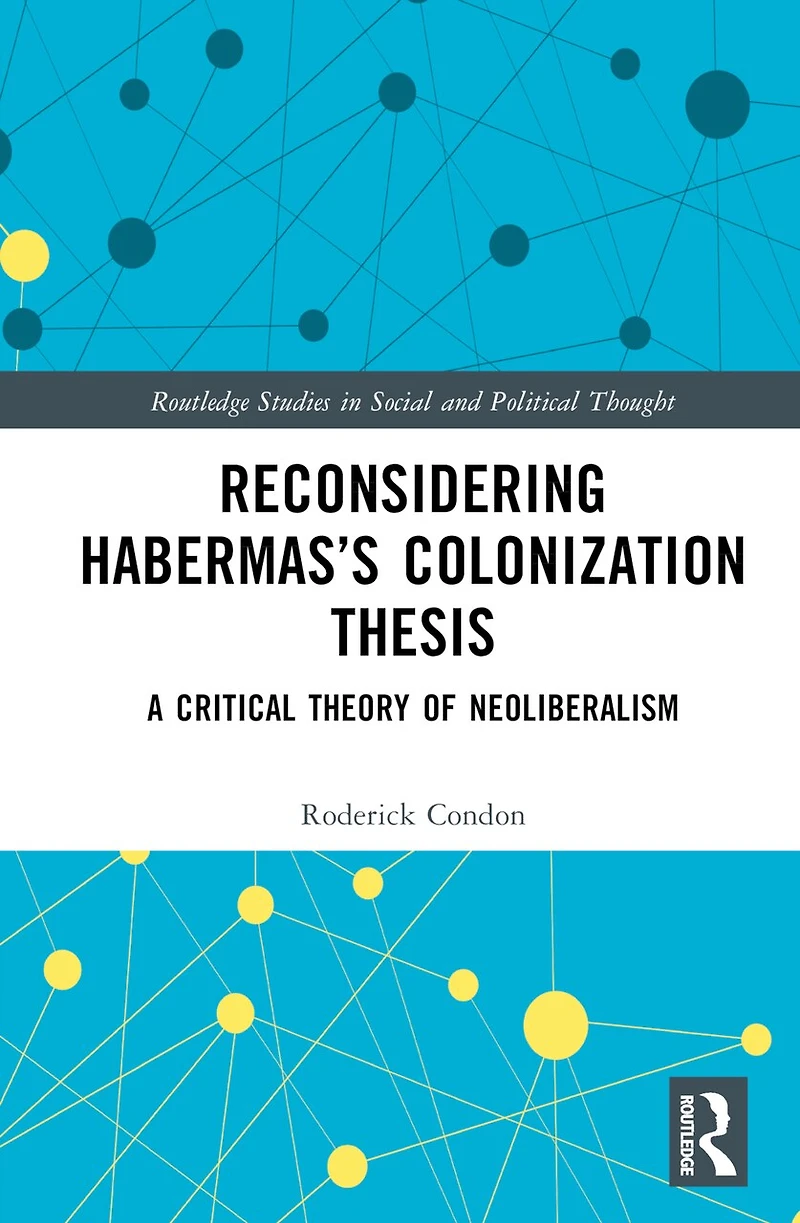
Reconsidering Habermas's Colonization Thesis: A Critical Theory of Neoliberalism in Ottawa, ON
Current price: $296.50

Reconsidering Habermas's Colonization Thesis: A Critical Theory of Neoliberalism in Ottawa, ON
Current price: $296.50
Loading Inventory...
Size: Hardcover
*Product information may vary - to confirm product availability, pricing, shipping and return information please contact Coles
This book reconsiders Habermas's critique of capitalism as a foundation for a critical theory of neoliberalism. Taking criticisms into account, the author refines and redevelops Habermas's system-lifeworld paradigm in three parts, focusing on system, lifeworld, and communication. The exposition unfolds through a new synthesis and convergence, from within Habermas's frame, of Axel Honneth, Niklas Luhmann, Talcott Parsons, and Karl Marx. This synthesis is interwoven with an account of the neoliberal turn, such that social theory is historically contextualized and neoliberalism theoretically explained at one and the same time. The end result is a reconstruction of the colonization thesis in a new theory of relinguistification, advancing a communicative, dialectical, and reflexive theory of reification. Reconsidering Habermas's Colonization Thesis will appeal to scholars of critical theory, social theory, sociology, and cultural studies, as well as readers interested in neoliberalism and the critique of capitalism.
This book reconsiders Habermas's critique of capitalism as a foundation for a critical theory of neoliberalism. Taking criticisms into account, the author refines and redevelops Habermas's system-lifeworld paradigm in three parts, focusing on system, lifeworld, and communication. The exposition unfolds through a new synthesis and convergence, from within Habermas's frame, of Axel Honneth, Niklas Luhmann, Talcott Parsons, and Karl Marx. This synthesis is interwoven with an account of the neoliberal turn, such that social theory is historically contextualized and neoliberalism theoretically explained at one and the same time. The end result is a reconstruction of the colonization thesis in a new theory of relinguistification, advancing a communicative, dialectical, and reflexive theory of reification. Reconsidering Habermas's Colonization Thesis will appeal to scholars of critical theory, social theory, sociology, and cultural studies, as well as readers interested in neoliberalism and the critique of capitalism.
You May Also Like









More About Coles at Bayshore Shopping Centre
Coles is renowned for its outstanding customer service and great selection of books. Along with the vast array of magazines, stationary, audio-books, children's literature, fiction, non-fiction and reference books, you can find accessories to make your reading experience more pleasurable. We can recommend the very best in reading today. We will help you search our titles for exactly what you need, and if we do not have it in stock, we will order it for you.
100 Bayshore Dr, Nepean, ON K2B 8C1, Canada
Find Coles at Bayshore Shopping Centre in Ottawa, ON
Visit Coles at Bayshore Shopping Centre in Ottawa, ON