

Give the Gift of Choice!
Too many options? Treat your friends and family to their favourite stores with a Bayshore Shopping Centre gift card, redeemable at participating retailers throughout the centre. Click below to purchase yours today!Purchase HereHome
Relativized Minimality
Coles
Loading Inventory...
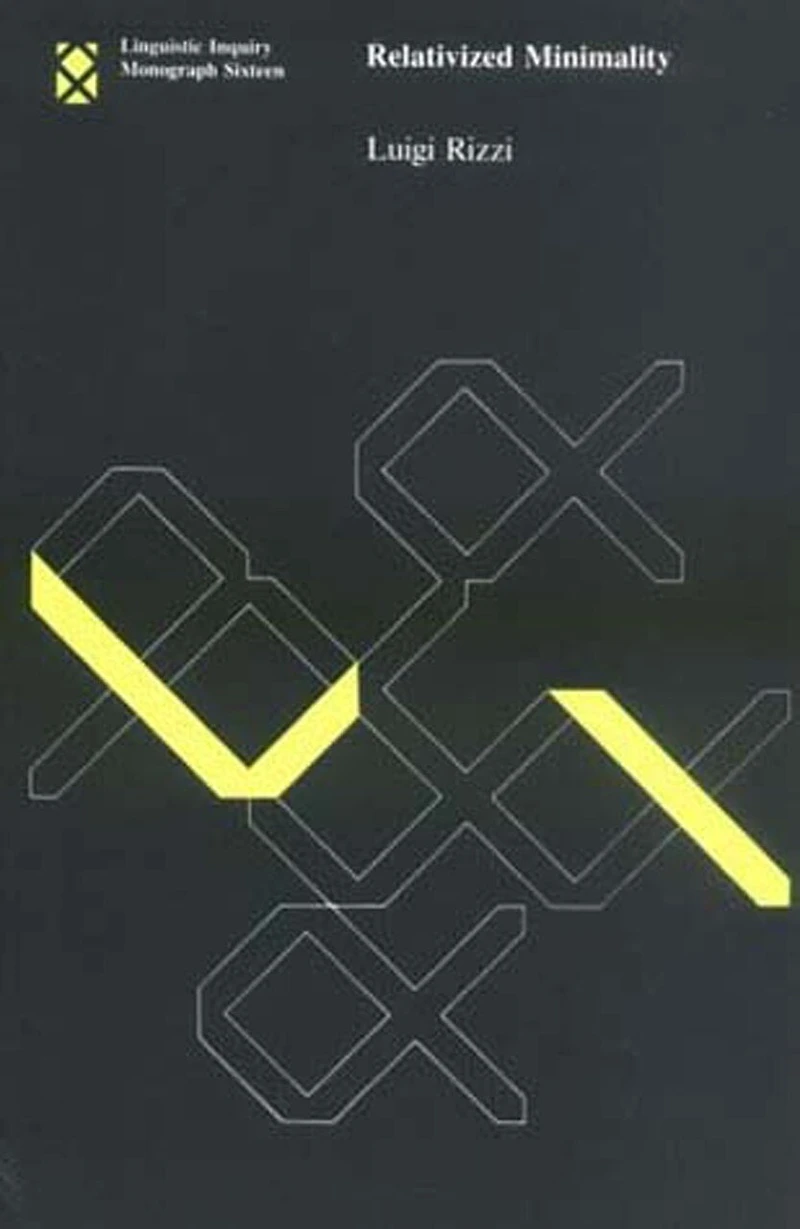
Relativized Minimality in Ottawa, ON
Current price: $54.00

Relativized Minimality in Ottawa, ON
Current price: $54.00
Loading Inventory...
Size: Paperback
*Product information may vary - to confirm product availability, pricing, shipping and return information please contact Coles
This monograph presents an important extension of government-binding theory in syntax. This monograph presents an important extension of government-binding theory in syntax. It offers a new characterization of locality in the theory of government through a relativization of the Minimality Principle, and it explores the consequences of this approach for the Empty Category Principle and the analysis of a variety of empirical domains, including intervention effects, That-trace phenomena, and argument/adjunct asymmetries. The final part of the book is devoted to a new interpretation of the argument/adjunct asymmetries that arise in various extraction processes. Referential indices, a fundamental ingredient of the binding relation, are restricted to occur on referential arguments, as in Chomsky's original proposal. This natural restriction has the surprising effect of capturing the major argument-adjunct asymmetries in a straightforward manner while permitting a radical simplification of the Empty Category Principle.
This monograph presents an important extension of government-binding theory in syntax. This monograph presents an important extension of government-binding theory in syntax. It offers a new characterization of locality in the theory of government through a relativization of the Minimality Principle, and it explores the consequences of this approach for the Empty Category Principle and the analysis of a variety of empirical domains, including intervention effects, That-trace phenomena, and argument/adjunct asymmetries. The final part of the book is devoted to a new interpretation of the argument/adjunct asymmetries that arise in various extraction processes. Referential indices, a fundamental ingredient of the binding relation, are restricted to occur on referential arguments, as in Chomsky's original proposal. This natural restriction has the surprising effect of capturing the major argument-adjunct asymmetries in a straightforward manner while permitting a radical simplification of the Empty Category Principle.
You May Also Like










More About Coles at Bayshore Shopping Centre
Coles is renowned for its outstanding customer service and great selection of books. Along with the vast array of magazines, stationary, audio-books, children's literature, fiction, non-fiction and reference books, you can find accessories to make your reading experience more pleasurable. We can recommend the very best in reading today. We will help you search our titles for exactly what you need, and if we do not have it in stock, we will order it for you.
100 Bayshore Dr, Nepean, ON K2B 8C1, Canada
Find Coles at Bayshore Shopping Centre in Ottawa, ON
Visit Coles at Bayshore Shopping Centre in Ottawa, ON