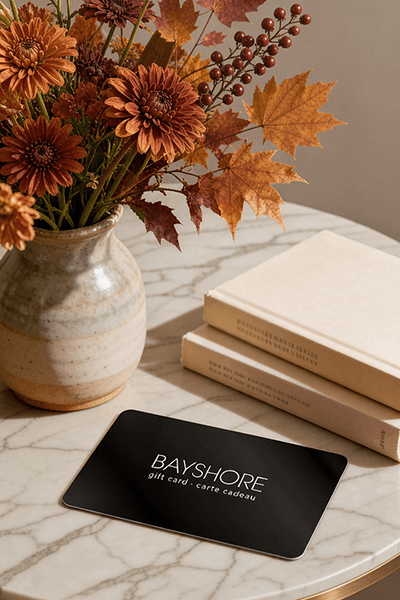
Too many options? Treat your friends and family to their favourite stores with a Bayshore Shopping Centre gift card, redeemable at participating retailers throughout the centre. Click below to purchase yours today!Purchase Here
*Product information may vary - to confirm product availability, pricing, shipping and return information please contact Coles
In Rethinking Philosophy with Borges, Zambrano, Paz, and Plato, Hugo Moreno argues that in Ficciones, Claros del bosque, and El mono gramático, Jorge Luis Borges, María Zambrano, and Octavio Paz practice a literary way of philosophizing-a way of seeking and communicating knowledge of reality that takes up analogical procedures. They deploy analogy as an indispensable and irreplaceable heuristic tool and literary device to convey their insight and perplexities on the nature of existence. Borges' ironic approach involves reading and writing philosophy as fiction. Zambrano's poetic reason is a mode of writing and thinking based on an imaginative sort of recollection that is ultimately a visionary's poetizing technique. Paz's poetic thinking relies on analogy to correlate and harmonize an array of worldviews, ideas, and discourses. In the appendix, Moreno shows that Plato's Republic is a forerunner of this way of philosophizing in literature. Moreno suggests that in the Republic, Plato reconciles philosophy and poetry and creates a rational prose poetry that fuses argumentation and narration, dialectical and analogical reasoning, and abstract concepts and poetic images.
In Rethinking Philosophy with Borges, Zambrano, Paz, and Plato, Hugo Moreno argues that in Ficciones, Claros del bosque, and El mono gramático, Jorge Luis Borges, María Zambrano, and Octavio Paz practice a literary way of philosophizing-a way of seeking and communicating knowledge of reality that takes up analogical procedures. They deploy analogy as an indispensable and irreplaceable heuristic tool and literary device to convey their insight and perplexities on the nature of existence. Borges' ironic approach involves reading and writing philosophy as fiction. Zambrano's poetic reason is a mode of writing and thinking based on an imaginative sort of recollection that is ultimately a visionary's poetizing technique. Paz's poetic thinking relies on analogy to correlate and harmonize an array of worldviews, ideas, and discourses. In the appendix, Moreno shows that Plato's Republic is a forerunner of this way of philosophizing in literature. Moreno suggests that in the Republic, Plato reconciles philosophy and poetry and creates a rational prose poetry that fuses argumentation and narration, dialectical and analogical reasoning, and abstract concepts and poetic images.
Coles is renowned for its outstanding customer service and great selection of books. Along with the vast array of magazines, stationary, audio-books, children's literature, fiction, non-fiction and reference books, you can find accessories to make your reading experience more pleasurable. We can recommend the very best in reading today. We will help you search our titles for exactly what you need, and if we do not have it in stock, we will order it for you.