

Give the Gift of Choice!
Too many options? Treat your friends and family to their favourite stores with a Bayshore Shopping Centre gift card, redeemable at participating retailers throughout the centre. Click below to purchase yours today!Purchase HereHome
Ruling Bodies: A Study of Coercion and Punishment Plato's Republic, Laws, Gorgias
Coles
Loading Inventory...
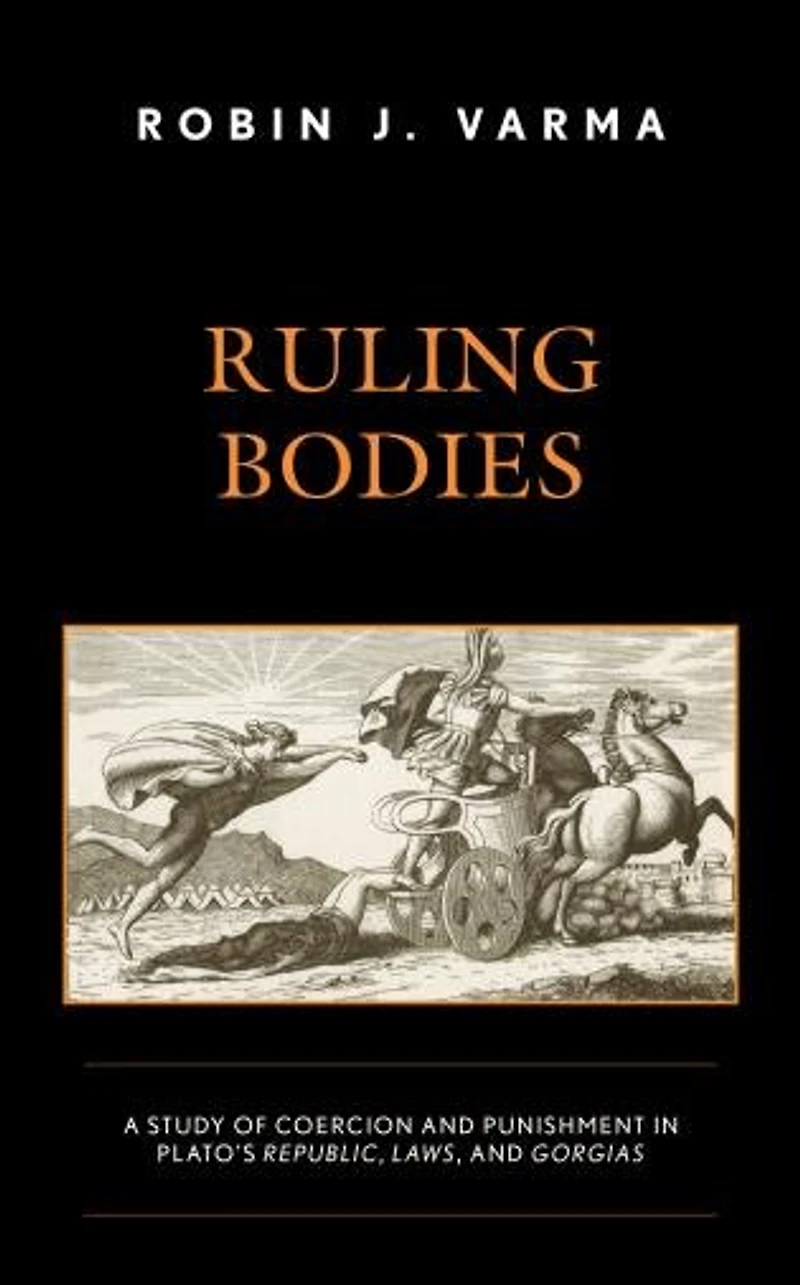
Ruling Bodies: A Study of Coercion and Punishment Plato's Republic, Laws, Gorgias in Ottawa, ON
Current price: $160.95

Ruling Bodies: A Study of Coercion and Punishment Plato's Republic, Laws, Gorgias in Ottawa, ON
Current price: $160.95
Loading Inventory...
Size: Hardcover
*Product information may vary - to confirm product availability, pricing, shipping and return information please contact Coles
This book is about an epochal shift in ideas that changed the nature and meaning of coercion in modern political thought. It begins with a review of Foucault, Arendt, and Habermas, and points out a discrepancy in the way each thinker understood coercion in modern politics. From here, Varma examines Plato's Republic, Laws, and Gorgias to provide a framework and context for thinking about this. As the author shows, each work demonstrates a particular style of Platonic statecraft that corresponds to the amount of power the philosopher holds in a city. The Republic demonstrates the philosopher's rule as a monarch; the Laws demonstrates his rule when he must share power with a few spirited statesmen; and the Gorgias demonstrates his rule in a democracy where power belongs to the people. Ultimately, Varma argues that the philosopher used coercion as a supplementary tool to help harmonize man's soul with the heavens. When Hobbes recast the cosmos as matter in motion, however, power became the highest ordering principle for political life.
This book is about an epochal shift in ideas that changed the nature and meaning of coercion in modern political thought. It begins with a review of Foucault, Arendt, and Habermas, and points out a discrepancy in the way each thinker understood coercion in modern politics. From here, Varma examines Plato's Republic, Laws, and Gorgias to provide a framework and context for thinking about this. As the author shows, each work demonstrates a particular style of Platonic statecraft that corresponds to the amount of power the philosopher holds in a city. The Republic demonstrates the philosopher's rule as a monarch; the Laws demonstrates his rule when he must share power with a few spirited statesmen; and the Gorgias demonstrates his rule in a democracy where power belongs to the people. Ultimately, Varma argues that the philosopher used coercion as a supplementary tool to help harmonize man's soul with the heavens. When Hobbes recast the cosmos as matter in motion, however, power became the highest ordering principle for political life.
You May Also Like







More About Coles at Bayshore Shopping Centre
Coles is renowned for its outstanding customer service and great selection of books. Along with the vast array of magazines, stationary, audio-books, children's literature, fiction, non-fiction and reference books, you can find accessories to make your reading experience more pleasurable. We can recommend the very best in reading today. We will help you search our titles for exactly what you need, and if we do not have it in stock, we will order it for you.
100 Bayshore Dr, Nepean, ON K2B 8C1, Canada
Find Coles at Bayshore Shopping Centre in Ottawa, ON
Visit Coles at Bayshore Shopping Centre in Ottawa, ON