

Give the Gift of Choice!
Too many options? Treat your friends and family to their favourite stores with a Bayshore Shopping Centre gift card, redeemable at participating retailers throughout the centre. Click below to purchase yours today!Purchase HereHome
Screening Foreign Direct Investment in the EU: Political Rationale, Legal Limitations, Legislative Options
Coles
Loading Inventory...
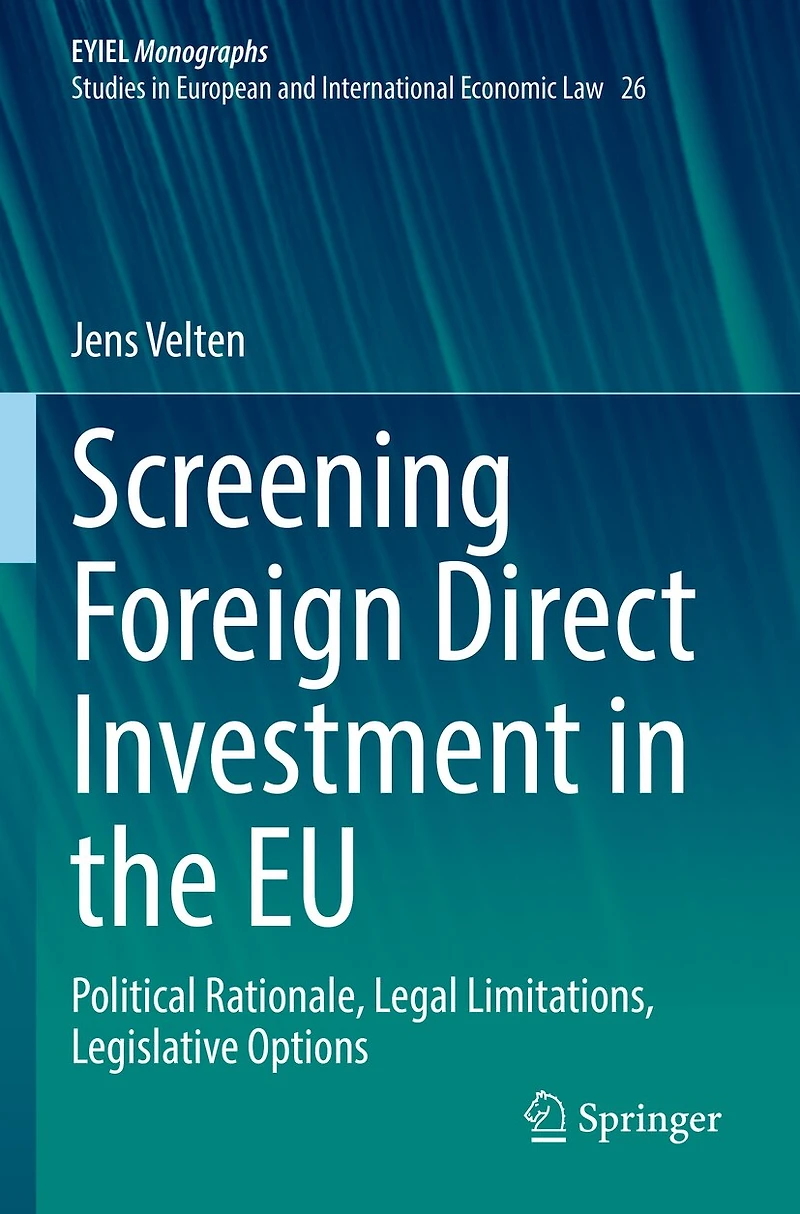
Screening Foreign Direct Investment in the EU: Political Rationale, Legal Limitations, Legislative Options in Ottawa, ON
Current price: $233.95

Screening Foreign Direct Investment in the EU: Political Rationale, Legal Limitations, Legislative Options in Ottawa, ON
Current price: $233.95
Loading Inventory...
Size: Paperback
*Product information may vary - to confirm product availability, pricing, shipping and return information please contact Coles
Foreign Direct Investment (FDI) from third countries-a desirable form of investment to boost the EU's economy or a threat to important EU and Member State interests that must be mitigated via FDI screening mechanisms? FDI screening is a complex, controversial and highly topical subject at the intersection of law, politics and economics. This book analyzes the political rationale behind FDI screening in the EU, reveals the legal limitations of current FDI screening mechanisms based on security and public order, and identifies legislative options for broader screening mechanisms in accordance with EU and international economic law.
In particular, the book identifies the four main concerns in the EU regarding FDI from third countries: distortive competition effects; the lack of reciprocity on FDI treatment between the EU and the investor's home country; objectives of the investor or their home country that may be detrimental to EU interests; and safety of private information. On this basis, the book analyzes the Screening Regulation (Regulation (EU) 2019/452) and its newly introduced screening ground "security or public order" and asks whether this and other similar screening grounds based on the notions of security, public order and public policy can address these concerns with regard to foreign investors. Based on an analysis of WTO law and EU primary law, it argues that they cannot. Thus, the question arises: Do the EU and Member States have the flexibility to adopt broader FDI screening mechanisms? To answer this question, the book examines the freedoms of capital movement and establishment in EU primary law, as well as various sources of international economic law such as, first and foremost, the WTO's General Agreement on Trade in Services, but also other bi- and plurilateral trade and investment treaties, including the EU-China Comprehensive Agreement on Investment. In closing, the book identifies various legislative options for broader FDI screening mechanisms-and their shortcomings.
Foreign Direct Investment (FDI) from third countries-a desirable form of investment to boost the EU's economy or a threat to important EU and Member State interests that must be mitigated via FDI screening mechanisms? FDI screening is a complex, controversial and highly topical subject at the intersection of law, politics and economics. This book analyzes the political rationale behind FDI screening in the EU, reveals the legal limitations of current FDI screening mechanisms based on security and public order, and identifies legislative options for broader screening mechanisms in accordance with EU and international economic law.
In particular, the book identifies the four main concerns in the EU regarding FDI from third countries: distortive competition effects; the lack of reciprocity on FDI treatment between the EU and the investor's home country; objectives of the investor or their home country that may be detrimental to EU interests; and safety of private information. On this basis, the book analyzes the Screening Regulation (Regulation (EU) 2019/452) and its newly introduced screening ground "security or public order" and asks whether this and other similar screening grounds based on the notions of security, public order and public policy can address these concerns with regard to foreign investors. Based on an analysis of WTO law and EU primary law, it argues that they cannot. Thus, the question arises: Do the EU and Member States have the flexibility to adopt broader FDI screening mechanisms? To answer this question, the book examines the freedoms of capital movement and establishment in EU primary law, as well as various sources of international economic law such as, first and foremost, the WTO's General Agreement on Trade in Services, but also other bi- and plurilateral trade and investment treaties, including the EU-China Comprehensive Agreement on Investment. In closing, the book identifies various legislative options for broader FDI screening mechanisms-and their shortcomings.
You May Also Like










More About Coles at Bayshore Shopping Centre
Coles is renowned for its outstanding customer service and great selection of books. Along with the vast array of magazines, stationary, audio-books, children's literature, fiction, non-fiction and reference books, you can find accessories to make your reading experience more pleasurable. We can recommend the very best in reading today. We will help you search our titles for exactly what you need, and if we do not have it in stock, we will order it for you.
100 Bayshore Dr, Nepean, ON K2B 8C1, Canada
Find Coles at Bayshore Shopping Centre in Ottawa, ON
Visit Coles at Bayshore Shopping Centre in Ottawa, ON