

Give the Gift of Choice!
Too many options? Treat your friends and family to their favourite stores with a Bayshore Shopping Centre gift card, redeemable at participating retailers throughout the centre. Click below to purchase yours today!Purchase HereHome
Self-Determination in the International Legal System: Whose Claim, to What Right?
Coles
Loading Inventory...
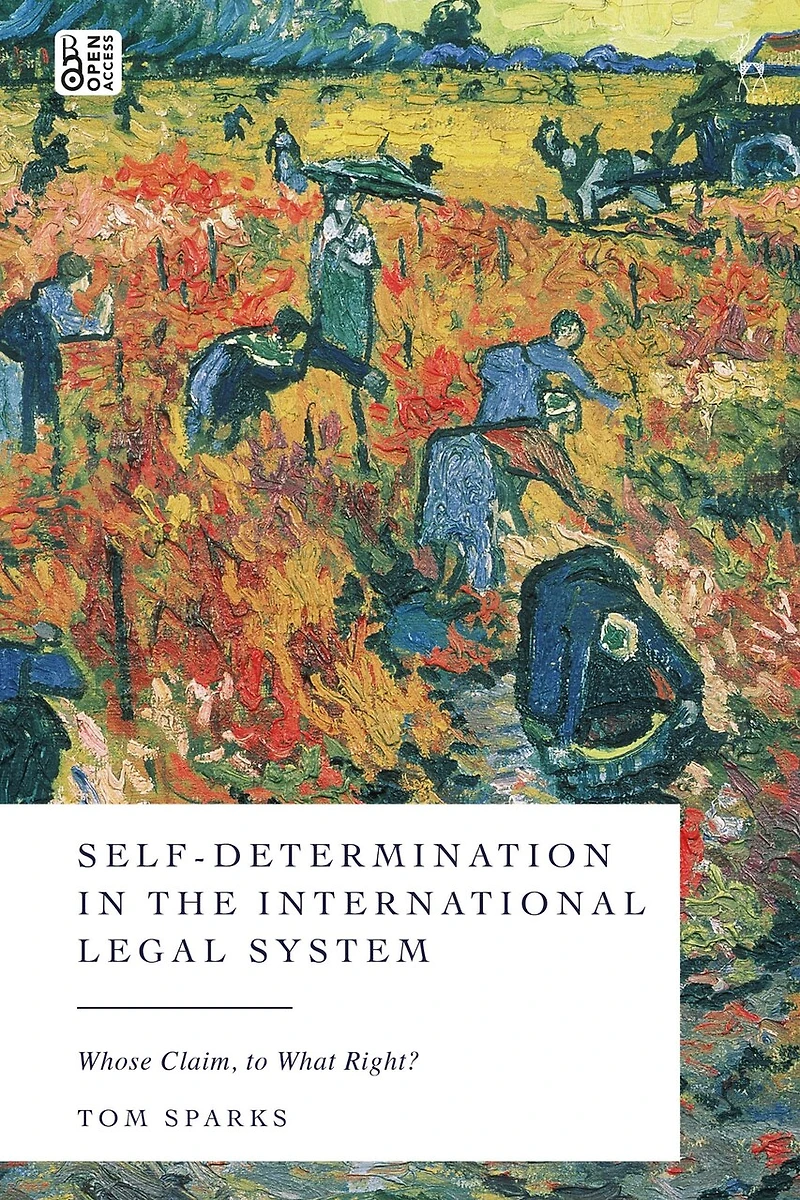
Self-Determination in the International Legal System: Whose Claim, to What Right? in Ottawa, ON
Current price: $86.50

Self-Determination in the International Legal System: Whose Claim, to What Right? in Ottawa, ON
Current price: $86.50
Loading Inventory...
Size: Paperback
*Product information may vary - to confirm product availability, pricing, shipping and return information please contact Coles
This open access book brings conceptual clarity to the study and practice of self-determination, showing that it is, without doubt, one of the most important concepts of the international legal order. It argues that the accepted categorisation of internal and external self-determination is not helpful, and suggests a new typology. This new framework has four categories: the polity-based, secessionary, colonial, and remedial forms. Each will be distinguished by the grounds, or the legitimacy-claim, on which it is based. This not only ensures consistency, it moves the question out of the purely conceptual realm and addresses the practical concerns of those invoking self-determination. By presenting international lawyers with a typology that is both theoretically consistent and more practically useful, the author makes a significant contribution to our understanding of this keystone of international law. The open access edition of this book is available under a CC BY-NC-ND 3.0 licence on bloomsburycollections.com. Open access was funded by Max-Planck-Institut für ausländisches öffentliches Recht und Völkerrecht.
This open access book brings conceptual clarity to the study and practice of self-determination, showing that it is, without doubt, one of the most important concepts of the international legal order. It argues that the accepted categorisation of internal and external self-determination is not helpful, and suggests a new typology. This new framework has four categories: the polity-based, secessionary, colonial, and remedial forms. Each will be distinguished by the grounds, or the legitimacy-claim, on which it is based. This not only ensures consistency, it moves the question out of the purely conceptual realm and addresses the practical concerns of those invoking self-determination. By presenting international lawyers with a typology that is both theoretically consistent and more practically useful, the author makes a significant contribution to our understanding of this keystone of international law. The open access edition of this book is available under a CC BY-NC-ND 3.0 licence on bloomsburycollections.com. Open access was funded by Max-Planck-Institut für ausländisches öffentliches Recht und Völkerrecht.
You May Also Like








More About Coles at Bayshore Shopping Centre
Coles is renowned for its outstanding customer service and great selection of books. Along with the vast array of magazines, stationary, audio-books, children's literature, fiction, non-fiction and reference books, you can find accessories to make your reading experience more pleasurable. We can recommend the very best in reading today. We will help you search our titles for exactly what you need, and if we do not have it in stock, we will order it for you.
100 Bayshore Dr, Nepean, ON K2B 8C1, Canada
Find Coles at Bayshore Shopping Centre in Ottawa, ON
Visit Coles at Bayshore Shopping Centre in Ottawa, ON