

Give the Gift of Choice!
Too many options? Treat your friends and family to their favourite stores with a Bayshore Shopping Centre gift card, redeemable at participating retailers throughout the centre. Click below to purchase yours today!Purchase HereHome
Self-Organization as a New Paradigm in Evolutionary Biology: From Theory to Applied Cases in the Tree of Life
Coles
Loading Inventory...
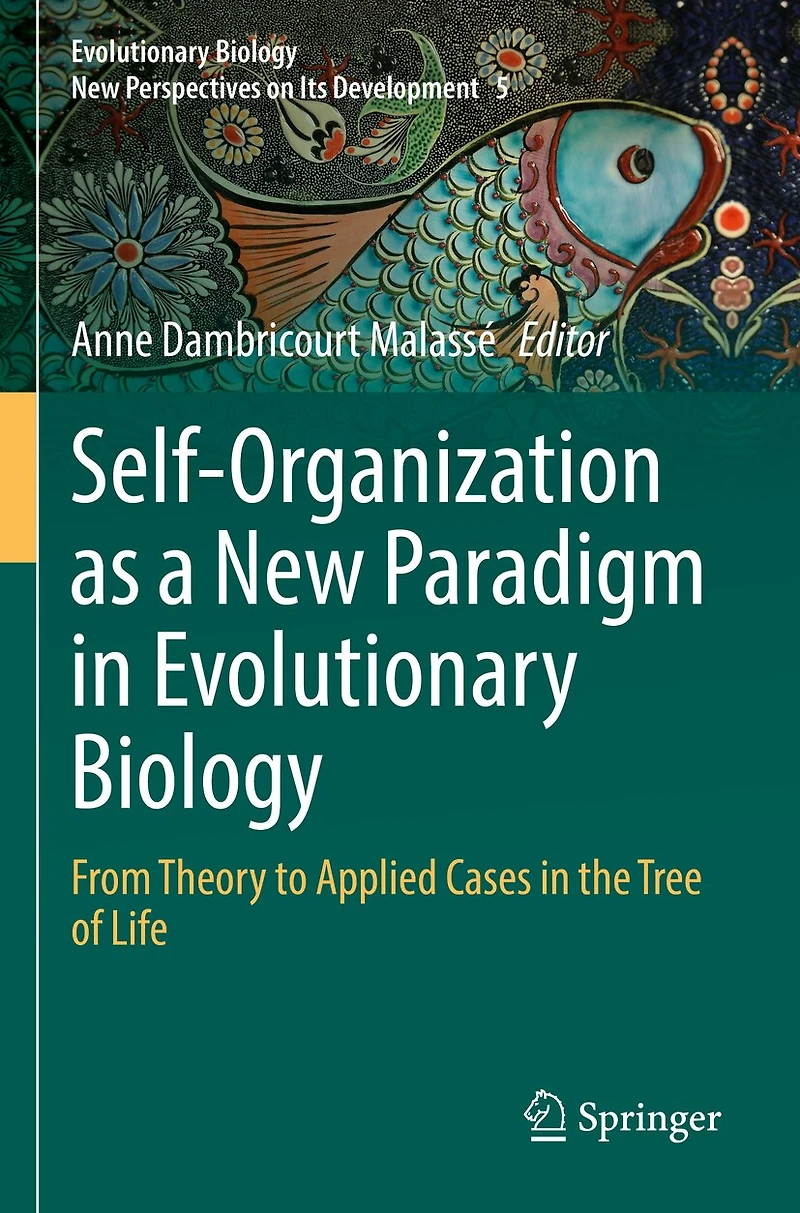
Self-Organization as a New Paradigm in Evolutionary Biology: From Theory to Applied Cases in the Tree of Life in Ottawa, ON
Current price: $291.95

Self-Organization as a New Paradigm in Evolutionary Biology: From Theory to Applied Cases in the Tree of Life in Ottawa, ON
Current price: $291.95
Loading Inventory...
Size: Paperback
*Product information may vary - to confirm product availability, pricing, shipping and return information please contact Coles
The epistemological synthesis of the various theories of evolution, since the first formulation in 1802 with the transmission of the inherited characters by J.B. Lamarck, shows the need for an alternative synthesis to that of Princeton (1947). This new synthesis integrates the scientific models of self-organization developed during the second half of the 20th century based on the laws of physics, thermodynamics, and mathematics with the emergent evolutionary problematics such as self-organized memory. This book shows, how self-organization is integrated in modern evolutionary biology. It is divided in two parts: The first part pays attention to the modern observations in paleontology and biology, which include major theoreticians of the self-organization (d'Arcy Thompson, Henri Bergson, René Thom, Ilya Prigogine). The second part presents different emergent evolutionary models including the sciences of complexity, the non-linear dynamical systems, fractals, attractors, epigenesis, systemics, and mesology with different examples of the sciences of complexity and self-organization as observed in the human lineage, from both internal (embryogenesis-morphogenesis) and external (mesology) viewpoints.
The epistemological synthesis of the various theories of evolution, since the first formulation in 1802 with the transmission of the inherited characters by J.B. Lamarck, shows the need for an alternative synthesis to that of Princeton (1947). This new synthesis integrates the scientific models of self-organization developed during the second half of the 20th century based on the laws of physics, thermodynamics, and mathematics with the emergent evolutionary problematics such as self-organized memory. This book shows, how self-organization is integrated in modern evolutionary biology. It is divided in two parts: The first part pays attention to the modern observations in paleontology and biology, which include major theoreticians of the self-organization (d'Arcy Thompson, Henri Bergson, René Thom, Ilya Prigogine). The second part presents different emergent evolutionary models including the sciences of complexity, the non-linear dynamical systems, fractals, attractors, epigenesis, systemics, and mesology with different examples of the sciences of complexity and self-organization as observed in the human lineage, from both internal (embryogenesis-morphogenesis) and external (mesology) viewpoints.
You May Also Like








More About Coles at Bayshore Shopping Centre
Coles is renowned for its outstanding customer service and great selection of books. Along with the vast array of magazines, stationary, audio-books, children's literature, fiction, non-fiction and reference books, you can find accessories to make your reading experience more pleasurable. We can recommend the very best in reading today. We will help you search our titles for exactly what you need, and if we do not have it in stock, we will order it for you.
100 Bayshore Dr, Nepean, ON K2B 8C1, Canada
Find Coles at Bayshore Shopping Centre in Ottawa, ON
Visit Coles at Bayshore Shopping Centre in Ottawa, ON