

Give the Gift of Choice!
Too many options? Treat your friends and family to their favourite stores with a Bayshore Shopping Centre gift card, redeemable at participating retailers throughout the centre. Click below to purchase yours today!Purchase HereHome
Setting National Priorities: Policy for the Nineties
Coles
Loading Inventory...
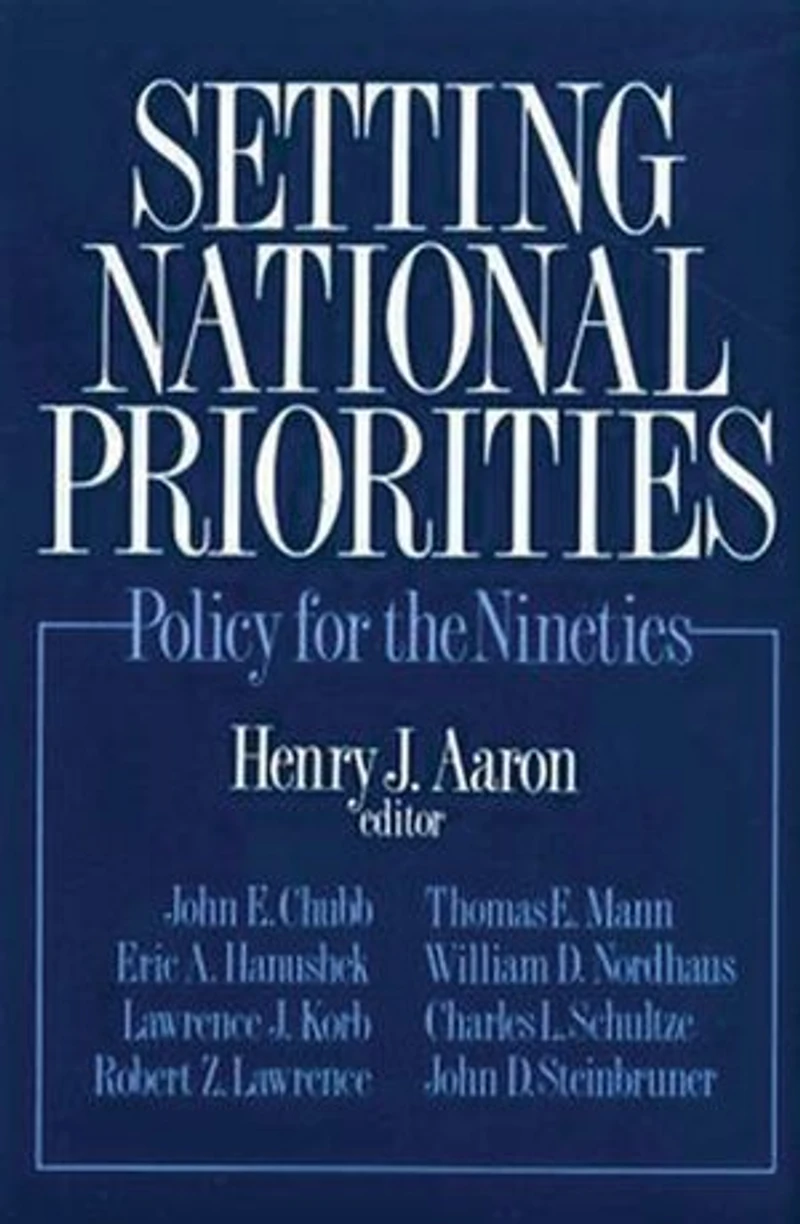
Setting National Priorities: Policy for the Nineties in Ottawa, ON
Current price: $29.49
Original price: $36.85

Setting National Priorities: Policy for the Nineties in Ottawa, ON
Current price: $29.49
Original price: $36.85
Loading Inventory...
Size: Kobo eBook
*Product information may vary - to confirm product availability, pricing, shipping and return information please contact Coles
Setting National Priorities continues the highly acclaimed and influential series of books that examine domestic and foreign policy choices confronting the United States. Members of the Brookings staff join outside experts to evaluate America's course through the next decade.
In clear and nontechnical terms the contributors explain and evaluate options for the United States in the 1990s, consider whether the federal government's current pollicies are consistent with long-term objectives, and explain what action could best achieve those goals.
Charles L. Schultze shows why it is important to solve the problem of the federal budget deficit and how it can be done: John D. Steinbruner addresses the revolution taking place in American foreign policy and explains how the United States can be more secure with lower defense spending; Lawrence J. Korb evaluates President Bush's defense budget and suggests possible improvements; Robert Z. Lawrence describes how the U.S. government and private industry should respond to the competitive challenge from foreign companies; William D. Nordhaus explains the risks form global warming and presents a policy to meet them; John E. Chubb and Eric A. Hanshek chart new directions of American elementary and secondary education; Henry J. Aaron identifies the major problems with the financing of healthcare and describes how they can be solved; and Thomas E. Mann considers how political institutions and public preferences constrain our ability to enact needed policy changes and what might be done to overcome those obstacles.
Setting National Priorities continues the highly acclaimed and influential series of books that examine domestic and foreign policy choices confronting the United States. Members of the Brookings staff join outside experts to evaluate America's course through the next decade.
In clear and nontechnical terms the contributors explain and evaluate options for the United States in the 1990s, consider whether the federal government's current pollicies are consistent with long-term objectives, and explain what action could best achieve those goals.
Charles L. Schultze shows why it is important to solve the problem of the federal budget deficit and how it can be done: John D. Steinbruner addresses the revolution taking place in American foreign policy and explains how the United States can be more secure with lower defense spending; Lawrence J. Korb evaluates President Bush's defense budget and suggests possible improvements; Robert Z. Lawrence describes how the U.S. government and private industry should respond to the competitive challenge from foreign companies; William D. Nordhaus explains the risks form global warming and presents a policy to meet them; John E. Chubb and Eric A. Hanshek chart new directions of American elementary and secondary education; Henry J. Aaron identifies the major problems with the financing of healthcare and describes how they can be solved; and Thomas E. Mann considers how political institutions and public preferences constrain our ability to enact needed policy changes and what might be done to overcome those obstacles.
You May Also Like















More About Coles at Bayshore Shopping Centre
Coles is renowned for its outstanding customer service and great selection of books. Along with the vast array of magazines, stationary, audio-books, children's literature, fiction, non-fiction and reference books, you can find accessories to make your reading experience more pleasurable. We can recommend the very best in reading today. We will help you search our titles for exactly what you need, and if we do not have it in stock, we will order it for you.
100 Bayshore Dr, Nepean, ON K2B 8C1, Canada
Find Coles at Bayshore Shopping Centre in Ottawa, ON
Visit Coles at Bayshore Shopping Centre in Ottawa, ON