

Give the Gift of Choice!
Too many options? Treat your friends and family to their favourite stores with a Bayshore Shopping Centre gift card, redeemable at participating retailers throughout the centre. Click below to purchase yours today!Purchase HereHome
Shadowing and Hyperbolicity
Coles
Loading Inventory...
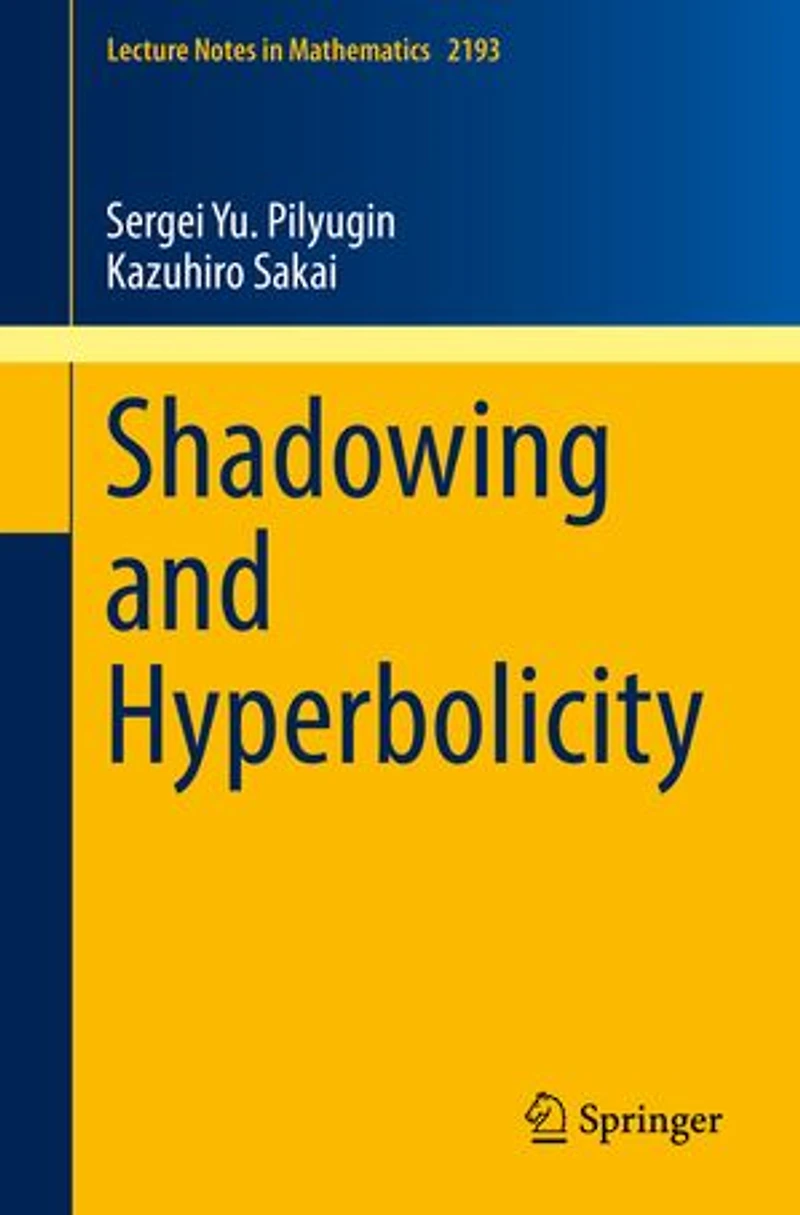
Shadowing and Hyperbolicity in Ottawa, ON
Current price: $70.99
Original price: $88.68

Shadowing and Hyperbolicity in Ottawa, ON
Current price: $70.99
Original price: $88.68
Loading Inventory...
Size: Kobo eBook
*Product information may vary - to confirm product availability, pricing, shipping and return information please contact Coles
Focusing on the theory of shadowing of approximate trajectories (pseudotrajectories) of dynamical systems, this book surveys recent progress in establishing relations between shadowing and such basic notions from the classical theory of structural stability as hyperbolicity and transversality. Special attention is given to the study of "quantitative" shadowing properties, such as Lipschitz shadowing (it is shown that this property is equivalent to structural stability both for diffeomorphisms and smooth flows), and to the passage to robust shadowing (which is also equivalent to structural stability in the case of diffeomorphisms, while the situation becomes more complicated in the case of flows). Relations between the shadowing property of diffeomorphisms on their chain transitive sets and the hyperbolicity of such sets are also described. The book will allow young researchers in the field of dynamical systems to gain a better understanding of new ideas in the global qualitative theory. It will also be of interest to specialists in dynamical systems and their applications.
Focusing on the theory of shadowing of approximate trajectories (pseudotrajectories) of dynamical systems, this book surveys recent progress in establishing relations between shadowing and such basic notions from the classical theory of structural stability as hyperbolicity and transversality. Special attention is given to the study of "quantitative" shadowing properties, such as Lipschitz shadowing (it is shown that this property is equivalent to structural stability both for diffeomorphisms and smooth flows), and to the passage to robust shadowing (which is also equivalent to structural stability in the case of diffeomorphisms, while the situation becomes more complicated in the case of flows). Relations between the shadowing property of diffeomorphisms on their chain transitive sets and the hyperbolicity of such sets are also described. The book will allow young researchers in the field of dynamical systems to gain a better understanding of new ideas in the global qualitative theory. It will also be of interest to specialists in dynamical systems and their applications.
You May Also Like













More About Coles at Bayshore Shopping Centre
Coles is renowned for its outstanding customer service and great selection of books. Along with the vast array of magazines, stationary, audio-books, children's literature, fiction, non-fiction and reference books, you can find accessories to make your reading experience more pleasurable. We can recommend the very best in reading today. We will help you search our titles for exactly what you need, and if we do not have it in stock, we will order it for you.
100 Bayshore Dr, Nepean, ON K2B 8C1, Canada
Find Coles at Bayshore Shopping Centre in Ottawa, ON
Visit Coles at Bayshore Shopping Centre in Ottawa, ON