

Give the Gift of Choice!
Too many options? Treat your friends and family to their favourite stores with a Bayshore Shopping Centre gift card, redeemable at participating retailers throughout the centre. Click below to purchase yours today!Purchase HereHome
Slavery Southern Culture and Education in Little Dixie Missouri 1820-1860 by Jeffrey C. Stone, Hardcover | Indigo Chapters
Coles
Loading Inventory...
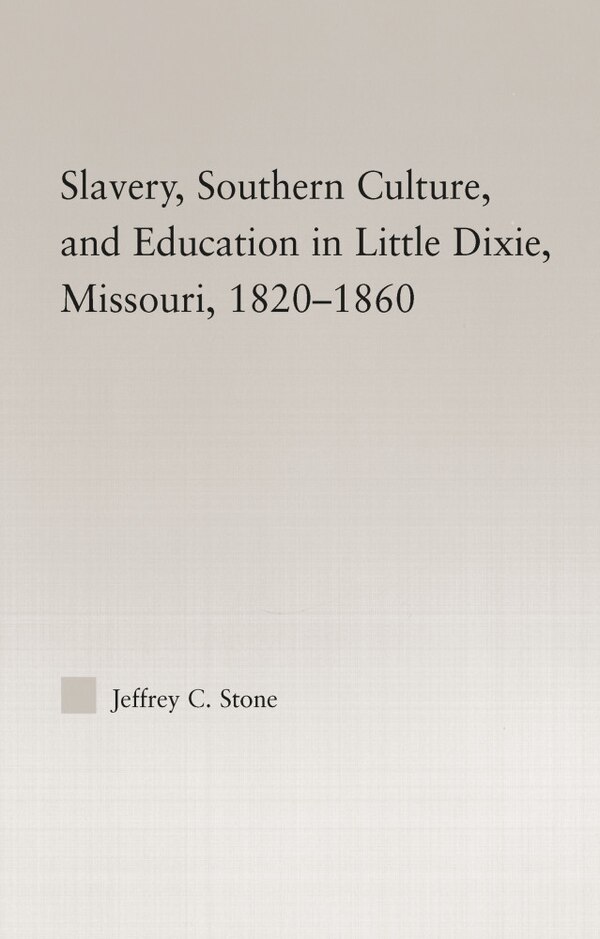
Slavery Southern Culture and Education in Little Dixie Missouri 1820-1860 by Jeffrey C. Stone, Hardcover | Indigo Chapters in Ottawa, ON
By Jeffrey C. Stone
Current price: $281.50

By Jeffrey C. Stone
Slavery Southern Culture and Education in Little Dixie Missouri 1820-1860 by Jeffrey C. Stone, Hardcover | Indigo Chapters in Ottawa, ON
Current price: $281.50
Loading Inventory...
Size: 0.5 x 9 x 0.65
*Product information may vary - to confirm product availability, pricing, shipping and return information please contact Coles
This dissertation examines the cultural and educational history of central Missouri between 1820 and 1860, and in particular, the issue of master-slave relationships and how they affected education (broadly defined as the transmission of Southern culture). Although Missouri had one of the lowest slave populations during the Antebellum period, Central Missouri - or what became known as Little Dixie - had slave percentages that rivaled many regions and counties of the Deep South. However, slaves and slave owners interacted on a regular basis, which affected cultural transmission in the areas of religion, work, and community. Generally, slave owners in Little Dixie showed a pattern of paternalism in all these areas, but the slaves did not always accept their masters' paternalism, and attempted to forge a life of their own. | Slavery Southern Culture and Education in Little Dixie Missouri 1820-1860 by Jeffrey C. Stone, Hardcover | Indigo Chapters
This dissertation examines the cultural and educational history of central Missouri between 1820 and 1860, and in particular, the issue of master-slave relationships and how they affected education (broadly defined as the transmission of Southern culture). Although Missouri had one of the lowest slave populations during the Antebellum period, Central Missouri - or what became known as Little Dixie - had slave percentages that rivaled many regions and counties of the Deep South. However, slaves and slave owners interacted on a regular basis, which affected cultural transmission in the areas of religion, work, and community. Generally, slave owners in Little Dixie showed a pattern of paternalism in all these areas, but the slaves did not always accept their masters' paternalism, and attempted to forge a life of their own. | Slavery Southern Culture and Education in Little Dixie Missouri 1820-1860 by Jeffrey C. Stone, Hardcover | Indigo Chapters
You May Also Like
















More About Coles at Bayshore Shopping Centre
Coles is renowned for its outstanding customer service and great selection of books. Along with the vast array of magazines, stationary, audio-books, children's literature, fiction, non-fiction and reference books, you can find accessories to make your reading experience more pleasurable. We can recommend the very best in reading today. We will help you search our titles for exactly what you need, and if we do not have it in stock, we will order it for you.
100 Bayshore Dr, Nepean, ON K2B 8C1, Canada
Find Coles at Bayshore Shopping Centre in Ottawa, ON
Visit Coles at Bayshore Shopping Centre in Ottawa, ON