

Give the Gift of Choice!
Too many options? Treat your friends and family to their favourite stores with a Bayshore Shopping Centre gift card, redeemable at participating retailers throughout the centre. Click below to purchase yours today!Purchase HereHome
Small, Medium, Large: How Government Made the U.S. into a Manufacturing Powerhouse
Coles
Loading Inventory...
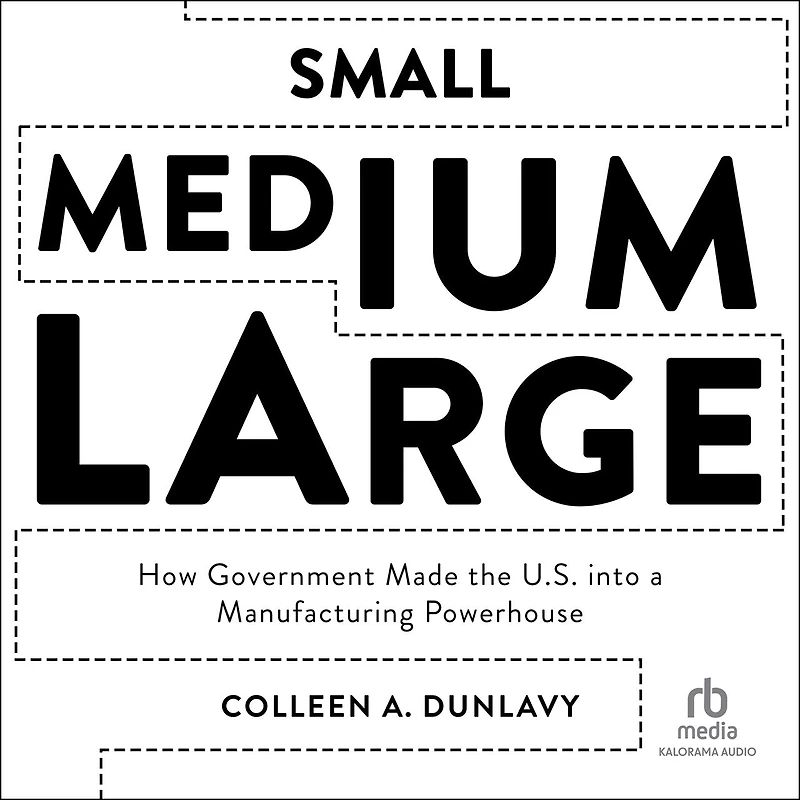
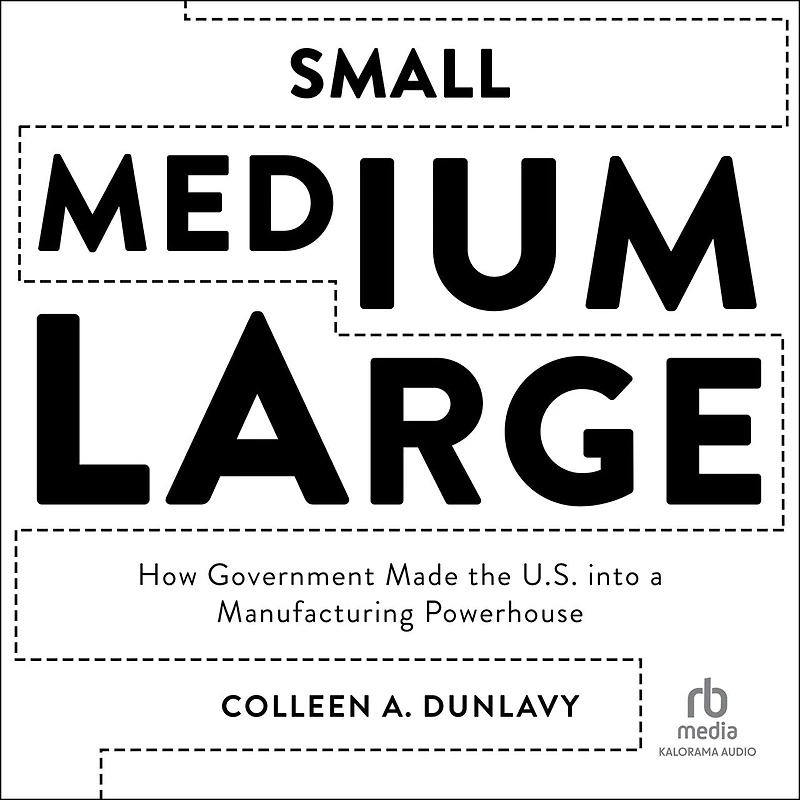
Small, Medium, Large: How Government Made the U.S. into a Manufacturing Powerhouse in Ottawa, ON
Current price: $59.95

Small, Medium, Large: How Government Made the U.S. into a Manufacturing Powerhouse in Ottawa, ON
Current price: $59.95
Loading Inventory...
Size: Audiobook (2024 A)
*Product information may vary - to confirm product availability, pricing, shipping and return information please contact Coles
We live in a world of seemingly limitless consumer choice. Yet, as every shopper knows without thinking about it, many everyday goods—from beds to batteries to printer paper—are available in a finite number of "standard sizes." What makes these sizes "standard" is an agreement among competing firms to make or sell products with the same limited dimensions. But how did firms—often hotly competing firms—reach such collective agreements? In exploring this question, Colleen Dunlavy puts the history of mass production and distribution in an entirely new light. She reveals that, despite the widely publicized model offered by Henry Ford, mass production techniques did not naturally diffuse throughout the US economy. On the contrary, formidable market forces blocked their diffusion. It was only under the cover of collectively agreed-upon, industry-wide standard sizes—orchestrated by the federal government—that competing firms were able to break free of market forces and transition to mass production and distribution. Without government promotion of standard sizes, the twentieth-century American variety of capitalism would have looked markedly less "Fordist." Small, Medium, Large will make all of us think differently about the everyday consumer choices we take for granted.
We live in a world of seemingly limitless consumer choice. Yet, as every shopper knows without thinking about it, many everyday goods—from beds to batteries to printer paper—are available in a finite number of "standard sizes." What makes these sizes "standard" is an agreement among competing firms to make or sell products with the same limited dimensions. But how did firms—often hotly competing firms—reach such collective agreements? In exploring this question, Colleen Dunlavy puts the history of mass production and distribution in an entirely new light. She reveals that, despite the widely publicized model offered by Henry Ford, mass production techniques did not naturally diffuse throughout the US economy. On the contrary, formidable market forces blocked their diffusion. It was only under the cover of collectively agreed-upon, industry-wide standard sizes—orchestrated by the federal government—that competing firms were able to break free of market forces and transition to mass production and distribution. Without government promotion of standard sizes, the twentieth-century American variety of capitalism would have looked markedly less "Fordist." Small, Medium, Large will make all of us think differently about the everyday consumer choices we take for granted.
You May Also Like


















More About Coles at Bayshore Shopping Centre
Coles is renowned for its outstanding customer service and great selection of books. Along with the vast array of magazines, stationary, audio-books, children's literature, fiction, non-fiction and reference books, you can find accessories to make your reading experience more pleasurable. We can recommend the very best in reading today. We will help you search our titles for exactly what you need, and if we do not have it in stock, we will order it for you.
100 Bayshore Dr, Nepean, ON K2B 8C1, Canada
Find Coles at Bayshore Shopping Centre in Ottawa, ON
Visit Coles at Bayshore Shopping Centre in Ottawa, ON