

Give the Gift of Choice!
Too many options? Treat your friends and family to their favourite stores with a Bayshore Shopping Centre gift card, redeemable at participating retailers throughout the centre. Click below to purchase yours today!Purchase HereHome
Social Capital and Subjective Well-Being: Insights from Cross-Cultural Studies
Coles
Loading Inventory...
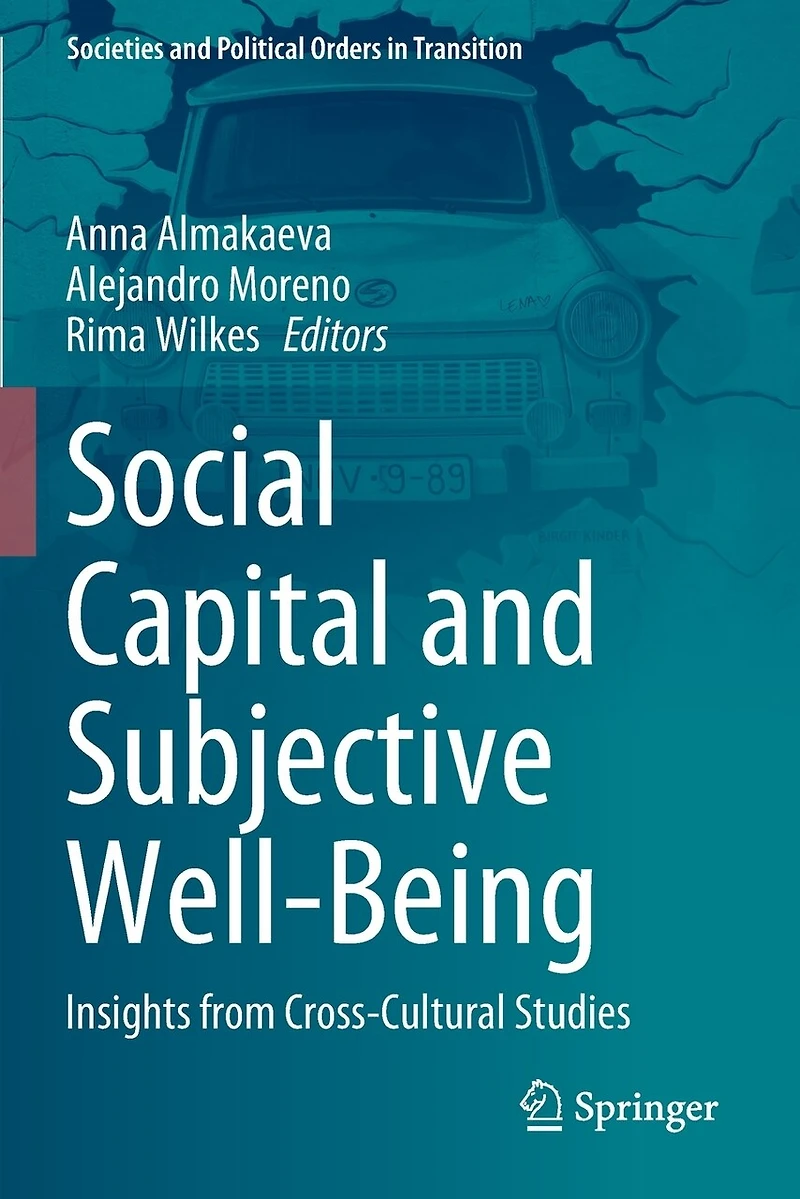
Social Capital and Subjective Well-Being: Insights from Cross-Cultural Studies in Ottawa, ON
Current price: $160.95

Social Capital and Subjective Well-Being: Insights from Cross-Cultural Studies in Ottawa, ON
Current price: $160.95
Loading Inventory...
Size: Paperback
*Product information may vary - to confirm product availability, pricing, shipping and return information please contact Coles
This book presents a cross-cultural investigation into the interplay between social capital and subjective well-being. Based on a quantitative analysis of the latest large-N cross-cultural data sets, including the World Value Survey and the European Social Survey, and covering various countries, it offers a comparative perspective on and new insights into the determinants of social capital and well-being. By identifying both universal and culture-specific patterns, the authors shed new light on the spatial and temporal differentiation of social capital and subjective well-being. The book is divided into two main parts: The first discusses mutual trust, religious and cultural tolerance, and pro-social and human values as essential dimensions of social capital. In turn, the second part studies social capital as a source of subjective well-being and life satisfaction. Given its scope, the book will appeal to scholars of sociology, social psychology, political scienceand economics seeking a deeper understanding of the multi-faceted nature of social capital and well-being.
This book presents a cross-cultural investigation into the interplay between social capital and subjective well-being. Based on a quantitative analysis of the latest large-N cross-cultural data sets, including the World Value Survey and the European Social Survey, and covering various countries, it offers a comparative perspective on and new insights into the determinants of social capital and well-being. By identifying both universal and culture-specific patterns, the authors shed new light on the spatial and temporal differentiation of social capital and subjective well-being. The book is divided into two main parts: The first discusses mutual trust, religious and cultural tolerance, and pro-social and human values as essential dimensions of social capital. In turn, the second part studies social capital as a source of subjective well-being and life satisfaction. Given its scope, the book will appeal to scholars of sociology, social psychology, political scienceand economics seeking a deeper understanding of the multi-faceted nature of social capital and well-being.
You May Also Like














More About Coles at Bayshore Shopping Centre
Coles is renowned for its outstanding customer service and great selection of books. Along with the vast array of magazines, stationary, audio-books, children's literature, fiction, non-fiction and reference books, you can find accessories to make your reading experience more pleasurable. We can recommend the very best in reading today. We will help you search our titles for exactly what you need, and if we do not have it in stock, we will order it for you.
100 Bayshore Dr, Nepean, ON K2B 8C1, Canada
Find Coles at Bayshore Shopping Centre in Ottawa, ON
Visit Coles at Bayshore Shopping Centre in Ottawa, ON