

Give the Gift of Choice!
Too many options? Treat your friends and family to their favourite stores with a Bayshore Shopping Centre gift card, redeemable at participating retailers throughout the centre. Click below to purchase yours today!Purchase HereHome
Soft Computing Techniques Engineering Applications
Coles
Loading Inventory...

Soft Computing Techniques Engineering Applications in Ottawa, ON
Current price: $116.09
Original price: $145.12

Soft Computing Techniques Engineering Applications in Ottawa, ON
Current price: $116.09
Original price: $145.12
Loading Inventory...
Size: Kobo eBook
*Product information may vary - to confirm product availability, pricing, shipping and return information please contact Coles
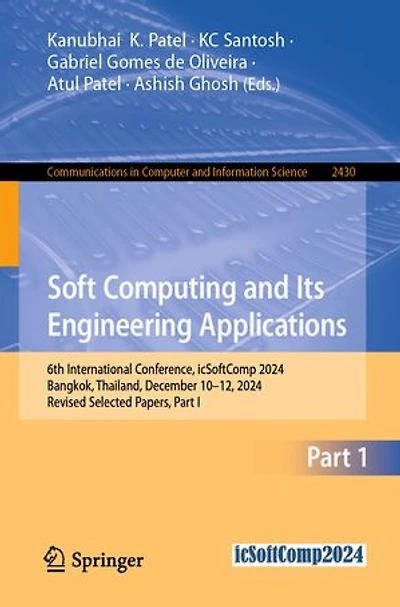
The Soft Computing techniques, which are based on the information processing of biological systems are now massively used in the area of pattern recognition, making prediction & planning, as well as acting on the environment. Ideally speaking, soft computing is not a subject of homogeneous concepts and techniques; rather, it is an amalgamation of distinct methods that confirms to its guiding principle. At present, the main aim of soft computing is to exploit the tolerance for imprecision and uncertainty to achieve tractability, robustness and low solutions cost. The principal constituents of soft computing techniques are probabilistic reasoning, fuzzy logic, neuro-computing, genetic algorithms, belief networks, chaotic systems, as well as learning theory. This book covers contributions from various authors to demonstrate the use of soft computing techniques in various applications of engineering.
The Soft Computing techniques, which are based on the information processing of biological systems are now massively used in the area of pattern recognition, making prediction & planning, as well as acting on the environment. Ideally speaking, soft computing is not a subject of homogeneous concepts and techniques; rather, it is an amalgamation of distinct methods that confirms to its guiding principle. At present, the main aim of soft computing is to exploit the tolerance for imprecision and uncertainty to achieve tractability, robustness and low solutions cost. The principal constituents of soft computing techniques are probabilistic reasoning, fuzzy logic, neuro-computing, genetic algorithms, belief networks, chaotic systems, as well as learning theory. This book covers contributions from various authors to demonstrate the use of soft computing techniques in various applications of engineering.
You May Also Like









More About Coles at Bayshore Shopping Centre
Coles is renowned for its outstanding customer service and great selection of books. Along with the vast array of magazines, stationary, audio-books, children's literature, fiction, non-fiction and reference books, you can find accessories to make your reading experience more pleasurable. We can recommend the very best in reading today. We will help you search our titles for exactly what you need, and if we do not have it in stock, we will order it for you.
100 Bayshore Dr, Nepean, ON K2B 8C1, Canada
Find Coles at Bayshore Shopping Centre in Ottawa, ON
Visit Coles at Bayshore Shopping Centre in Ottawa, ON