

Give the Gift of Choice!
Too many options? Treat your friends and family to their favourite stores with a Bayshore Shopping Centre gift card, redeemable at participating retailers throughout the centre. Click below to purchase yours today!Purchase HereHome
South Wind (Summarized Edition): Enriched edition. A lush Mediterranean portrait of exile, introspective hedonism, island life, and complex, eccentric souls in a philosophical romance
Coles
Loading Inventory...
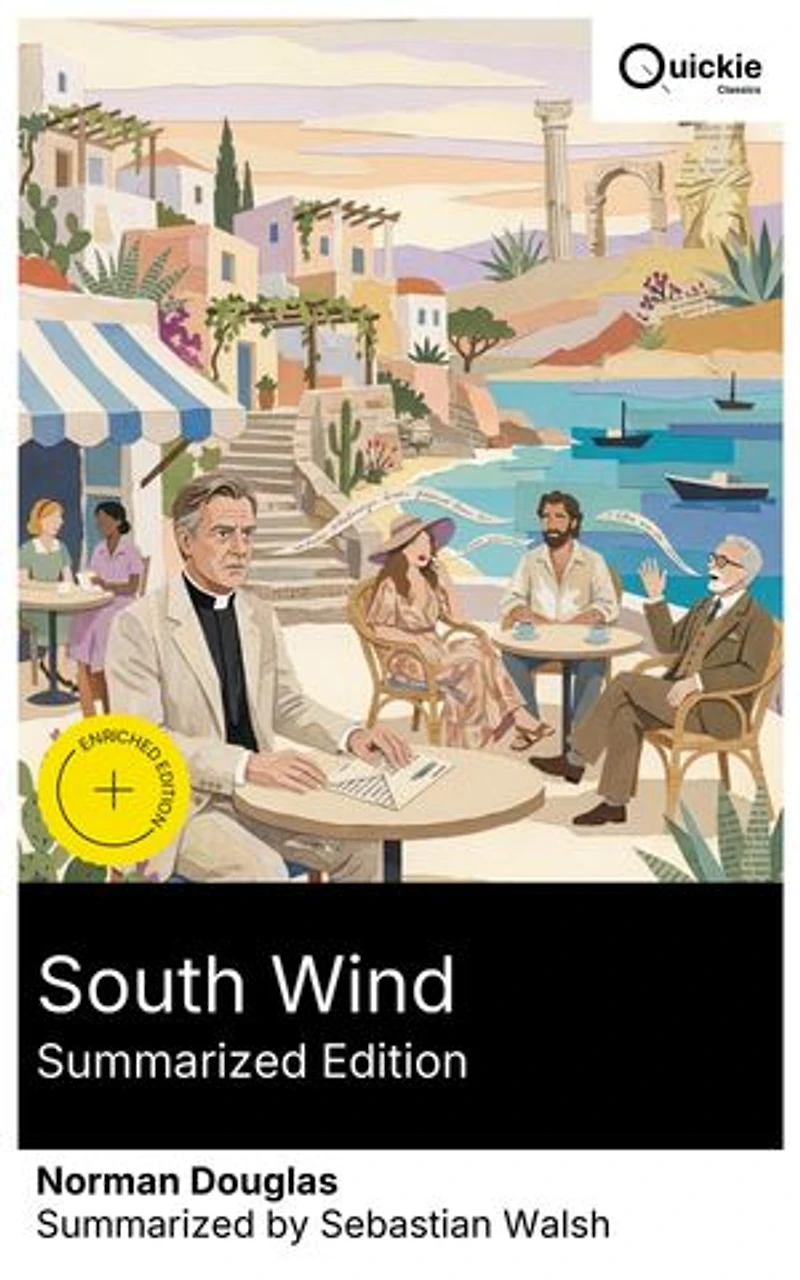
South Wind (Summarized Edition): Enriched edition. A lush Mediterranean portrait of exile, introspective hedonism, island life, and complex, eccentric souls in a philosophical romance in Ottawa, ON
Current price: $2.99

South Wind (Summarized Edition): Enriched edition. A lush Mediterranean portrait of exile, introspective hedonism, island life, and complex, eccentric souls in a philosophical romance in Ottawa, ON
Current price: $2.99
Loading Inventory...
Size: Kobo eBook
*Product information may vary - to confirm product availability, pricing, shipping and return information please contact Coles
South Wind (1917) unfolds on the sun-struck island of Nepenthe, a scarcely veiled Capri, where the sirocco's languor dissolves imported certainties. Through the visit of Bishop Thomas Heard and a gallery of expatriates, sensualists, and savants, Douglas orchestrates a novel of talk rather than plot, its energies residing in crystalline description, epigrammatic dialogue, and sly classical allusion. Morality, religion, and empire are not so much debated as tested against Mediterranean paganism; anecdote, gossip, and travelogue blend into a satiric, hedonistic anthropology of place. Norman Douglas, a cosmopolitan classicist and lifelong devotee of the Mediterranean, wrote from intimate residence on Capri and from a naturalist's eye honed in travel and study. His background in languages, folklore, and botany, together with an exile's skepticism of northern moralism, informs every page: the flora catalogued with exactitude, the ruins read as palimpsests, the talk salted with learned mischief. Old Calabria and his essays anticipate the book's preference for observation over doctrine. Readers who relish ironical conversation novels—from Anatole France to Maugham—and those curious about the transition from late-Edwardian aestheticism to modernist disillusion will find South Wind enduringly fresh. It rewards slow reading, a tolerance for ambiguity, and a taste for sunlit heresy. Quickie Classics summarizes timeless works with precision, preserving the author's voice and keeping the prose clear, fast, and readable—distilled, never diluted. Enriched Edition extras: Introduction · Synopsis · Historical Context · Brief Analysis · 4 Reflection Q&As · Editorial Footnotes.
South Wind (1917) unfolds on the sun-struck island of Nepenthe, a scarcely veiled Capri, where the sirocco's languor dissolves imported certainties. Through the visit of Bishop Thomas Heard and a gallery of expatriates, sensualists, and savants, Douglas orchestrates a novel of talk rather than plot, its energies residing in crystalline description, epigrammatic dialogue, and sly classical allusion. Morality, religion, and empire are not so much debated as tested against Mediterranean paganism; anecdote, gossip, and travelogue blend into a satiric, hedonistic anthropology of place. Norman Douglas, a cosmopolitan classicist and lifelong devotee of the Mediterranean, wrote from intimate residence on Capri and from a naturalist's eye honed in travel and study. His background in languages, folklore, and botany, together with an exile's skepticism of northern moralism, informs every page: the flora catalogued with exactitude, the ruins read as palimpsests, the talk salted with learned mischief. Old Calabria and his essays anticipate the book's preference for observation over doctrine. Readers who relish ironical conversation novels—from Anatole France to Maugham—and those curious about the transition from late-Edwardian aestheticism to modernist disillusion will find South Wind enduringly fresh. It rewards slow reading, a tolerance for ambiguity, and a taste for sunlit heresy. Quickie Classics summarizes timeless works with precision, preserving the author's voice and keeping the prose clear, fast, and readable—distilled, never diluted. Enriched Edition extras: Introduction · Synopsis · Historical Context · Brief Analysis · 4 Reflection Q&As · Editorial Footnotes.
You May Also Like

















More About Coles at Bayshore Shopping Centre
Coles is renowned for its outstanding customer service and great selection of books. Along with the vast array of magazines, stationary, audio-books, children's literature, fiction, non-fiction and reference books, you can find accessories to make your reading experience more pleasurable. We can recommend the very best in reading today. We will help you search our titles for exactly what you need, and if we do not have it in stock, we will order it for you.
100 Bayshore Dr, Nepean, ON K2B 8C1, Canada
Find Coles at Bayshore Shopping Centre in Ottawa, ON
Visit Coles at Bayshore Shopping Centre in Ottawa, ON