

Give the Gift of Choice!
Too many options? Treat your friends and family to their favourite stores with a Bayshore Shopping Centre gift card, redeemable at participating retailers throughout the centre. Click below to purchase yours today!Purchase HereHome
Strict Negative Concord in Slavic and Finno-Ugric: Licensing, Structure and Interpretation
Coles
Loading Inventory...
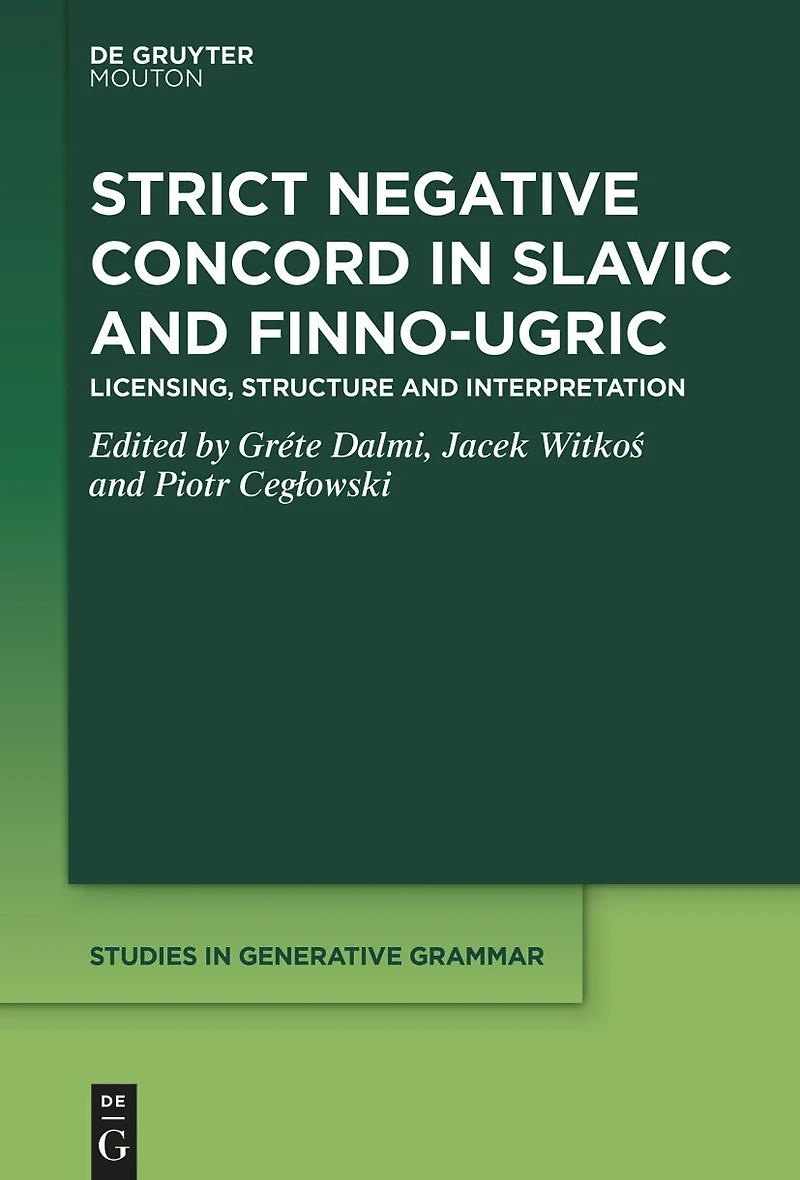
Strict Negative Concord in Slavic and Finno-Ugric: Licensing, Structure and Interpretation in Ottawa, ON
Current price: $244.99

Strict Negative Concord in Slavic and Finno-Ugric: Licensing, Structure and Interpretation in Ottawa, ON
Current price: $244.99
Loading Inventory...
Size: Hardcover
*Product information may vary - to confirm product availability, pricing, shipping and return information please contact Coles
Expressing negation is a universal property of all human languages. There is considerable variation, however, in the exact ways negation materializes cross-linguistically. Strict Negative Concord differs both from the Negative Polarity Item strategy and the Asymmetric Negative Concord strategy in that the sentence becomes negative only if the sentence negator is overtly expressed in it, irrespective of how many negative expressions are used. The central aim of this book is to describe Strict Negative Concord in some Slavic and Finno-Ugric languages. In particular, the volume gives an insight into the forms Strict Negative Concord manifests itself in Russian, Polish, Czech, Slovenian (Slavic), Finnish, Hungarian, Mari (Finno-Ugric) and the closely related Selkup (Samoyedic) to a wide linguistic community. It aims to create a platform for comparison with similar phenomena in well-described European languages.
Expressing negation is a universal property of all human languages. There is considerable variation, however, in the exact ways negation materializes cross-linguistically. Strict Negative Concord differs both from the Negative Polarity Item strategy and the Asymmetric Negative Concord strategy in that the sentence becomes negative only if the sentence negator is overtly expressed in it, irrespective of how many negative expressions are used. The central aim of this book is to describe Strict Negative Concord in some Slavic and Finno-Ugric languages. In particular, the volume gives an insight into the forms Strict Negative Concord manifests itself in Russian, Polish, Czech, Slovenian (Slavic), Finnish, Hungarian, Mari (Finno-Ugric) and the closely related Selkup (Samoyedic) to a wide linguistic community. It aims to create a platform for comparison with similar phenomena in well-described European languages.
You May Also Like













More About Coles at Bayshore Shopping Centre
Coles is renowned for its outstanding customer service and great selection of books. Along with the vast array of magazines, stationary, audio-books, children's literature, fiction, non-fiction and reference books, you can find accessories to make your reading experience more pleasurable. We can recommend the very best in reading today. We will help you search our titles for exactly what you need, and if we do not have it in stock, we will order it for you.
100 Bayshore Dr, Nepean, ON K2B 8C1, Canada
Find Coles at Bayshore Shopping Centre in Ottawa, ON
Visit Coles at Bayshore Shopping Centre in Ottawa, ON