

Give the Gift of Choice!
Too many options? Treat your friends and family to their favourite stores with a Bayshore Shopping Centre gift card, redeemable at participating retailers throughout the centre. Click below to purchase yours today!Purchase HereHome
Study of some dark energy and string models in certain alternative theories of gravitation
Coles
Loading Inventory...
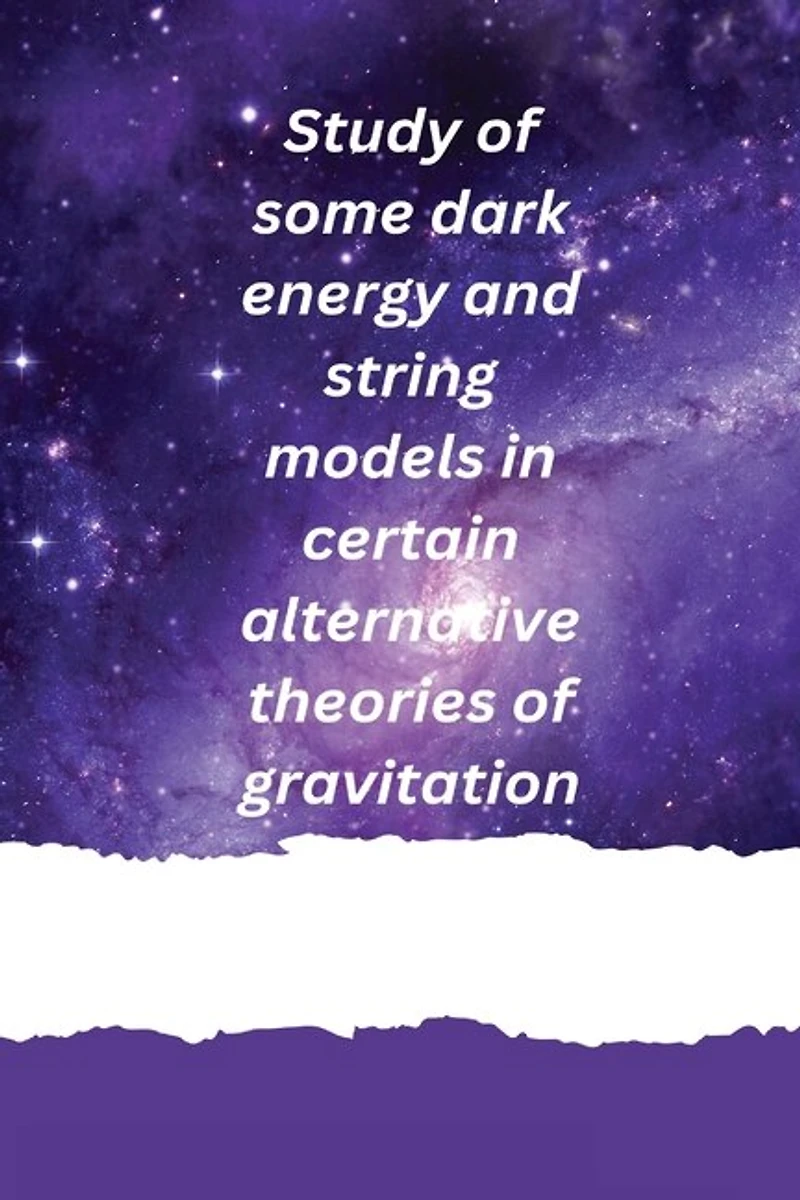
Study of some dark energy and string models in certain alternative theories of gravitation in Ottawa, ON
Current price: $48.99

Study of some dark energy and string models in certain alternative theories of gravitation in Ottawa, ON
Current price: $48.99
Loading Inventory...
Size: Paperback
*Product information may vary - to confirm product availability, pricing, shipping and return information please contact Coles
This thesis titled "Study of Some Dark Energy and String Models in Certain Alternative Theories of Gravitation" consists of eight chapters and deals with the investigation of some spatially homogeneous and anisotropic cosmological models in the frame work of Brans-Dicke (1961) and Saez-Ballester (1986) scalar-tensor theories, Barber's (1982) second self-creation theory and f(R, T ) modified theory of gravity (Harko et al. 2011), which are viable alternatives to Einstein's theory of gravitation. The main aim of cosmology is to construct mathematical models of the universe and compare these models with the present day universe as observed by astronomers. A full picture should comprise both an inventory of the present matter content (including its spatial distribution) and an understanding of the dynamics governing past and future evolution of the universe as a whole. Technological advances have brought an increasing ability to gather enormous quantities of data to further our understanding.
This thesis titled "Study of Some Dark Energy and String Models in Certain Alternative Theories of Gravitation" consists of eight chapters and deals with the investigation of some spatially homogeneous and anisotropic cosmological models in the frame work of Brans-Dicke (1961) and Saez-Ballester (1986) scalar-tensor theories, Barber's (1982) second self-creation theory and f(R, T ) modified theory of gravity (Harko et al. 2011), which are viable alternatives to Einstein's theory of gravitation. The main aim of cosmology is to construct mathematical models of the universe and compare these models with the present day universe as observed by astronomers. A full picture should comprise both an inventory of the present matter content (including its spatial distribution) and an understanding of the dynamics governing past and future evolution of the universe as a whole. Technological advances have brought an increasing ability to gather enormous quantities of data to further our understanding.
You May Also Like








More About Coles at Bayshore Shopping Centre
Coles is renowned for its outstanding customer service and great selection of books. Along with the vast array of magazines, stationary, audio-books, children's literature, fiction, non-fiction and reference books, you can find accessories to make your reading experience more pleasurable. We can recommend the very best in reading today. We will help you search our titles for exactly what you need, and if we do not have it in stock, we will order it for you.
100 Bayshore Dr, Nepean, ON K2B 8C1, Canada
Find Coles at Bayshore Shopping Centre in Ottawa, ON
Visit Coles at Bayshore Shopping Centre in Ottawa, ON