

Give the Gift of Choice!
Too many options? Treat your friends and family to their favourite stores with a Bayshore Shopping Centre gift card, redeemable at participating retailers throughout the centre. Click below to purchase yours today!Purchase HereHome
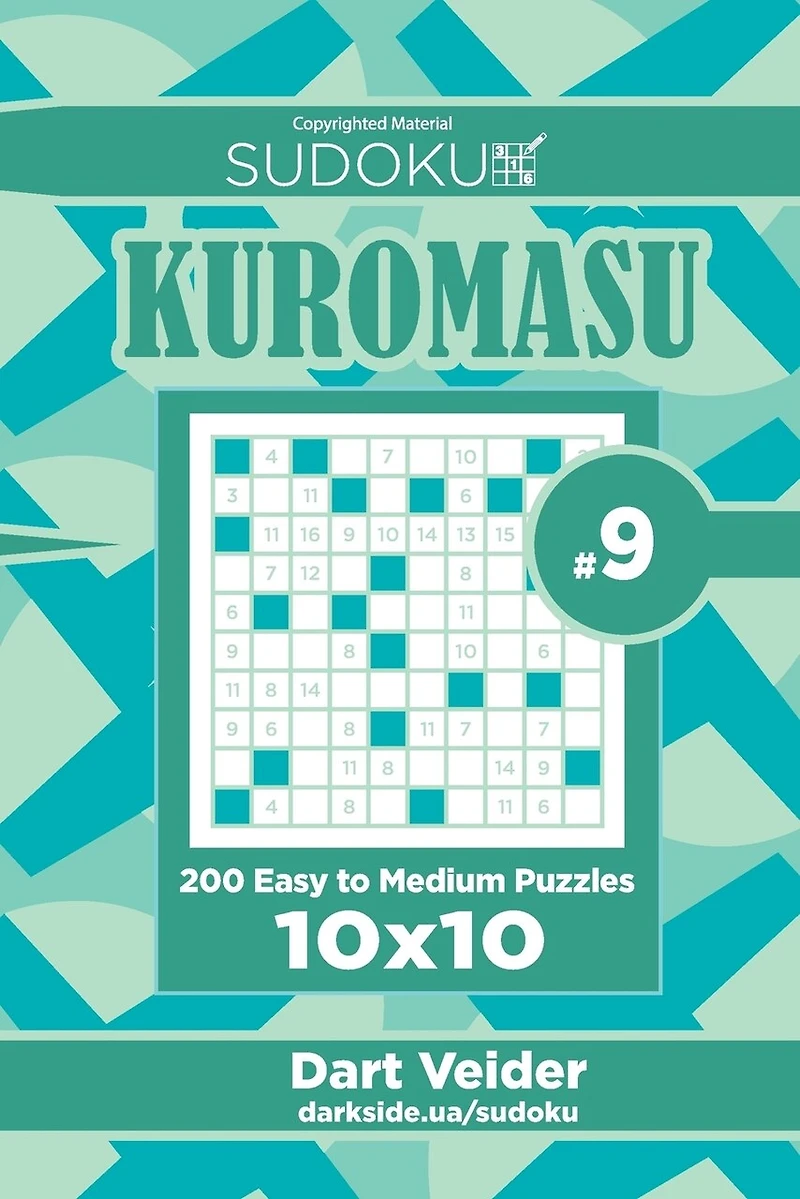
Sudoku Kuromasu - 200 Easy to Medium Puzzles 10x10 (Volume 9)
Coles
Loading Inventory...
Sudoku Kuromasu - 200 Easy to Medium Puzzles 10x10 (Volume 9) in Ottawa, ON
Current price: $9.50

Sudoku Kuromasu - 200 Easy to Medium Puzzles 10x10 (Volume 9) in Ottawa, ON
Current price: $9.50
Loading Inventory...
Size: Paperback
*Product information may vary - to confirm product availability, pricing, shipping and return information please contact Coles
Kuromasu (from Japanese " kuromasu wa doko da ", literally " Where is Black Cells? "; also known as " Kurodoko ") is played on a rectangular grid. Some of these cells have numbers in them. Each cell may be either black or white. The object is to determine what type each cell is.
The following rules determine which cells are which:
- Each number on the board represents the number of white cells that can be seen from that cell, including itself. A cell can be seen from another cell if they are in the same row or column, and there are no black cells between them in that row or column.
- Numbered cells may not be black.
- No two black cells may be horizontally or vertically adjacent.
- All the white cells must be connected horizontally or vertically.
Kuromasu (from Japanese " kuromasu wa doko da ", literally " Where is Black Cells? "; also known as " Kurodoko ") is played on a rectangular grid. Some of these cells have numbers in them. Each cell may be either black or white. The object is to determine what type each cell is.
The following rules determine which cells are which:
- Each number on the board represents the number of white cells that can be seen from that cell, including itself. A cell can be seen from another cell if they are in the same row or column, and there are no black cells between them in that row or column.
- Numbered cells may not be black.
- No two black cells may be horizontally or vertically adjacent.
- All the white cells must be connected horizontally or vertically.
You May Also Like







More About Coles at Bayshore Shopping Centre
Coles is renowned for its outstanding customer service and great selection of books. Along with the vast array of magazines, stationary, audio-books, children's literature, fiction, non-fiction and reference books, you can find accessories to make your reading experience more pleasurable. We can recommend the very best in reading today. We will help you search our titles for exactly what you need, and if we do not have it in stock, we will order it for you.
100 Bayshore Dr, Nepean, ON K2B 8C1, Canada
Find Coles at Bayshore Shopping Centre in Ottawa, ON
Visit Coles at Bayshore Shopping Centre in Ottawa, ON