

Give the Gift of Choice!
Too many options? Treat your friends and family to their favourite stores with a Bayshore Shopping Centre gift card, redeemable at participating retailers throughout the centre. Click below to purchase yours today!Purchase HereHome
Technocracy and Political Truth: An Inquiry into the Singularity of Judgment
Coles
Loading Inventory...
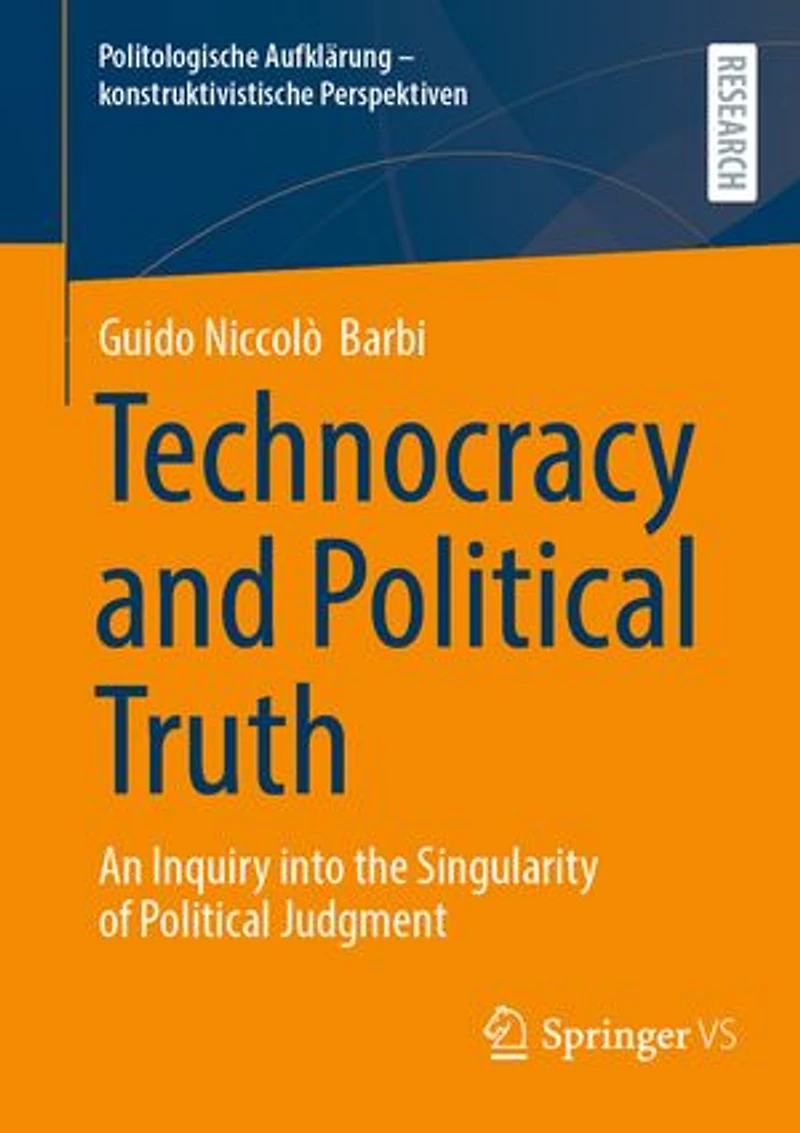
Technocracy and Political Truth: An Inquiry into the Singularity of Judgment in Ottawa, ON
Current price: $128.99
Original price: $161.25

Technocracy and Political Truth: An Inquiry into the Singularity of Judgment in Ottawa, ON
Current price: $128.99
Original price: $161.25
Loading Inventory...
Size: Kobo eBook
*Product information may vary - to confirm product availability, pricing, shipping and return information please contact Coles
The inability to envision political alternatives & or, to use Arendt&s terminology, to make new beginnings & is a key component of today&s democratic crisis. In its first part, this study shows that this situation results from the growing technocratization of both government and the democratic public sphere, which hinders the ability to form new political judgments. By analyzing rationalized bureaucracy, which substitutes automated procedures for political decision, and mass democracy, which permits the infinite expansion of the administration&s purview, an account of technocracy as administrative, non-political rule is constructed. The book&s second part expands on this diagnosis by examining how political judgment differs from epistemic reasoning. This examination puts into dialogue Arendt, Kant, and Vico, reviving a humanist understanding of common sense ( sensus communis ) and ingenuity ( ingenium ). This allows us to rethink political judgment as both cognitively immediate and reflectively plural, showcasing how technocratic decision-making illegitimately delimits the horizon for political judgments and new beginnings.
The inability to envision political alternatives & or, to use Arendt&s terminology, to make new beginnings & is a key component of today&s democratic crisis. In its first part, this study shows that this situation results from the growing technocratization of both government and the democratic public sphere, which hinders the ability to form new political judgments. By analyzing rationalized bureaucracy, which substitutes automated procedures for political decision, and mass democracy, which permits the infinite expansion of the administration&s purview, an account of technocracy as administrative, non-political rule is constructed. The book&s second part expands on this diagnosis by examining how political judgment differs from epistemic reasoning. This examination puts into dialogue Arendt, Kant, and Vico, reviving a humanist understanding of common sense ( sensus communis ) and ingenuity ( ingenium ). This allows us to rethink political judgment as both cognitively immediate and reflectively plural, showcasing how technocratic decision-making illegitimately delimits the horizon for political judgments and new beginnings.
You May Also Like









More About Coles at Bayshore Shopping Centre
Coles is renowned for its outstanding customer service and great selection of books. Along with the vast array of magazines, stationary, audio-books, children's literature, fiction, non-fiction and reference books, you can find accessories to make your reading experience more pleasurable. We can recommend the very best in reading today. We will help you search our titles for exactly what you need, and if we do not have it in stock, we will order it for you.
100 Bayshore Dr, Nepean, ON K2B 8C1, Canada
Find Coles at Bayshore Shopping Centre in Ottawa, ON
Visit Coles at Bayshore Shopping Centre in Ottawa, ON