

Give the Gift of Choice!
Too many options? Treat your friends and family to their favourite stores with a Bayshore Shopping Centre gift card, redeemable at participating retailers throughout the centre. Click below to purchase yours today!Purchase HereHome
Temperament and Behavior: Exploring the Socio-Emotional Domain
Coles
Loading Inventory...
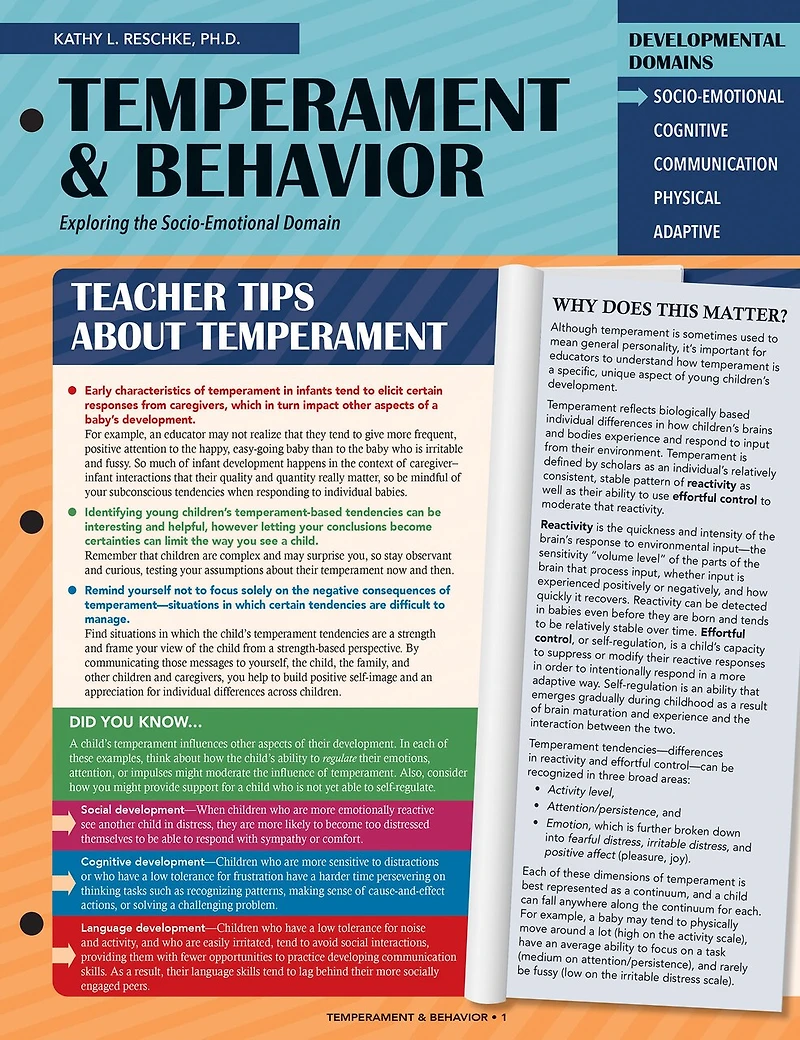
Temperament and Behavior: Exploring the Socio-Emotional Domain in Ottawa, ON
Current price: $87.95

Temperament and Behavior: Exploring the Socio-Emotional Domain in Ottawa, ON
Current price: $87.95
Loading Inventory...
Size: Loose Leaf
*Product information may vary - to confirm product availability, pricing, shipping and return information please contact Coles
Part of the Quick Reference Guides for Early Childhood Best Practices, this convenient pack of 5 laminated, six-page primers gives early childhood educators practical guidance on how temperament affects early development—and how teachers should consider temperament when caring for and teaching children. Colorful graphics, lists, and tips instantly engage teachers and give them an at-a-glance understanding of:
expressions of temperament and how they develop over time
the impact of temperament on social, cognitive, and language development
ways to provide a “good fit for the wide range of temperaments in a classroom
myths and facts about shyness
strategies for supporting emerging self-regulation, regardless of children's temperament
These developmentally appropriate practices are ready to use with children from birth to five across settings: in homes, classrooms, or professional learning environments. About the Quick Reference Guides for Early Childhood Best Practices Perfect for professional learning, these 16 Quick Reference Guides will put practical knowledge and ready-to-use strategies in the hands of every educator in your early childhood program. Developed by an early childhood expert with more than 40 years of experience in the field, these laminated, six-page primers cover specific topics with explicit links to core developmental domains: cognitive, physical, socio-emotional, communication, and adaptive. Teachers of children from birth to five will get tips they can trust on developmentally appropriate practices—not only within developmental domains, but in other key areas with a broad effect on a child's life (such as mealtime, friendships, and creativity).
Part of the Quick Reference Guides for Early Childhood Best Practices, this convenient pack of 5 laminated, six-page primers gives early childhood educators practical guidance on how temperament affects early development—and how teachers should consider temperament when caring for and teaching children. Colorful graphics, lists, and tips instantly engage teachers and give them an at-a-glance understanding of:
expressions of temperament and how they develop over time
the impact of temperament on social, cognitive, and language development
ways to provide a “good fit for the wide range of temperaments in a classroom
myths and facts about shyness
strategies for supporting emerging self-regulation, regardless of children's temperament
These developmentally appropriate practices are ready to use with children from birth to five across settings: in homes, classrooms, or professional learning environments. About the Quick Reference Guides for Early Childhood Best Practices Perfect for professional learning, these 16 Quick Reference Guides will put practical knowledge and ready-to-use strategies in the hands of every educator in your early childhood program. Developed by an early childhood expert with more than 40 years of experience in the field, these laminated, six-page primers cover specific topics with explicit links to core developmental domains: cognitive, physical, socio-emotional, communication, and adaptive. Teachers of children from birth to five will get tips they can trust on developmentally appropriate practices—not only within developmental domains, but in other key areas with a broad effect on a child's life (such as mealtime, friendships, and creativity).
You May Also Like












More About Coles at Bayshore Shopping Centre
Coles is renowned for its outstanding customer service and great selection of books. Along with the vast array of magazines, stationary, audio-books, children's literature, fiction, non-fiction and reference books, you can find accessories to make your reading experience more pleasurable. We can recommend the very best in reading today. We will help you search our titles for exactly what you need, and if we do not have it in stock, we will order it for you.
100 Bayshore Dr, Nepean, ON K2B 8C1, Canada
Find Coles at Bayshore Shopping Centre in Ottawa, ON
Visit Coles at Bayshore Shopping Centre in Ottawa, ON