

Give the Gift of Choice!
Too many options? Treat your friends and family to their favourite stores with a Bayshore Shopping Centre gift card, redeemable at participating retailers throughout the centre. Click below to purchase yours today!Purchase HereHome
The American Shore: Meditations on a Tale of Science Fiction by Thomas M. Disch—"Angouleme"
Coles
Loading Inventory...
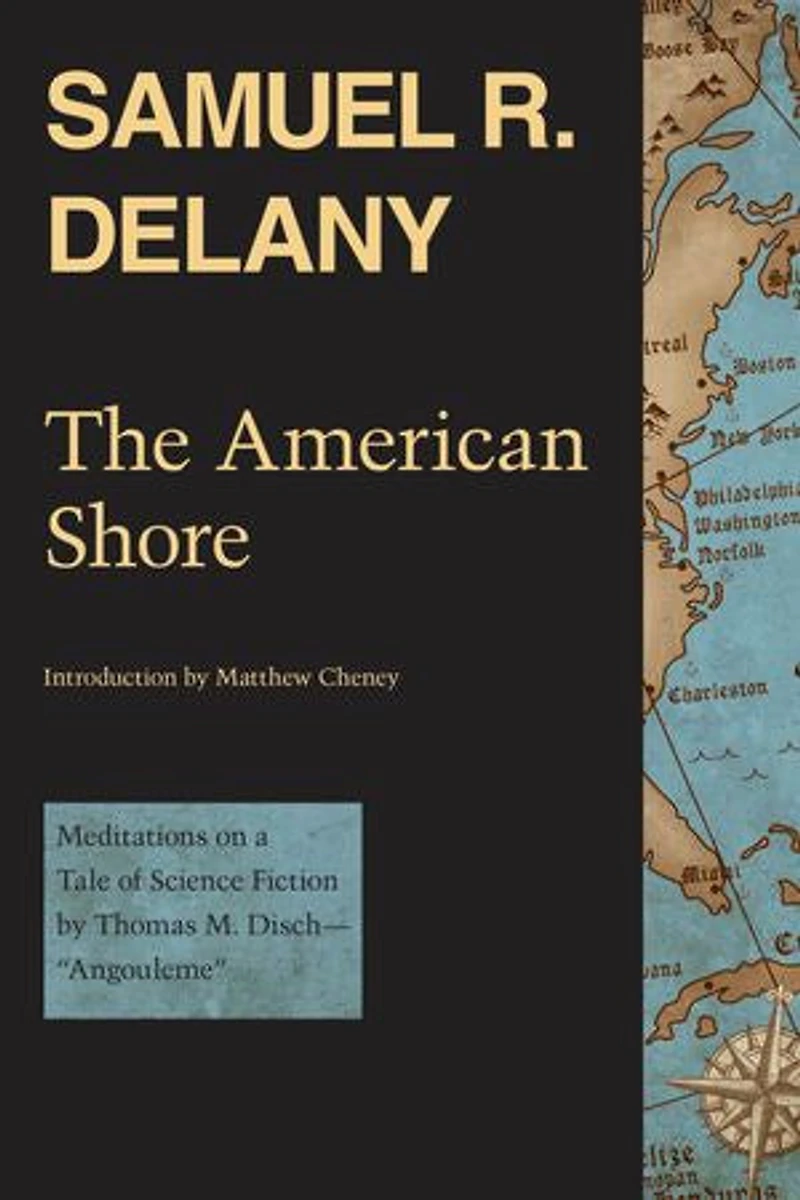
The American Shore: Meditations on a Tale of Science Fiction by Thomas M. Disch—"Angouleme" in Ottawa, ON
Current price: $17.59
Original price: $21.99

The American Shore: Meditations on a Tale of Science Fiction by Thomas M. Disch—"Angouleme" in Ottawa, ON
Current price: $17.59
Original price: $21.99
Loading Inventory...
Size: Kobo eBook
*Product information may vary - to confirm product availability, pricing, shipping and return information please contact Coles
From the four-time Nebula Award–winning author, a keystone text in literary theory and science fiction analyzing a 1972 work of dystopian fiction.
The American Shore: Meditations on a Tale of Science Fiction by Thomas M. Disch—"Angouleme" was first published in 1978 to the intense interest of science fiction readers and the growing community of SF scholars. Recalling Nabokov's commentary on Pushkin's Eugene Onegin , Roland Barthes's commentary on Balzac's Sarazine , and Grabinier's reading of The Heart of Hamlet , this book-length essay helped prove the genre worthy of serious investigation. The American Shore is the third in a series of influential critical works by Samuel R. Delany, beginning with The Jewel-Hinged Jaw and Starboard Wine , first published in the late seventies and reissued over the last five years by Wesleyan University Press, which helped win Delany a Pilgrim Award for Science Fiction Scholarship from the Science Fiction Research Association of America. This edition includes the author's corrected text as well as a new introduction by Delany scholar Matthew Cheney.
" The American Shore is an important offering in the history of science fiction criticism, rich with Delany's poetic skills and insight as a tremendous, formidable reader. It is a one of a kind book, really, and very clearly attempts a genre of its own." —Louis Chude-Sokei, University of Washington
"Delany's dive over and between the lines of "Angouleme" stands as a model of thought about all the signs and languages that produce and obscure our lives. No great text ever ends if there are still readers to read it and reread it, to diffuse it and re-fuse it, reveling in the possibilities of polysemy and dissemination." —Matthew Cheney, from the introduction
From the four-time Nebula Award–winning author, a keystone text in literary theory and science fiction analyzing a 1972 work of dystopian fiction.
The American Shore: Meditations on a Tale of Science Fiction by Thomas M. Disch—"Angouleme" was first published in 1978 to the intense interest of science fiction readers and the growing community of SF scholars. Recalling Nabokov's commentary on Pushkin's Eugene Onegin , Roland Barthes's commentary on Balzac's Sarazine , and Grabinier's reading of The Heart of Hamlet , this book-length essay helped prove the genre worthy of serious investigation. The American Shore is the third in a series of influential critical works by Samuel R. Delany, beginning with The Jewel-Hinged Jaw and Starboard Wine , first published in the late seventies and reissued over the last five years by Wesleyan University Press, which helped win Delany a Pilgrim Award for Science Fiction Scholarship from the Science Fiction Research Association of America. This edition includes the author's corrected text as well as a new introduction by Delany scholar Matthew Cheney.
" The American Shore is an important offering in the history of science fiction criticism, rich with Delany's poetic skills and insight as a tremendous, formidable reader. It is a one of a kind book, really, and very clearly attempts a genre of its own." —Louis Chude-Sokei, University of Washington
"Delany's dive over and between the lines of "Angouleme" stands as a model of thought about all the signs and languages that produce and obscure our lives. No great text ever ends if there are still readers to read it and reread it, to diffuse it and re-fuse it, reveling in the possibilities of polysemy and dissemination." —Matthew Cheney, from the introduction
You May Also Like














More About Coles at Bayshore Shopping Centre
Coles is renowned for its outstanding customer service and great selection of books. Along with the vast array of magazines, stationary, audio-books, children's literature, fiction, non-fiction and reference books, you can find accessories to make your reading experience more pleasurable. We can recommend the very best in reading today. We will help you search our titles for exactly what you need, and if we do not have it in stock, we will order it for you.
100 Bayshore Dr, Nepean, ON K2B 8C1, Canada
Find Coles at Bayshore Shopping Centre in Ottawa, ON
Visit Coles at Bayshore Shopping Centre in Ottawa, ON