

Give the Gift of Choice!
Too many options? Treat your friends and family to their favourite stores with a Bayshore Shopping Centre gift card, redeemable at participating retailers throughout the centre. Click below to purchase yours today!Purchase HereHome
The Collected Sermons of Jim Jones: The Collected Sermons of Jim Jones, #8
Coles
Loading Inventory...
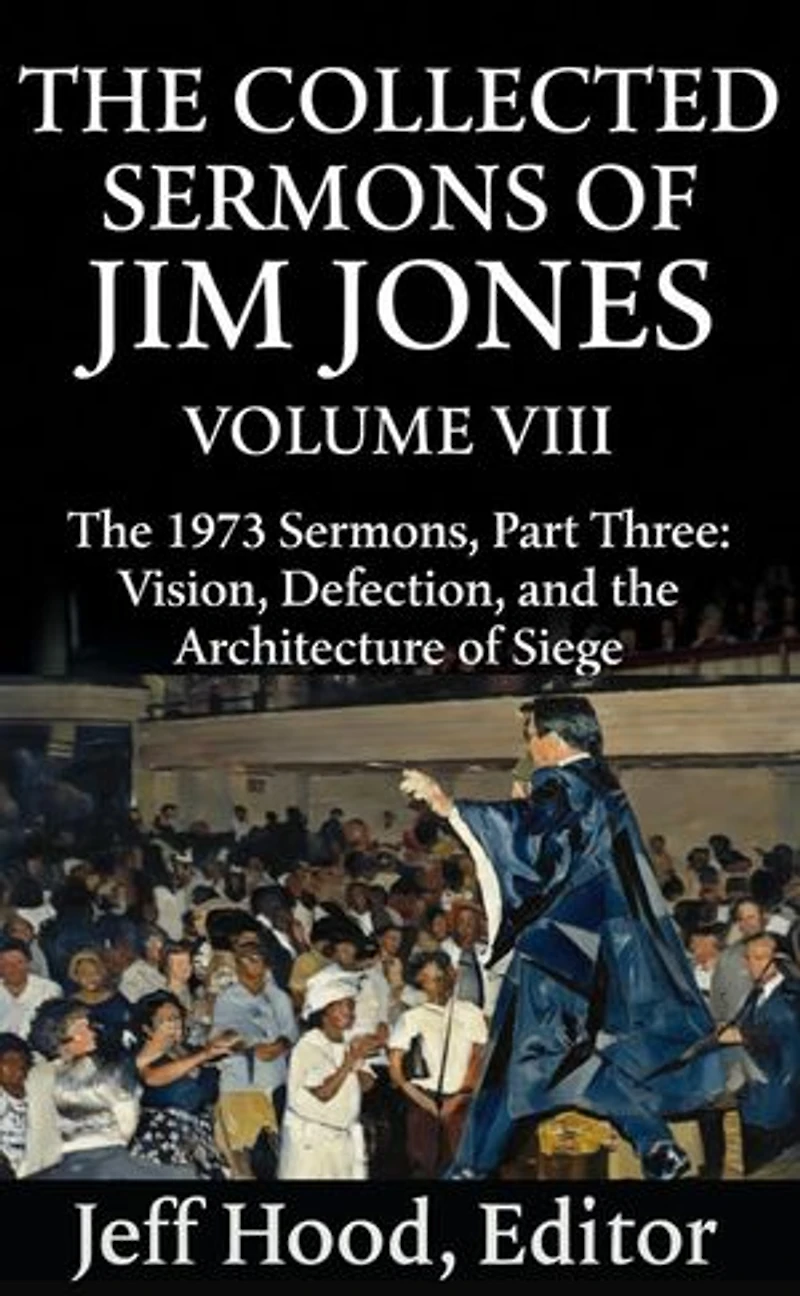
The Collected Sermons of Jim Jones: The Collected Sermons of Jim Jones, #8 in Ottawa, ON
Current price: $17.99

The Collected Sermons of Jim Jones: The Collected Sermons of Jim Jones, #8 in Ottawa, ON
Current price: $17.99
Loading Inventory...
Size: Kobo eBook
*Product information may vary - to confirm product availability, pricing, shipping and return information please contact Coles
The Collected Sermons of Jim Jones, Volume VIII: The 1973 Sermons, Part Three — Vision, Defection, and the Architecture of Siege presents nine full sermon transcripts from the Q-number archive — Q1023, Q1027, Q1053-4, Q1057-2, Q1057-3, Q1057-4, Q1059-1, Q1059-3, and Q1059-4 — capturing Jim Jones at a pivotal and darkening moment in the history of Peoples Temple.
By late 1973, the Temple was at its largest and most committed. The Guyanese agricultural project that would become Jonestown was moving from vision toward reality. Jones preached with the energy of a man who believed he was building something that would outlast him — a revolutionary communalism rooted in racial, social, and economic equality. These sermons preserve that energy in full: the miracle testimonies, the offering calls, the congregation's ecstatic responses, the theological debates about God, Christ, socialism, and the nature of love. They also preserve something more troubling — the mechanisms of control becoming increasingly explicit. The sermons on defection, takeover, and internal discipline reveal Jones hardening the community's boundaries in ways that would make departure nearly impossible. As editor Jeff Hood observes in his volume introduction, by the end of 1973 the Peoples Temple was functioning less like a voluntary community and more like a total institution.
The transcripts are presented with their original Q-number designations, the cataloguing system imposed by federal investigators after November 18, 1978, and maintained by the Jonestown Institute. Each sermon is introduced with brief editorial context situating it within the arc of Jones's development as both preacher and manipulator.
The Collected Sermons of Jim Jones, Volume VIII: The 1973 Sermons, Part Three — Vision, Defection, and the Architecture of Siege presents nine full sermon transcripts from the Q-number archive — Q1023, Q1027, Q1053-4, Q1057-2, Q1057-3, Q1057-4, Q1059-1, Q1059-3, and Q1059-4 — capturing Jim Jones at a pivotal and darkening moment in the history of Peoples Temple.
By late 1973, the Temple was at its largest and most committed. The Guyanese agricultural project that would become Jonestown was moving from vision toward reality. Jones preached with the energy of a man who believed he was building something that would outlast him — a revolutionary communalism rooted in racial, social, and economic equality. These sermons preserve that energy in full: the miracle testimonies, the offering calls, the congregation's ecstatic responses, the theological debates about God, Christ, socialism, and the nature of love. They also preserve something more troubling — the mechanisms of control becoming increasingly explicit. The sermons on defection, takeover, and internal discipline reveal Jones hardening the community's boundaries in ways that would make departure nearly impossible. As editor Jeff Hood observes in his volume introduction, by the end of 1973 the Peoples Temple was functioning less like a voluntary community and more like a total institution.
The transcripts are presented with their original Q-number designations, the cataloguing system imposed by federal investigators after November 18, 1978, and maintained by the Jonestown Institute. Each sermon is introduced with brief editorial context situating it within the arc of Jones's development as both preacher and manipulator.
You May Also Like








More About Coles at Bayshore Shopping Centre
Coles is renowned for its outstanding customer service and great selection of books. Along with the vast array of magazines, stationary, audio-books, children's literature, fiction, non-fiction and reference books, you can find accessories to make your reading experience more pleasurable. We can recommend the very best in reading today. We will help you search our titles for exactly what you need, and if we do not have it in stock, we will order it for you.
100 Bayshore Dr, Nepean, ON K2B 8C1, Canada
Find Coles at Bayshore Shopping Centre in Ottawa, ON
Visit Coles at Bayshore Shopping Centre in Ottawa, ON