

Give the Gift of Choice!
Too many options? Treat your friends and family to their favourite stores with a Bayshore Shopping Centre gift card, redeemable at participating retailers throughout the centre. Click below to purchase yours today!Purchase HereHome
The Complete Software Engineering Lifecycle: Methods, Patterns, and Implementation
Coles
Loading Inventory...
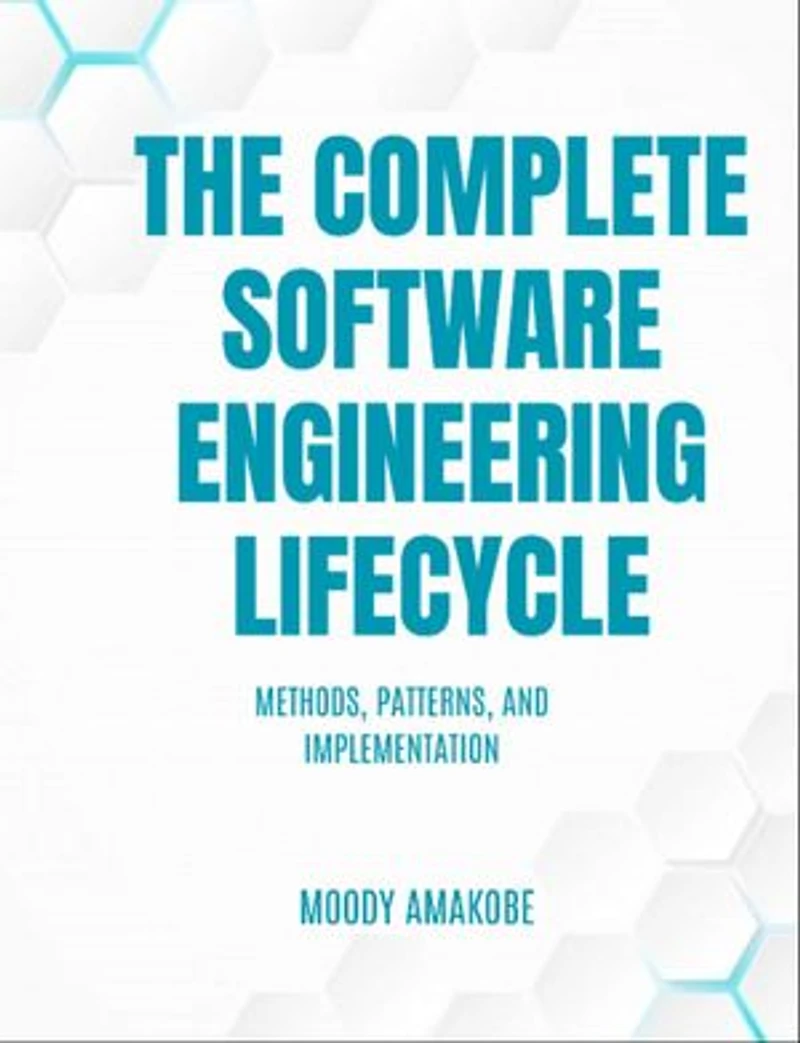
The Complete Software Engineering Lifecycle: Methods, Patterns, and Implementation in Ottawa, ON
Current price: $35.99
Original price: $44.99

The Complete Software Engineering Lifecycle: Methods, Patterns, and Implementation in Ottawa, ON
Current price: $35.99
Original price: $44.99
Loading Inventory...
Size: Kobo eBook
*Product information may vary - to confirm product availability, pricing, shipping and return information please contact Coles
Software engineering is not a collection of concepts to memorize; it is a sequence of decisions to make. This textbook is built around that conviction.
Written for graduate and upper-division undergraduate students, Software Engineering: A Practice-Driven Introduction guides readers through the complete arc of a real software project: from the first requirements conversation to a deployed, containerized, production-ready application. Each chapter introduces a concept, then immediately puts it to work. There are no ideas here that do not have a job to do.
The book is organized around three phases that mirror industry practice. The Foundations section covers requirements engineering, systems modeling and UML, software architecture and design patterns, UI/UX design, and Agile methodology, the thinking work that determines whether a project succeeds before a line of code is written. The Construction section addresses version control workflows, continuous integration and deployment, API and data management, and cloud deployment, the building work of turning a plan into working software. The Operations and Stewardship section tackles containerization, software security, technical debt, professional ethics, and the long-term craft of maintaining systems that outlive their original authors.
Three commitments shape every chapter. Immediate application means every concept is paired with a concrete artifact that students can produce the same week they encounter it. Progressive depth means topics introduced early in the semester return later with greater complexity, so students see how engineering decisions compound over time. Honest craft means the book does not pretend software development is cleaner or more predictable than it actually is; it prepares students for the real conditions of professional practice.
Designed as an Open Educational Resource, this textbook is freely adaptable for course adoption. It is appropriate for any course in which students are expected to build, document, deploy, and reflect on a real software system.
Students who finish this book will not just understand software engineering. They will have practiced it.
Software engineering is not a collection of concepts to memorize; it is a sequence of decisions to make. This textbook is built around that conviction.
Written for graduate and upper-division undergraduate students, Software Engineering: A Practice-Driven Introduction guides readers through the complete arc of a real software project: from the first requirements conversation to a deployed, containerized, production-ready application. Each chapter introduces a concept, then immediately puts it to work. There are no ideas here that do not have a job to do.
The book is organized around three phases that mirror industry practice. The Foundations section covers requirements engineering, systems modeling and UML, software architecture and design patterns, UI/UX design, and Agile methodology, the thinking work that determines whether a project succeeds before a line of code is written. The Construction section addresses version control workflows, continuous integration and deployment, API and data management, and cloud deployment, the building work of turning a plan into working software. The Operations and Stewardship section tackles containerization, software security, technical debt, professional ethics, and the long-term craft of maintaining systems that outlive their original authors.
Three commitments shape every chapter. Immediate application means every concept is paired with a concrete artifact that students can produce the same week they encounter it. Progressive depth means topics introduced early in the semester return later with greater complexity, so students see how engineering decisions compound over time. Honest craft means the book does not pretend software development is cleaner or more predictable than it actually is; it prepares students for the real conditions of professional practice.
Designed as an Open Educational Resource, this textbook is freely adaptable for course adoption. It is appropriate for any course in which students are expected to build, document, deploy, and reflect on a real software system.
Students who finish this book will not just understand software engineering. They will have practiced it.
You May Also Like







More About Coles at Bayshore Shopping Centre
Coles is renowned for its outstanding customer service and great selection of books. Along with the vast array of magazines, stationary, audio-books, children's literature, fiction, non-fiction and reference books, you can find accessories to make your reading experience more pleasurable. We can recommend the very best in reading today. We will help you search our titles for exactly what you need, and if we do not have it in stock, we will order it for you.
100 Bayshore Dr, Nepean, ON K2B 8C1, Canada
Find Coles at Bayshore Shopping Centre in Ottawa, ON
Visit Coles at Bayshore Shopping Centre in Ottawa, ON