

Give the Gift of Choice!
Too many options? Treat your friends and family to their favourite stores with a Bayshore Shopping Centre gift card, redeemable at participating retailers throughout the centre. Click below to purchase yours today!Purchase HereHome
The Composition of Luke and Rewritten Scripture
Coles
Loading Inventory...
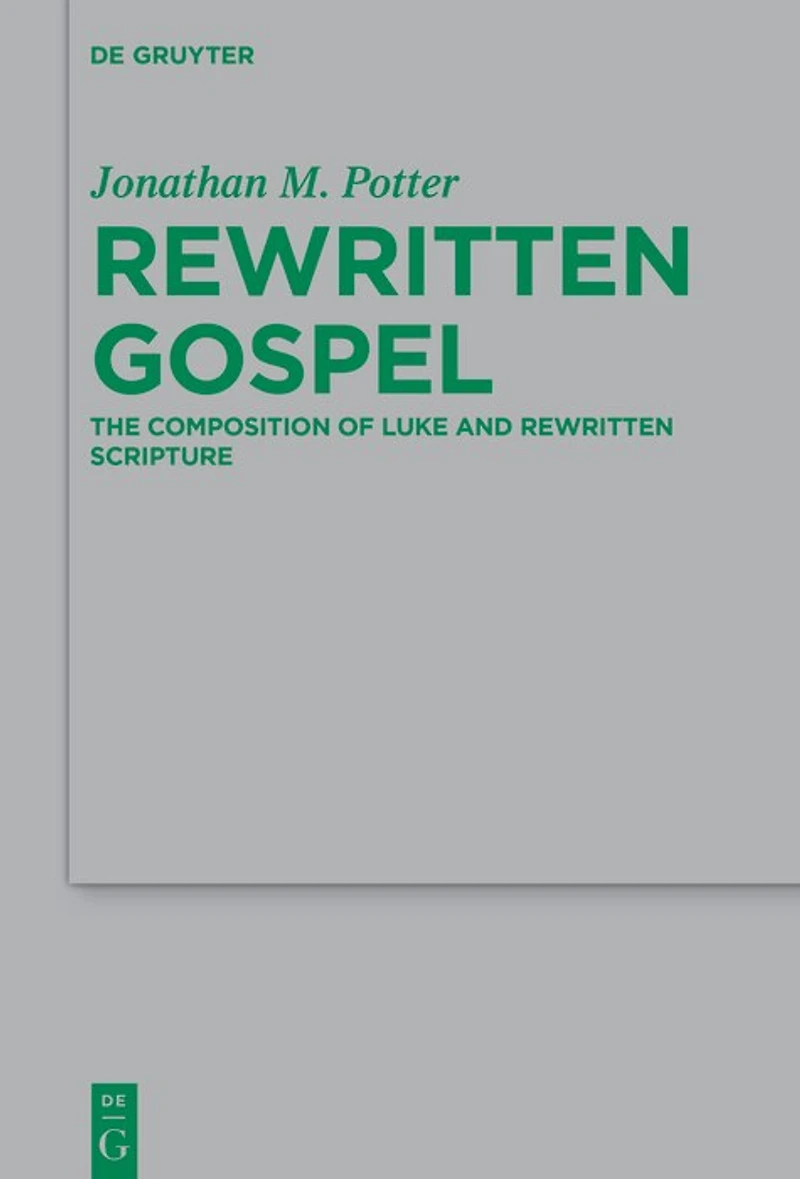
The Composition of Luke and Rewritten Scripture in Ottawa, ON
Current price: $143.49

The Composition of Luke and Rewritten Scripture in Ottawa, ON
Current price: $143.49
Loading Inventory...
Size: Hardcover
*Product information may vary - to confirm product availability, pricing, shipping and return information please contact Coles
How early Christian gospels were written is an old question that continues to engage scholars. Moving beyond the traditional approach of reading Luke as a "gentile" gospel composed primarily using Greco-Roman methods of history and biography writing, this book argues that Luke’s use of the earlier Gospel of Mark should be understood in the context of contemporaneous early Jewish writings known as "Rewritten Scripture." Texts like the Book of Jubilees and Josephus’s Antiquities interpret Scripture by rewriting it in such a way that ambiguities and contradictions are diminished, while also adapting it to contemporary beliefs and practices. A similar strategy of interpretation through rewriting best explains Luke’s reworking of Mark. Even if Mark is not yet "Scripture," Luke’s manner of rewriting Mark suggests that Luke views the earliest gospel as an authoritative narrative about Jesus that merits interpretive clarification and expansion rather than rejection or critique. This approach offers solutions to various "problems" in the composition of Luke, such as the combination of expansion and omission, verbatim repetition and free paraphrase, and it also places Luke’s compositional process within a plausible ancient literary context.
How early Christian gospels were written is an old question that continues to engage scholars. Moving beyond the traditional approach of reading Luke as a "gentile" gospel composed primarily using Greco-Roman methods of history and biography writing, this book argues that Luke’s use of the earlier Gospel of Mark should be understood in the context of contemporaneous early Jewish writings known as "Rewritten Scripture." Texts like the Book of Jubilees and Josephus’s Antiquities interpret Scripture by rewriting it in such a way that ambiguities and contradictions are diminished, while also adapting it to contemporary beliefs and practices. A similar strategy of interpretation through rewriting best explains Luke’s reworking of Mark. Even if Mark is not yet "Scripture," Luke’s manner of rewriting Mark suggests that Luke views the earliest gospel as an authoritative narrative about Jesus that merits interpretive clarification and expansion rather than rejection or critique. This approach offers solutions to various "problems" in the composition of Luke, such as the combination of expansion and omission, verbatim repetition and free paraphrase, and it also places Luke’s compositional process within a plausible ancient literary context.
You May Also Like













More About Coles at Bayshore Shopping Centre
Coles is renowned for its outstanding customer service and great selection of books. Along with the vast array of magazines, stationary, audio-books, children's literature, fiction, non-fiction and reference books, you can find accessories to make your reading experience more pleasurable. We can recommend the very best in reading today. We will help you search our titles for exactly what you need, and if we do not have it in stock, we will order it for you.
100 Bayshore Dr, Nepean, ON K2B 8C1, Canada
Find Coles at Bayshore Shopping Centre in Ottawa, ON
Visit Coles at Bayshore Shopping Centre in Ottawa, ON