

Give the Gift of Choice!
Too many options? Treat your friends and family to their favourite stores with a Bayshore Shopping Centre gift card, redeemable at participating retailers throughout the centre. Click below to purchase yours today!Purchase HereHome
The Defendant (1901). By: G. K. Chesterton: English essays
Coles
Loading Inventory...
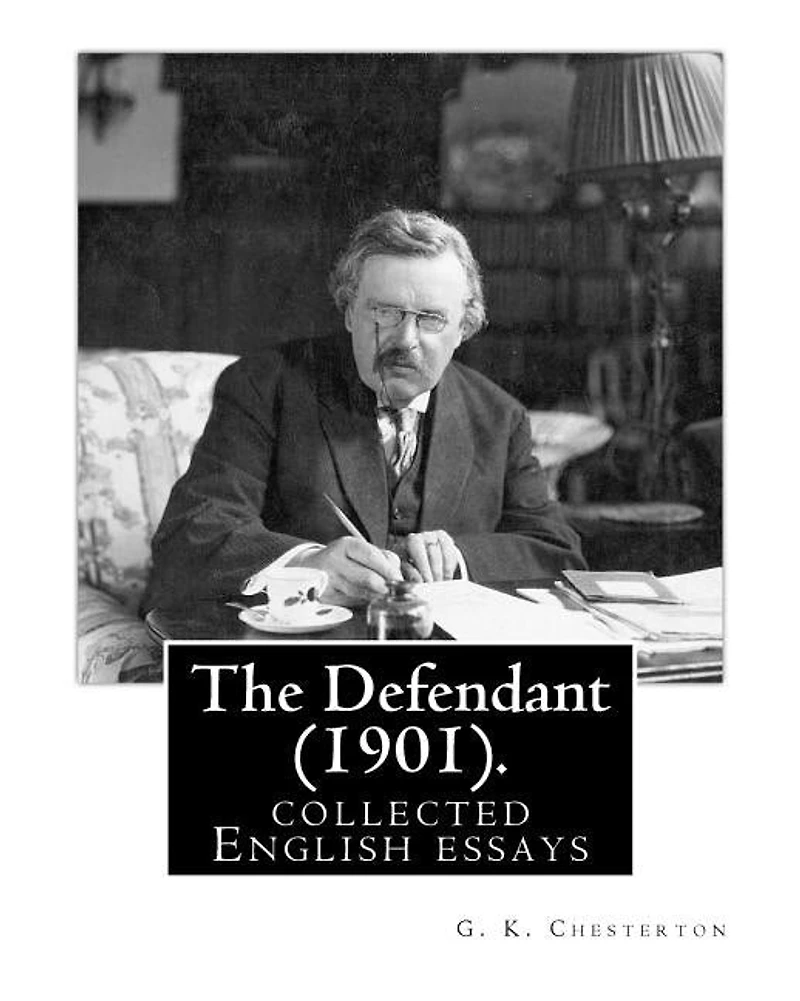
The Defendant (1901). By: G. K. Chesterton: English essays in Ottawa, ON
Current price: $9.58

The Defendant (1901). By: G. K. Chesterton: English essays in Ottawa, ON
Current price: $9.58
Loading Inventory...
Size: Paperback
*Product information may vary - to confirm product availability, pricing, shipping and return information please contact Coles
G.K. Chesterton's collected essays on subjects ranging from detective stories and penny dreadfuls to heraldry and patriotism. The essays originally appeared in "The Speaker" but were edited and revised for republication. Gilbert Keith Chesterton, KC*SG (29 May 1874 - 14 June 1936), better known as G. K. Chesterton, was an English writer, poet, philosopher, dramatist, journalist, orator, lay theologian, biographer, and literary and art critic. Chesterton is often referred to as the "prince of paradox."Time magazine has observed of his writing style: "Whenever possible Chesterton made his points with popular sayings, proverbs, allegories-first carefully turning them inside out." Chesterton is well known for his fictional priest-detective Father Brown, and for his reasoned apologetics. Even some of those who disagree with him have recognised the wide appeal of such works as Orthodoxy and The Everlasting Man.Chesterton, as a political thinker, cast aspersions on both Progressivism and Conservatism, saying, "The whole modern world has divided itself into Conservatives and Progressives. The business of Progressives is to go on making mistakes. The business of the Conservatives is to prevent the mistakes from being corrected."Chesterton routinely referred to himself as an "orthodox" Christian, and came to identify this position more and more with Catholicism, eventually converting to Catholicism from High Church Anglicanism. George Bernard Shaw, Chesterton's "friendly enemy" according to Time, said of him, "He was a man of colossal genius."Biographers have identified him as a successor to such Victorian authors as Matthew Arnold, Thomas Carlyle, Cardinal John Henry Newman, and John Ruskin.Chesterton was born in Campden Hill in Kensington, London, the son of Marie Louise, née Grosjean, and Edward Chesterton.He was baptised at the age of one month into the Church of England, though his family themselves were irregularly practising Unitarians.According to his autobiography, as a young man Chesterton became fascinated with the occult and, along with his brother Cecil, experimented with Ouija boards. Chesterton was educated at St Paul's School, then attended the Slade School of Art to become an illustrator. The Slade is a department of University College London, where Chesterton also took classes in literature, but did not complete a degree in either subject.
G.K. Chesterton's collected essays on subjects ranging from detective stories and penny dreadfuls to heraldry and patriotism. The essays originally appeared in "The Speaker" but were edited and revised for republication. Gilbert Keith Chesterton, KC*SG (29 May 1874 - 14 June 1936), better known as G. K. Chesterton, was an English writer, poet, philosopher, dramatist, journalist, orator, lay theologian, biographer, and literary and art critic. Chesterton is often referred to as the "prince of paradox."Time magazine has observed of his writing style: "Whenever possible Chesterton made his points with popular sayings, proverbs, allegories-first carefully turning them inside out." Chesterton is well known for his fictional priest-detective Father Brown, and for his reasoned apologetics. Even some of those who disagree with him have recognised the wide appeal of such works as Orthodoxy and The Everlasting Man.Chesterton, as a political thinker, cast aspersions on both Progressivism and Conservatism, saying, "The whole modern world has divided itself into Conservatives and Progressives. The business of Progressives is to go on making mistakes. The business of the Conservatives is to prevent the mistakes from being corrected."Chesterton routinely referred to himself as an "orthodox" Christian, and came to identify this position more and more with Catholicism, eventually converting to Catholicism from High Church Anglicanism. George Bernard Shaw, Chesterton's "friendly enemy" according to Time, said of him, "He was a man of colossal genius."Biographers have identified him as a successor to such Victorian authors as Matthew Arnold, Thomas Carlyle, Cardinal John Henry Newman, and John Ruskin.Chesterton was born in Campden Hill in Kensington, London, the son of Marie Louise, née Grosjean, and Edward Chesterton.He was baptised at the age of one month into the Church of England, though his family themselves were irregularly practising Unitarians.According to his autobiography, as a young man Chesterton became fascinated with the occult and, along with his brother Cecil, experimented with Ouija boards. Chesterton was educated at St Paul's School, then attended the Slade School of Art to become an illustrator. The Slade is a department of University College London, where Chesterton also took classes in literature, but did not complete a degree in either subject.
You May Also Like







More About Coles at Bayshore Shopping Centre
Coles is renowned for its outstanding customer service and great selection of books. Along with the vast array of magazines, stationary, audio-books, children's literature, fiction, non-fiction and reference books, you can find accessories to make your reading experience more pleasurable. We can recommend the very best in reading today. We will help you search our titles for exactly what you need, and if we do not have it in stock, we will order it for you.
100 Bayshore Dr, Nepean, ON K2B 8C1, Canada
Find Coles at Bayshore Shopping Centre in Ottawa, ON
Visit Coles at Bayshore Shopping Centre in Ottawa, ON