

Give the Gift of Choice!
Too many options? Treat your friends and family to their favourite stores with a Bayshore Shopping Centre gift card, redeemable at participating retailers throughout the centre. Click below to purchase yours today!Purchase HereHome
The Divine Comedy (Volume I): Paradise
Coles
Loading Inventory...
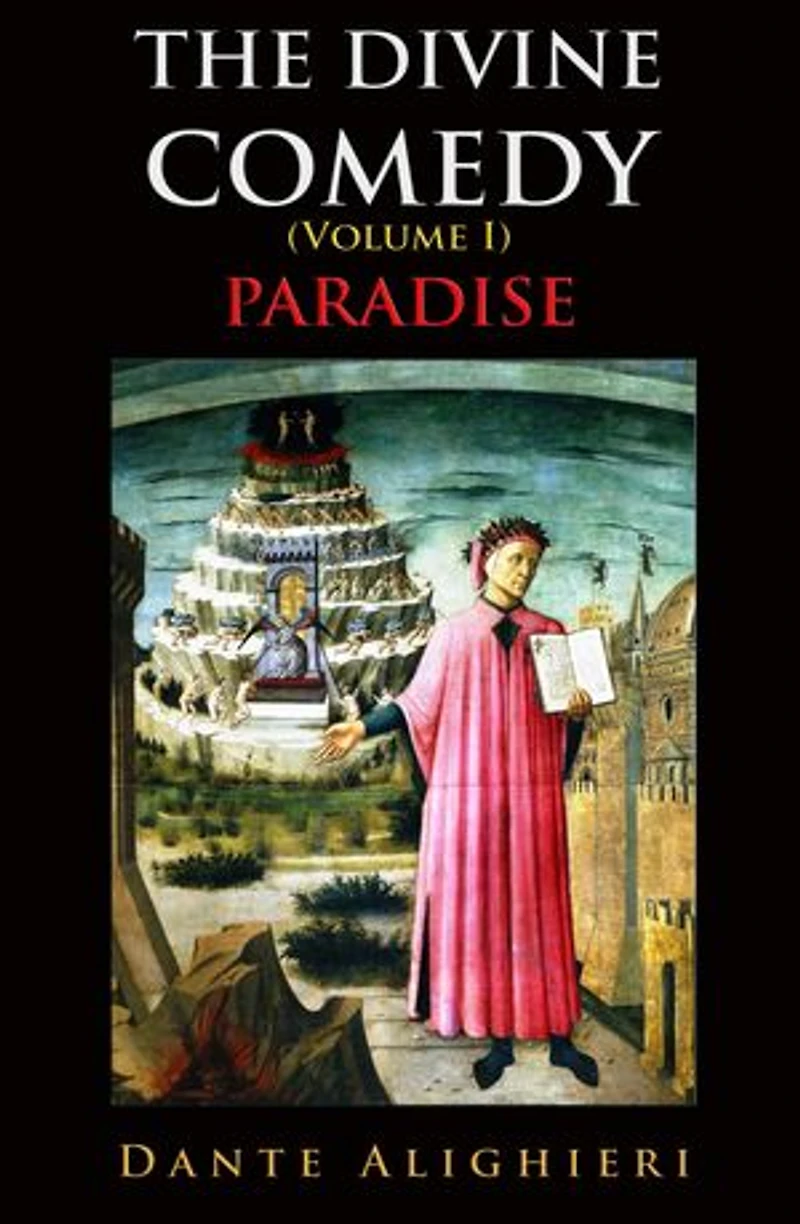
The Divine Comedy (Volume I): Paradise in Ottawa, ON
Current price: $8.99

The Divine Comedy (Volume I): Paradise in Ottawa, ON
Current price: $8.99
Loading Inventory...
Size: Kobo eBook
*Product information may vary - to confirm product availability, pricing, shipping and return information please contact Coles
The Divine Comedy describes Dante's journey through Hell (Inferno), Purgatory (Purgatorio), and Paradise (Paradiso), guided first by the Roman poet Virgil and then by Beatrice, the subject of his love and of another of his works, La Vita Nuova. While the vision of Hell, the Inferno, is vivid for modern readers, the theological niceties presented in the other books require a certain amount of patience and knowledge to appreciate. Purgatorio, the most lyrical and human of the three, also has the most poets in it; Paradiso, the most heavily theological, has the most beautiful and ecstatic mystic passages in which Dante tries to describe what he confesses he is unable to convey (e.g., when Dante looks into the face of God: "all'alta fantasia qui mancò possa" — "at this high moment, ability failed my capacity to describe," Paradiso, XXXIII, 142). His glory, by whose might all things are mov'd, Pierces the universe, and in one part Sheds more resplendence, elsewhere less. In heav'n, That largeliest of his light partakes, was I, Witness of things, which to relate again Surpasseth power of him who comes from thence; For that, so near approaching its desire Our intellect is to such depth absorb'd, That memory cannot follow. Nathless all, That in my thoughts I of that sacred realm Could store, shall now be matter of my song. Benign Apollo! this last labour aid, And make me such a vessel of thy worth, As thy own laurel claims of me belov'd. Thus far hath one of steep Parnassus' brows Suffic'd me; henceforth there is need of both For my remaining enterprise Do thou Enter into my bosom, and there breathe So, as when Marsyas by thy hand was dragg'd Forth from his limbs unsheath'd. O power divine! If thou to me of shine impart so much, That of that happy realm the shadow'd form Trac'd in my thoughts I may set forth to view, Thou shalt behold me of thy favour'd tree Come to the foot, and crown myself with leaves; For to that honour thou, and my high theme Will fit me. If but seldom, mighty Sire! To grace his triumph gathers thence a wreath Caesar or bard (more shame for human wills Deprav'd) joy to the Delphic god must spring From the Pierian foliage, when one breast Is with such thirst inspir'd. From a small spark Great flame hath risen: after me perchance Others with better voice may pray, and gain From the Cirrhaean city answer kind.
The Divine Comedy describes Dante's journey through Hell (Inferno), Purgatory (Purgatorio), and Paradise (Paradiso), guided first by the Roman poet Virgil and then by Beatrice, the subject of his love and of another of his works, La Vita Nuova. While the vision of Hell, the Inferno, is vivid for modern readers, the theological niceties presented in the other books require a certain amount of patience and knowledge to appreciate. Purgatorio, the most lyrical and human of the three, also has the most poets in it; Paradiso, the most heavily theological, has the most beautiful and ecstatic mystic passages in which Dante tries to describe what he confesses he is unable to convey (e.g., when Dante looks into the face of God: "all'alta fantasia qui mancò possa" — "at this high moment, ability failed my capacity to describe," Paradiso, XXXIII, 142). His glory, by whose might all things are mov'd, Pierces the universe, and in one part Sheds more resplendence, elsewhere less. In heav'n, That largeliest of his light partakes, was I, Witness of things, which to relate again Surpasseth power of him who comes from thence; For that, so near approaching its desire Our intellect is to such depth absorb'd, That memory cannot follow. Nathless all, That in my thoughts I of that sacred realm Could store, shall now be matter of my song. Benign Apollo! this last labour aid, And make me such a vessel of thy worth, As thy own laurel claims of me belov'd. Thus far hath one of steep Parnassus' brows Suffic'd me; henceforth there is need of both For my remaining enterprise Do thou Enter into my bosom, and there breathe So, as when Marsyas by thy hand was dragg'd Forth from his limbs unsheath'd. O power divine! If thou to me of shine impart so much, That of that happy realm the shadow'd form Trac'd in my thoughts I may set forth to view, Thou shalt behold me of thy favour'd tree Come to the foot, and crown myself with leaves; For to that honour thou, and my high theme Will fit me. If but seldom, mighty Sire! To grace his triumph gathers thence a wreath Caesar or bard (more shame for human wills Deprav'd) joy to the Delphic god must spring From the Pierian foliage, when one breast Is with such thirst inspir'd. From a small spark Great flame hath risen: after me perchance Others with better voice may pray, and gain From the Cirrhaean city answer kind.
You May Also Like








More About Coles at Bayshore Shopping Centre
Coles is renowned for its outstanding customer service and great selection of books. Along with the vast array of magazines, stationary, audio-books, children's literature, fiction, non-fiction and reference books, you can find accessories to make your reading experience more pleasurable. We can recommend the very best in reading today. We will help you search our titles for exactly what you need, and if we do not have it in stock, we will order it for you.
100 Bayshore Dr, Nepean, ON K2B 8C1, Canada
Find Coles at Bayshore Shopping Centre in Ottawa, ON
Visit Coles at Bayshore Shopping Centre in Ottawa, ON