

Give the Gift of Choice!
Too many options? Treat your friends and family to their favourite stores with a Bayshore Shopping Centre gift card, redeemable at participating retailers throughout the centre. Click below to purchase yours today!Purchase HereHome
The Emergent Method Part 2: A Modern Science Approach to the Phenomenology and Ethics of Emergentism
Coles
Loading Inventory...
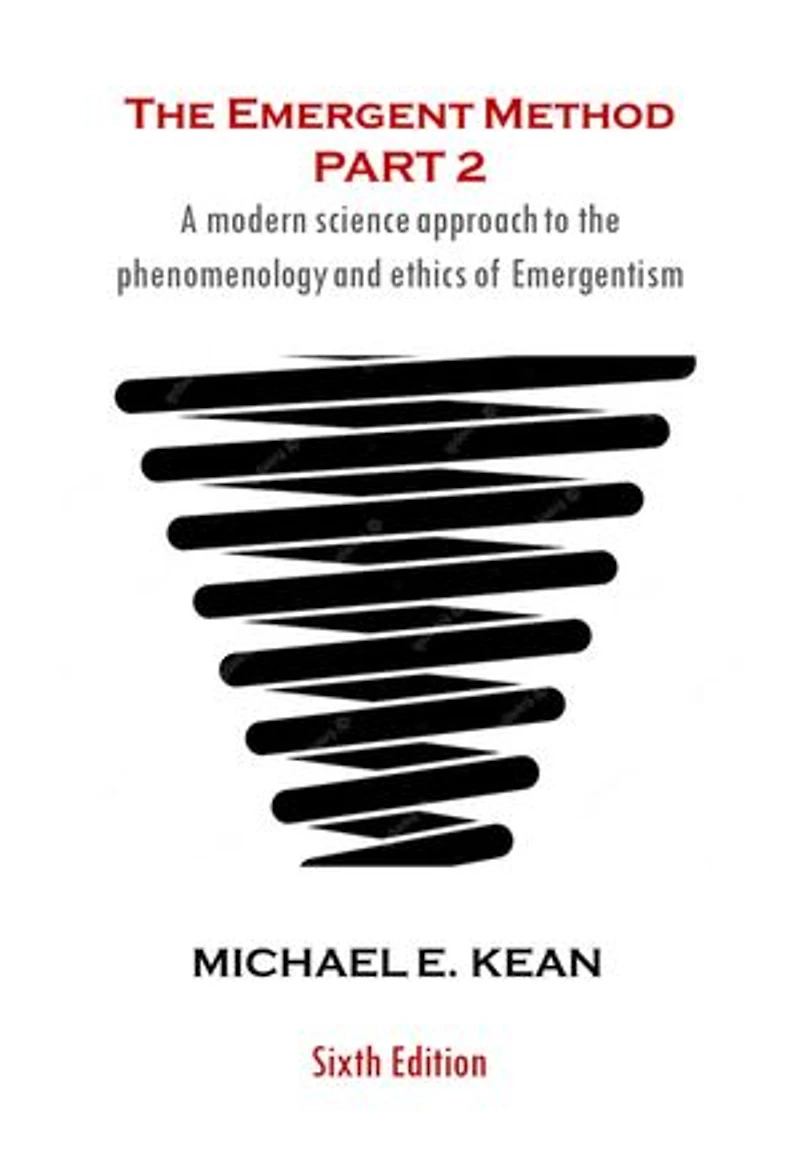
The Emergent Method Part 2: A Modern Science Approach to the Phenomenology and Ethics of Emergentism in Ottawa, ON
Current price: $3.01

The Emergent Method Part 2: A Modern Science Approach to the Phenomenology and Ethics of Emergentism in Ottawa, ON
Current price: $3.01
Loading Inventory...
Size: Kobo eBook
*Product information may vary - to confirm product availability, pricing, shipping and return information please contact Coles
This book introduces readers to the philosophical theory of Emergentism. It explores Emergentism’s many ramifications in areas of science, phenomenology, philosophy of mind, ethics and morality. The book suggests to readers how Emergentism may be incorporated into daily life in very practical ways. The book's list of far-reaching ideas is extensive, but somehow none of the ideas presented is completely unfamiliar. The notions are simple and naturalistic. Here are two examples: •We can solve the hard problem of consciousness if we look at it from the perspective of nonlocal waves rather than local particles. •Free-will arises in a sentient being through an interoperability with its environment. Free-will is not an illusion, but independence from our environment is an illusion. The book is directed towards all those who question life, science, philosophy, and themselves.
This book introduces readers to the philosophical theory of Emergentism. It explores Emergentism’s many ramifications in areas of science, phenomenology, philosophy of mind, ethics and morality. The book suggests to readers how Emergentism may be incorporated into daily life in very practical ways. The book's list of far-reaching ideas is extensive, but somehow none of the ideas presented is completely unfamiliar. The notions are simple and naturalistic. Here are two examples: •We can solve the hard problem of consciousness if we look at it from the perspective of nonlocal waves rather than local particles. •Free-will arises in a sentient being through an interoperability with its environment. Free-will is not an illusion, but independence from our environment is an illusion. The book is directed towards all those who question life, science, philosophy, and themselves.
You May Also Like














More About Coles at Bayshore Shopping Centre
Coles is renowned for its outstanding customer service and great selection of books. Along with the vast array of magazines, stationary, audio-books, children's literature, fiction, non-fiction and reference books, you can find accessories to make your reading experience more pleasurable. We can recommend the very best in reading today. We will help you search our titles for exactly what you need, and if we do not have it in stock, we will order it for you.
100 Bayshore Dr, Nepean, ON K2B 8C1, Canada
Find Coles at Bayshore Shopping Centre in Ottawa, ON
Visit Coles at Bayshore Shopping Centre in Ottawa, ON