

Give the Gift of Choice!
Too many options? Treat your friends and family to their favourite stores with a Bayshore Shopping Centre gift card, redeemable at participating retailers throughout the centre. Click below to purchase yours today!Purchase HereHome
The Emerging Market for Private Land Preservation and Conservation Easements
Coles
Loading Inventory...
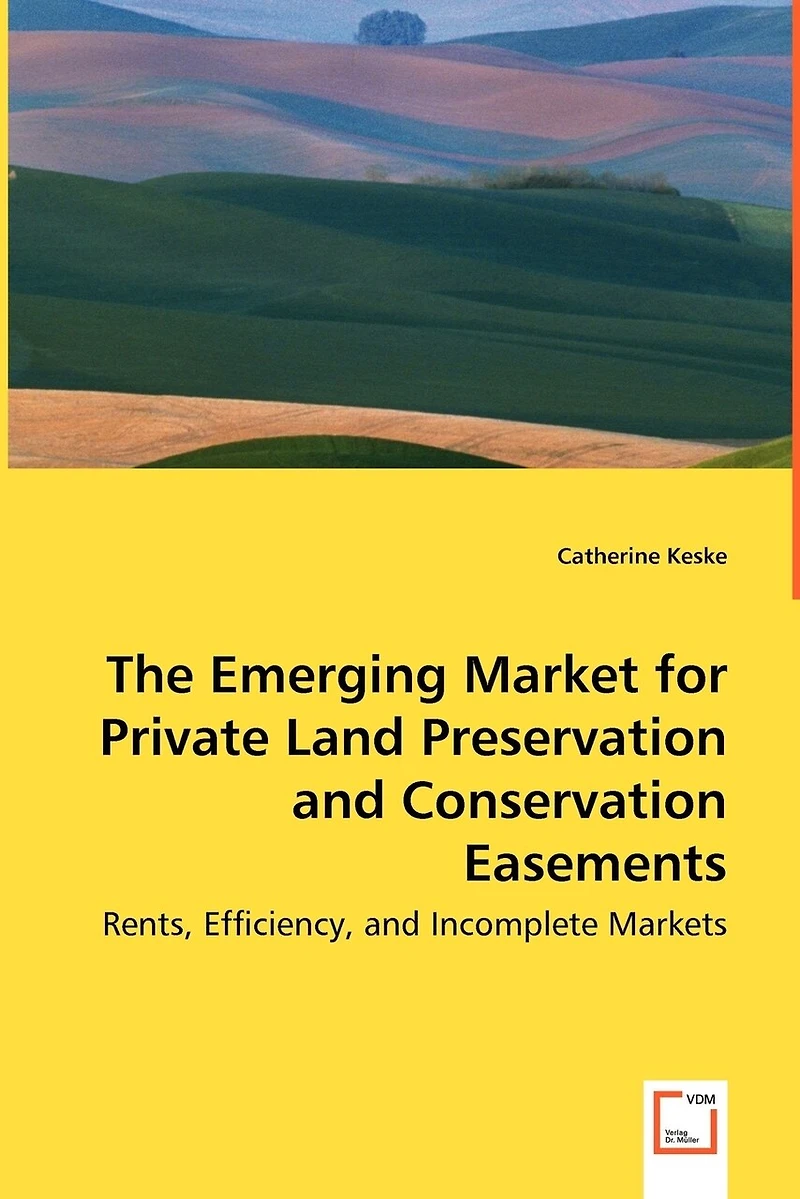
The Emerging Market for Private Land Preservation and Conservation Easements in Ottawa, ON
Current price: $110.95

The Emerging Market for Private Land Preservation and Conservation Easements in Ottawa, ON
Current price: $110.95
Loading Inventory...
Size: Paperback
*Product information may vary - to confirm product availability, pricing, shipping and return information please contact Coles
This economic study explores land market development and identifies contributing sources to incomplete markets--markets that do not operate efficiently or yield consistent price information. Using graphical and mathematical arguments, I discuss the positive externality from private lands that present public benefit, and the impact on efficiency and landowner rents. I present a comprehensive economic analysis of conservation easements (the policy tool most often used by the private land preservation movement) and I use this analysis to determine contributing sources to the incomplete market. I use a mixed methods research protocol that incorporates qualitative research in the first stage of the study to yield an economic model in the second stage of the project. In my economic model, I disaggregate the marginal private benefits curve to illustrate sources of market failure. I conclude that the private land preservation community is seeking to preserve a sense of place, rather than just specific attributes or features of the land, which yields implications for market efficiency. Although the market is evolving into a complete one, policy may expedite the process.
This economic study explores land market development and identifies contributing sources to incomplete markets--markets that do not operate efficiently or yield consistent price information. Using graphical and mathematical arguments, I discuss the positive externality from private lands that present public benefit, and the impact on efficiency and landowner rents. I present a comprehensive economic analysis of conservation easements (the policy tool most often used by the private land preservation movement) and I use this analysis to determine contributing sources to the incomplete market. I use a mixed methods research protocol that incorporates qualitative research in the first stage of the study to yield an economic model in the second stage of the project. In my economic model, I disaggregate the marginal private benefits curve to illustrate sources of market failure. I conclude that the private land preservation community is seeking to preserve a sense of place, rather than just specific attributes or features of the land, which yields implications for market efficiency. Although the market is evolving into a complete one, policy may expedite the process.
You May Also Like













More About Coles at Bayshore Shopping Centre
Coles is renowned for its outstanding customer service and great selection of books. Along with the vast array of magazines, stationary, audio-books, children's literature, fiction, non-fiction and reference books, you can find accessories to make your reading experience more pleasurable. We can recommend the very best in reading today. We will help you search our titles for exactly what you need, and if we do not have it in stock, we will order it for you.
100 Bayshore Dr, Nepean, ON K2B 8C1, Canada
Find Coles at Bayshore Shopping Centre in Ottawa, ON
Visit Coles at Bayshore Shopping Centre in Ottawa, ON