

Give the Gift of Choice!
Too many options? Treat your friends and family to their favourite stores with a Bayshore Shopping Centre gift card, redeemable at participating retailers throughout the centre. Click below to purchase yours today!Purchase HereHome
The Galactic and Extragalactic Background Radiation: Proceedings of the 139th Symposium of the International Astronomical Union Held in Heidelberg, F.R.G., June 12-16, 1989
Coles
Loading Inventory...
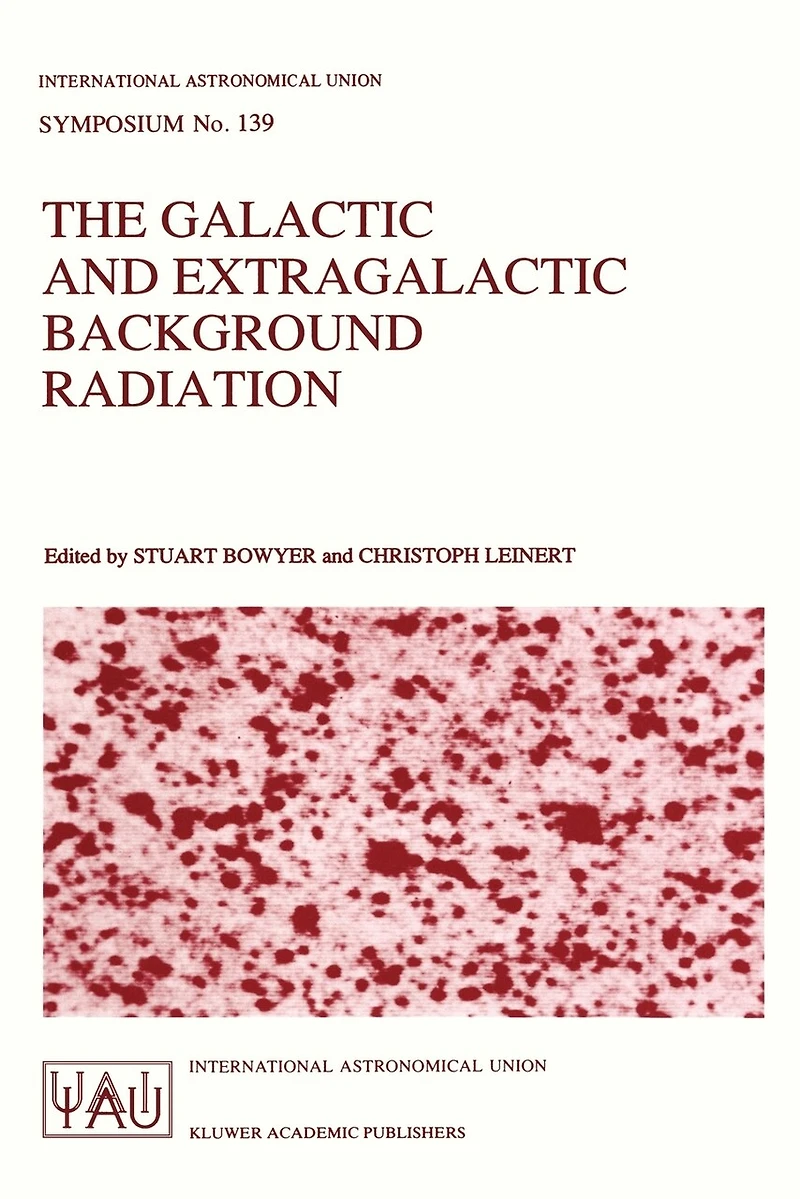
The Galactic and Extragalactic Background Radiation: Proceedings of the 139th Symposium of the International Astronomical Union Held in Heidelberg, F.R.G., June 12-16, 1989 in Ottawa, ON
Current price: $142.95

The Galactic and Extragalactic Background Radiation: Proceedings of the 139th Symposium of the International Astronomical Union Held in Heidelberg, F.R.G., June 12-16, 1989 in Ottawa, ON
Current price: $142.95
Loading Inventory...
Size: Paperback
*Product information may vary - to confirm product availability, pricing, shipping and return information please contact Coles
The galactic and extragalactic background radiation components are of major importance in astrophysical studies of a variety of problems related to galactic structure, interstellar matter, the distribution and evolution of galaxies and intergalactic matter, and cosmology. The back- ground radiation is a unique source of information in cases where the source is of a truly diffuse nature, as with scattering and emission by interstellar dust and gas, or where the discrete emission sources are so faint (e. g., very distant galaxies) that they can be observed only by their integrated emission. The galactic and extragalactic background must be discussed together because they are observationally entangled and their proper separation requires a knowledge of both components. The above points are equally valid for the entire electromag- netic spectrum, from gamma rays to long radio waves. Thus, the study of the galactic and extragalactic background radiation is interdisciplinary in its character, and a multi wavelength approach would appear to be dictated by the nature of the topic. The proper separation of the galactic and extragalactic background components requires a knowledge of both. In addition, the foreground components, i. e., zodiacal light, airglow, and atmospheric scattered light, must be treated carefully.
The galactic and extragalactic background radiation components are of major importance in astrophysical studies of a variety of problems related to galactic structure, interstellar matter, the distribution and evolution of galaxies and intergalactic matter, and cosmology. The back- ground radiation is a unique source of information in cases where the source is of a truly diffuse nature, as with scattering and emission by interstellar dust and gas, or where the discrete emission sources are so faint (e. g., very distant galaxies) that they can be observed only by their integrated emission. The galactic and extragalactic background must be discussed together because they are observationally entangled and their proper separation requires a knowledge of both components. The above points are equally valid for the entire electromag- netic spectrum, from gamma rays to long radio waves. Thus, the study of the galactic and extragalactic background radiation is interdisciplinary in its character, and a multi wavelength approach would appear to be dictated by the nature of the topic. The proper separation of the galactic and extragalactic background components requires a knowledge of both. In addition, the foreground components, i. e., zodiacal light, airglow, and atmospheric scattered light, must be treated carefully.
You May Also Like














More About Coles at Bayshore Shopping Centre
Coles is renowned for its outstanding customer service and great selection of books. Along with the vast array of magazines, stationary, audio-books, children's literature, fiction, non-fiction and reference books, you can find accessories to make your reading experience more pleasurable. We can recommend the very best in reading today. We will help you search our titles for exactly what you need, and if we do not have it in stock, we will order it for you.
100 Bayshore Dr, Nepean, ON K2B 8C1, Canada
Find Coles at Bayshore Shopping Centre in Ottawa, ON
Visit Coles at Bayshore Shopping Centre in Ottawa, ON