

Give the Gift of Choice!
Too many options? Treat your friends and family to their favourite stores with a Bayshore Shopping Centre gift card, redeemable at participating retailers throughout the centre. Click below to purchase yours today!Purchase HereHome
the Humility of Eternal Son: Reformed Kenoticism and Repair Chalcedon
Coles
Loading Inventory...
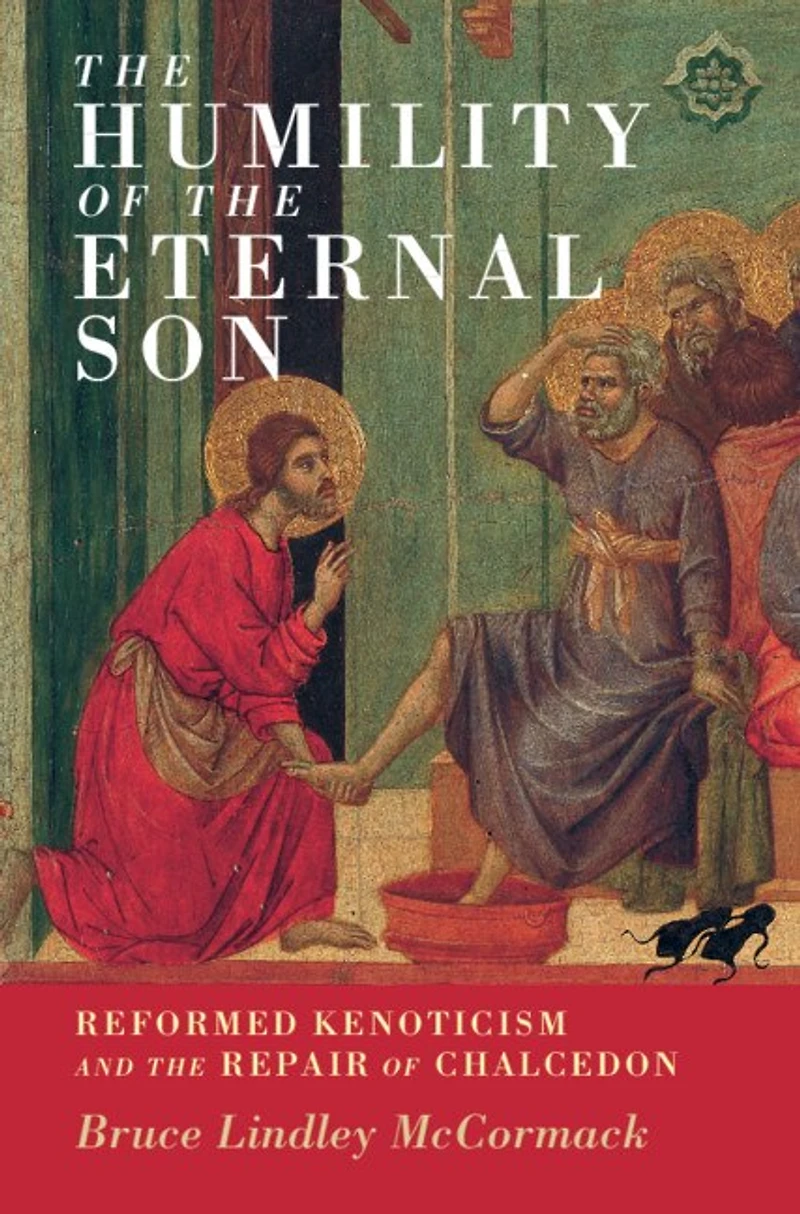
the Humility of Eternal Son: Reformed Kenoticism and Repair Chalcedon in Ottawa, ON
Current price: $57.95

the Humility of Eternal Son: Reformed Kenoticism and Repair Chalcedon in Ottawa, ON
Current price: $57.95
Loading Inventory...
Size: Hardcover
*Product information may vary - to confirm product availability, pricing, shipping and return information please contact Coles
The Chalcedonian Definition of 451 never completely resolved one of the critical issues at the heart of Christianity: the unity of the 'person' of Christ. In this eagerly-awaited volume - the result of deep and sustained reflection - distinguished theologian Bruce Lindley McCormack examines the reasons for this philosophical and theological failure. His book serves as a critical history that traces modern attempts at resolution of this problem, from the nineteenth-century Lutheran emphasis on Kenoticism (or the 'self-emptying' of the Son in order to be receptive to the will of the Father) to post-Barthian efforts that evade the issue by collapsing the second person of the Trinity into the human Jesus - thereby rejecting altogether the logic of the classical 'two-natures' Christology. McCormack shows how New Testament Christologies both limit and authorize ontological reflection, and in so doing offers a distinctively Reformed version of Kenoticism. Proposing a new and bold divine ontology, with a convincing basis in Christology, he persuasively argues that the unity of the 'person' is in fact guaranteed by the Son's act of taking into his 'being' the lived existence of Jesus.
The Chalcedonian Definition of 451 never completely resolved one of the critical issues at the heart of Christianity: the unity of the 'person' of Christ. In this eagerly-awaited volume - the result of deep and sustained reflection - distinguished theologian Bruce Lindley McCormack examines the reasons for this philosophical and theological failure. His book serves as a critical history that traces modern attempts at resolution of this problem, from the nineteenth-century Lutheran emphasis on Kenoticism (or the 'self-emptying' of the Son in order to be receptive to the will of the Father) to post-Barthian efforts that evade the issue by collapsing the second person of the Trinity into the human Jesus - thereby rejecting altogether the logic of the classical 'two-natures' Christology. McCormack shows how New Testament Christologies both limit and authorize ontological reflection, and in so doing offers a distinctively Reformed version of Kenoticism. Proposing a new and bold divine ontology, with a convincing basis in Christology, he persuasively argues that the unity of the 'person' is in fact guaranteed by the Son's act of taking into his 'being' the lived existence of Jesus.
You May Also Like









More About Coles at Bayshore Shopping Centre
Coles is renowned for its outstanding customer service and great selection of books. Along with the vast array of magazines, stationary, audio-books, children's literature, fiction, non-fiction and reference books, you can find accessories to make your reading experience more pleasurable. We can recommend the very best in reading today. We will help you search our titles for exactly what you need, and if we do not have it in stock, we will order it for you.
100 Bayshore Dr, Nepean, ON K2B 8C1, Canada
Find Coles at Bayshore Shopping Centre in Ottawa, ON
Visit Coles at Bayshore Shopping Centre in Ottawa, ON