

Give the Gift of Choice!
Too many options? Treat your friends and family to their favourite stores with a Bayshore Shopping Centre gift card, redeemable at participating retailers throughout the centre. Click below to purchase yours today!Purchase HereHome
The Informed Are Hardest To Educate
Coles
Loading Inventory...
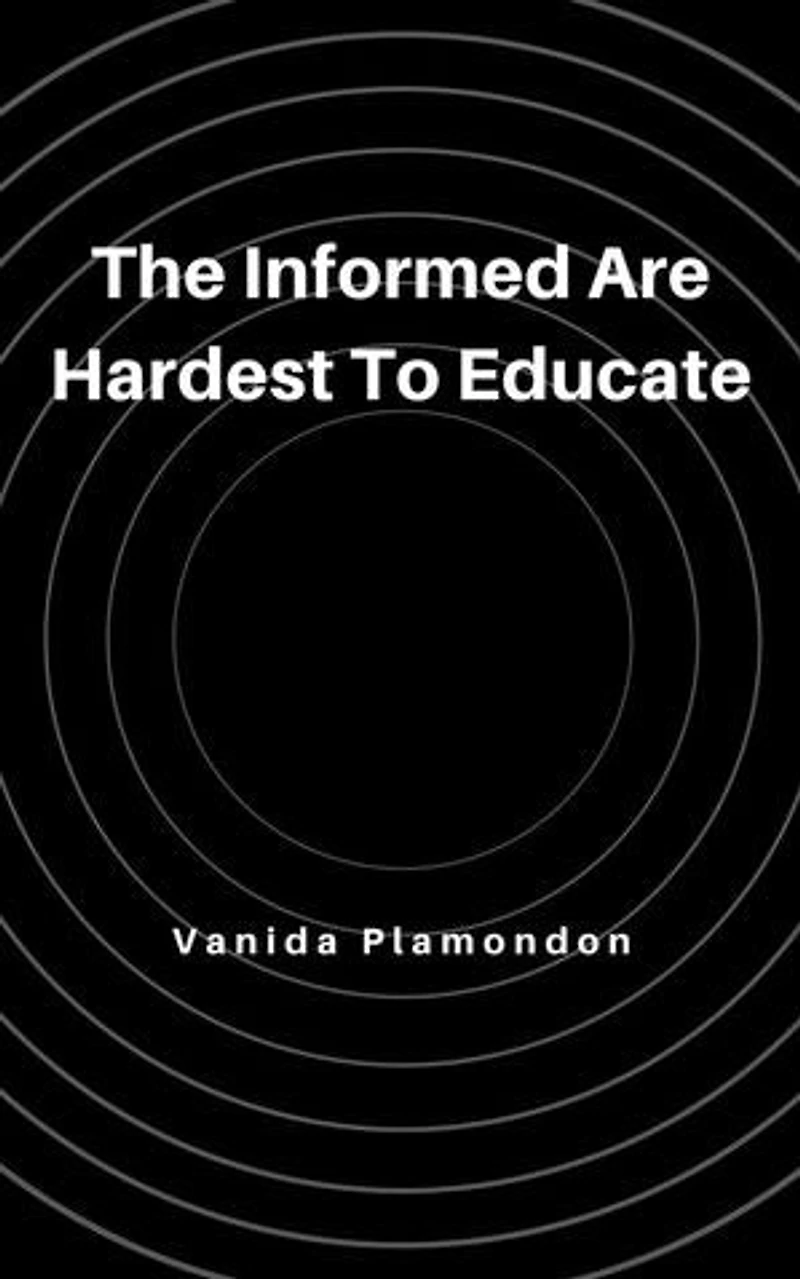
The Informed Are Hardest To Educate in Ottawa, ON
Current price: $2.99

The Informed Are Hardest To Educate in Ottawa, ON
Current price: $2.99
Loading Inventory...
Size: Kobo eBook
*Product information may vary - to confirm product availability, pricing, shipping and return information please contact Coles
Through an exploration of how modern education has failed to teach the essential skills needed to break down complex problems, The Informed Are Hardest to Educate uncovers the deep-seated issues that prevent us from addressing today's most pressing global challenges. The book critiques the education system's focus on rote memorization and standardized testing, arguing that this approach has left individuals ill-prepared for real-world problem-solving. Without the ability to simplify complex issues into manageable components, people struggle to see the connections between disparate parts of a problem and, as a result, fail to create effective solutions.
This lack of problem decomposition goes beyond a mere intellectual shortcoming, it's a fundamental barrier to meaningful progress. The book highlights how this cognitive gap has contributed to our inability to tackle global crises like climate change, economic instability, and political polarization. By failing to equip individuals with the tools to break down these complex issues, society has allowed itself to remain trapped in cycles of ineffective responses and deepening crises.
Ultimately, The Informed Are Hardest to Educate challenges readers to confront the cognitive barriers that hinder true understanding and to rethink the ways in which we approach problem-solving. Drawing on historical examples and academic research, the book outlines how both individuals and institutions can begin to adopt strategies for simplification, tools that will not only improve decision-making and policy but also provide a roadmap for more effective social advancement. The implications for the future of education, public policy, and global cooperation are far-reaching, and the book calls for a cultural shift in how we view complexity, simplification, and progress in the 21st century.
Through an exploration of how modern education has failed to teach the essential skills needed to break down complex problems, The Informed Are Hardest to Educate uncovers the deep-seated issues that prevent us from addressing today's most pressing global challenges. The book critiques the education system's focus on rote memorization and standardized testing, arguing that this approach has left individuals ill-prepared for real-world problem-solving. Without the ability to simplify complex issues into manageable components, people struggle to see the connections between disparate parts of a problem and, as a result, fail to create effective solutions.
This lack of problem decomposition goes beyond a mere intellectual shortcoming, it's a fundamental barrier to meaningful progress. The book highlights how this cognitive gap has contributed to our inability to tackle global crises like climate change, economic instability, and political polarization. By failing to equip individuals with the tools to break down these complex issues, society has allowed itself to remain trapped in cycles of ineffective responses and deepening crises.
Ultimately, The Informed Are Hardest to Educate challenges readers to confront the cognitive barriers that hinder true understanding and to rethink the ways in which we approach problem-solving. Drawing on historical examples and academic research, the book outlines how both individuals and institutions can begin to adopt strategies for simplification, tools that will not only improve decision-making and policy but also provide a roadmap for more effective social advancement. The implications for the future of education, public policy, and global cooperation are far-reaching, and the book calls for a cultural shift in how we view complexity, simplification, and progress in the 21st century.
You May Also Like












More About Coles at Bayshore Shopping Centre
Coles is renowned for its outstanding customer service and great selection of books. Along with the vast array of magazines, stationary, audio-books, children's literature, fiction, non-fiction and reference books, you can find accessories to make your reading experience more pleasurable. We can recommend the very best in reading today. We will help you search our titles for exactly what you need, and if we do not have it in stock, we will order it for you.
100 Bayshore Dr, Nepean, ON K2B 8C1, Canada
Find Coles at Bayshore Shopping Centre in Ottawa, ON
Visit Coles at Bayshore Shopping Centre in Ottawa, ON