

Give the Gift of Choice!
Too many options? Treat your friends and family to their favourite stores with a Bayshore Shopping Centre gift card, redeemable at participating retailers throughout the centre. Click below to purchase yours today!Purchase HereHome
The Italian Colony of São Paulo: Race, Class, and Cultural Capital Brazil
Coles
Loading Inventory...
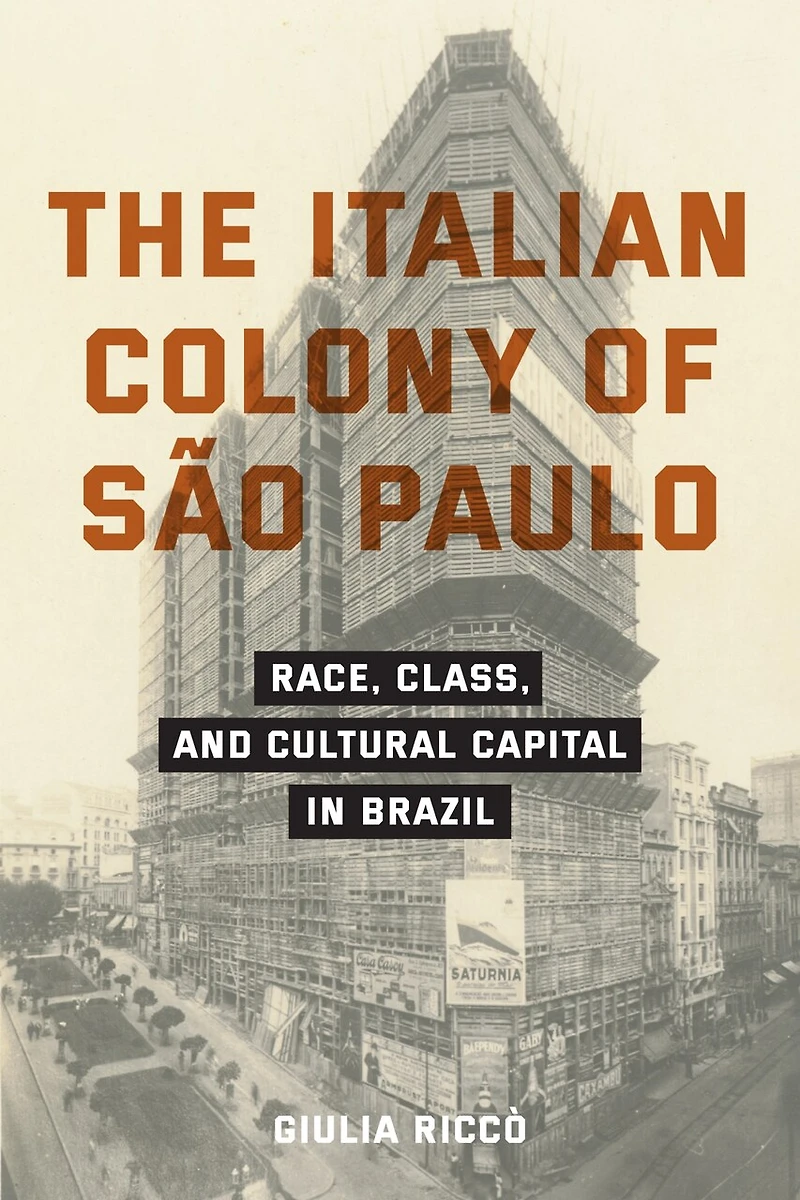
The Italian Colony of São Paulo: Race, Class, and Cultural Capital Brazil in Ottawa, ON
Current price: $146.99

The Italian Colony of São Paulo: Race, Class, and Cultural Capital Brazil in Ottawa, ON
Current price: $146.99
Loading Inventory...
Size: Hardcover
*Product information may vary - to confirm product availability, pricing, shipping and return information please contact Coles
WINNER, 2024 ALDO AND JEANNE SCAGLIONE PUBLICATION AWARD FOR A MANUSCRIPT IN ITALIAN LITERARY STUDIES, MODERN LANGUAGES ASSOCIATION
Introduces a way to study migration that privileges literary analysis over and against sociological data and insists on the importance of culture in the production of political identities
This book argues that Italians first became racialized as white in São Paulo, Brazil, at the turn of the twentieth century. Whereas Italians in the United States struggled with xenophobia and were often not fully acknowledged as white, in São Paulo, due to a series of social, economic, and cultural factors, Italians became closely associated with ideas of whiteness, modernization, and civilization. This book brings to light how the overlooked experiences of Italians in Brazil complicate conventional narratives about the racial ambiguity and oppression of Italians in the Americas, on the one hand, and the conflation of Italians with cultural and economic backwardness in Europe, on the other.
In the book, close readings of a wide array of texts—the travel writings of Gina Lombroso Ferrero, the short stories of Antônio de Alcântara Machado, the columns of José Correia Leite, the political essays of Miguel Reale, and the memoirs of Zélia Gattai—trace a “New World Italian discourse,” or the overlapping narratives about Italian racial, economic, and cultural superiority that constructed and maintained Italians’ status as a model minority in São Paulo. These discursive practices represent essential antecedents to the racial nationalism that reared its ugly head in Italy throughout the twentieth century and remain central to contemporary debates about national identity in the Italian public sphere.
The Italian Colony of São Paulo: Race, Class, and Cultural Capital in Brazil is available from the publisher on an open-access basis.
WINNER, 2024 ALDO AND JEANNE SCAGLIONE PUBLICATION AWARD FOR A MANUSCRIPT IN ITALIAN LITERARY STUDIES, MODERN LANGUAGES ASSOCIATION
Introduces a way to study migration that privileges literary analysis over and against sociological data and insists on the importance of culture in the production of political identities
This book argues that Italians first became racialized as white in São Paulo, Brazil, at the turn of the twentieth century. Whereas Italians in the United States struggled with xenophobia and were often not fully acknowledged as white, in São Paulo, due to a series of social, economic, and cultural factors, Italians became closely associated with ideas of whiteness, modernization, and civilization. This book brings to light how the overlooked experiences of Italians in Brazil complicate conventional narratives about the racial ambiguity and oppression of Italians in the Americas, on the one hand, and the conflation of Italians with cultural and economic backwardness in Europe, on the other.
In the book, close readings of a wide array of texts—the travel writings of Gina Lombroso Ferrero, the short stories of Antônio de Alcântara Machado, the columns of José Correia Leite, the political essays of Miguel Reale, and the memoirs of Zélia Gattai—trace a “New World Italian discourse,” or the overlapping narratives about Italian racial, economic, and cultural superiority that constructed and maintained Italians’ status as a model minority in São Paulo. These discursive practices represent essential antecedents to the racial nationalism that reared its ugly head in Italy throughout the twentieth century and remain central to contemporary debates about national identity in the Italian public sphere.
The Italian Colony of São Paulo: Race, Class, and Cultural Capital in Brazil is available from the publisher on an open-access basis.
You May Also Like













More About Coles at Bayshore Shopping Centre
Coles is renowned for its outstanding customer service and great selection of books. Along with the vast array of magazines, stationary, audio-books, children's literature, fiction, non-fiction and reference books, you can find accessories to make your reading experience more pleasurable. We can recommend the very best in reading today. We will help you search our titles for exactly what you need, and if we do not have it in stock, we will order it for you.
100 Bayshore Dr, Nepean, ON K2B 8C1, Canada
Find Coles at Bayshore Shopping Centre in Ottawa, ON
Visit Coles at Bayshore Shopping Centre in Ottawa, ON