

Give the Gift of Choice!
Too many options? Treat your friends and family to their favourite stores with a Bayshore Shopping Centre gift card, redeemable at participating retailers throughout the centre. Click below to purchase yours today!Purchase HereHome
The Land of Mist (Summarized Edition): Enriched edition. Professor Challenger probes the afterlife: science versus the paranormal in early 20th-century British spiritualism
Coles
Loading Inventory...
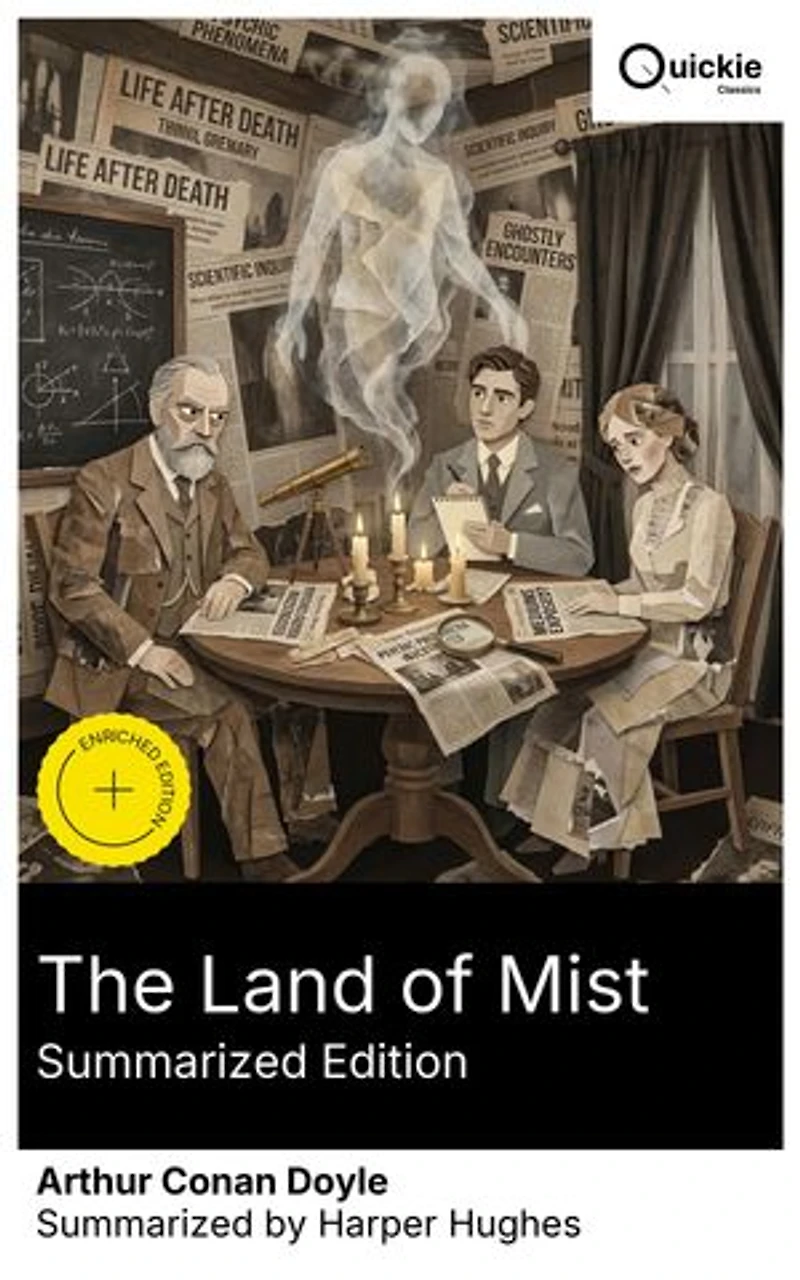
The Land of Mist (Summarized Edition): Enriched edition. Professor Challenger probes the afterlife: science versus the paranormal in early 20th-century British spiritualism in Ottawa, ON
Current price: $2.99

The Land of Mist (Summarized Edition): Enriched edition. Professor Challenger probes the afterlife: science versus the paranormal in early 20th-century British spiritualism in Ottawa, ON
Current price: $2.99
Loading Inventory...
Size: Kobo eBook
*Product information may vary - to confirm product availability, pricing, shipping and return information please contact Coles
The Land of Mist, the third Professor Challenger novel, transforms Doyle's scientific romance into a spiritualist inquiry. Serialized in the Strand (1925) and published in 1926, it follows reporter Edward Malone and Enid Challenger through séances, public disputations, and cautious tests that sift testimony from fraud. Dialogic chapters and case-study vignettes replace jungle exploits; Challenger's embattled rationalism collides with claims of survival after death. Set amid the interwar crisis of belief and the vogue for psychical research, the book blends melodrama with reportage to probe the limits of materialist science. Doyle, physician-turned-novelist and outspoken advocate of Spiritualism, writes from conviction shaped by wartime bereavements and years engaging psychical research. Companion tracts The New Revelation and The Vital Message announce the same aim: to defend survival after death while conceding the reality of imposture and the need for disciplined inquiry. Readers of speculative fiction, intellectual history, or religion-and-science debates will find The Land of Mist rewarding. As a sequel to The Lost World and a cultural artifact of the 1920s, it marries argument to narrative vigor; approach it as a serious historical brief in fictional form. Quickie Classics summarizes timeless works with precision, preserving the author's voice and keeping the prose clear, fast, and readable—distilled, never diluted. Enriched Edition extras: Introduction · Synopsis · Historical Context · Author Biography · Brief Analysis · 4 Reflection Q&As · Editorial Footnotes.
The Land of Mist, the third Professor Challenger novel, transforms Doyle's scientific romance into a spiritualist inquiry. Serialized in the Strand (1925) and published in 1926, it follows reporter Edward Malone and Enid Challenger through séances, public disputations, and cautious tests that sift testimony from fraud. Dialogic chapters and case-study vignettes replace jungle exploits; Challenger's embattled rationalism collides with claims of survival after death. Set amid the interwar crisis of belief and the vogue for psychical research, the book blends melodrama with reportage to probe the limits of materialist science. Doyle, physician-turned-novelist and outspoken advocate of Spiritualism, writes from conviction shaped by wartime bereavements and years engaging psychical research. Companion tracts The New Revelation and The Vital Message announce the same aim: to defend survival after death while conceding the reality of imposture and the need for disciplined inquiry. Readers of speculative fiction, intellectual history, or religion-and-science debates will find The Land of Mist rewarding. As a sequel to The Lost World and a cultural artifact of the 1920s, it marries argument to narrative vigor; approach it as a serious historical brief in fictional form. Quickie Classics summarizes timeless works with precision, preserving the author's voice and keeping the prose clear, fast, and readable—distilled, never diluted. Enriched Edition extras: Introduction · Synopsis · Historical Context · Author Biography · Brief Analysis · 4 Reflection Q&As · Editorial Footnotes.
You May Also Like









More About Coles at Bayshore Shopping Centre
Coles is renowned for its outstanding customer service and great selection of books. Along with the vast array of magazines, stationary, audio-books, children's literature, fiction, non-fiction and reference books, you can find accessories to make your reading experience more pleasurable. We can recommend the very best in reading today. We will help you search our titles for exactly what you need, and if we do not have it in stock, we will order it for you.
100 Bayshore Dr, Nepean, ON K2B 8C1, Canada
Find Coles at Bayshore Shopping Centre in Ottawa, ON
Visit Coles at Bayshore Shopping Centre in Ottawa, ON