

Give the Gift of Choice!
Too many options? Treat your friends and family to their favourite stores with a Bayshore Shopping Centre gift card, redeemable at participating retailers throughout the centre. Click below to purchase yours today!Purchase HereHome
The Learning Society In A Postmodern World by Kenneth Wain, Paperback | Indigo Chapters
Coles
Loading Inventory...
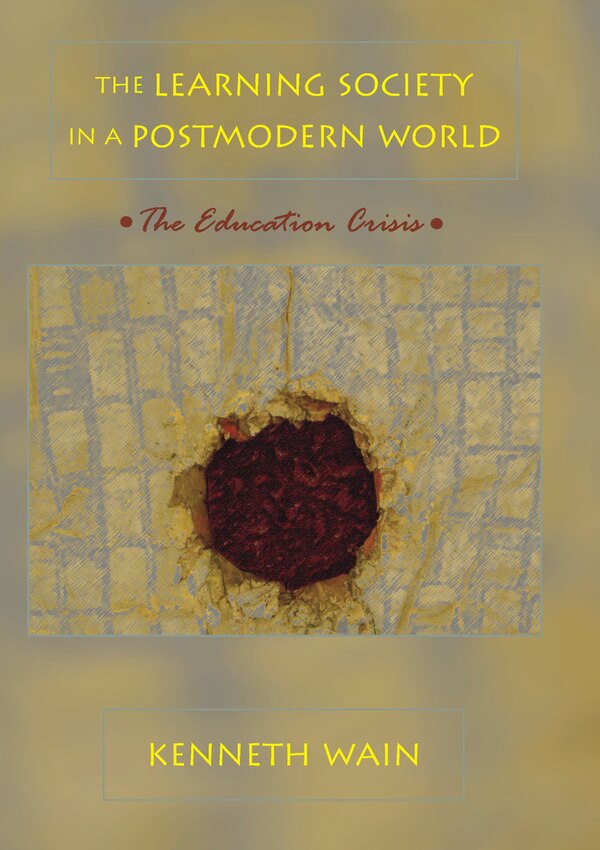
The Learning Society In A Postmodern World by Kenneth Wain, Paperback | Indigo Chapters in Ottawa, ON
By Kenneth Wain
Current price: $63.61

By Kenneth Wain
The Learning Society In A Postmodern World by Kenneth Wain, Paperback | Indigo Chapters in Ottawa, ON
Current price: $63.61
Loading Inventory...
Size: 0.68 x 9 x 530
*Product information may vary - to confirm product availability, pricing, shipping and return information please contact Coles
Lifelong learning has become a key concern as the focus of educational policy has shifted from mass schooling toward the learning society. The shift started in the mid 1960s and early 1970s under the impetus of a group of writers and adult educators, gravitating around UNESCO, with a humanist philosophy and a leftist agenda. The vocabulary of that movement was appropriated in the 1990s by other interests with a very different performativist agenda emphasizing effectiveness and economic outcomes. This change of interest, described in the book, has signified the death of education. The Learning Society in a Postmodern World explores different theoretical resources to respond to this situation, mainly those that propose some restoration of an educated public or, to the contrary, individual self-creation, and uses the works of a broad range of philosophers and thinkers - notably MacIntyre, Habermas, Foucault, Derrida, Rorty, and Baudrillard. In addition, it raises important questions about postmodern and poststructuralist responses to education in the postmodern world. Its comprehensiveness and historical background make it an essential textbook for theoretical courses in lifelong learning and in educational theory in general. A broad range of interests and subject matter make it important reading for educators, policy specialists, media specialists, researchers on the subject of lifelong learning and on the relation between education and the postmodern world, political theorists, philosophers, and philosophers of education. | The Learning Society In A Postmodern World by Kenneth Wain, Paperback | Indigo Chapters
Lifelong learning has become a key concern as the focus of educational policy has shifted from mass schooling toward the learning society. The shift started in the mid 1960s and early 1970s under the impetus of a group of writers and adult educators, gravitating around UNESCO, with a humanist philosophy and a leftist agenda. The vocabulary of that movement was appropriated in the 1990s by other interests with a very different performativist agenda emphasizing effectiveness and economic outcomes. This change of interest, described in the book, has signified the death of education. The Learning Society in a Postmodern World explores different theoretical resources to respond to this situation, mainly those that propose some restoration of an educated public or, to the contrary, individual self-creation, and uses the works of a broad range of philosophers and thinkers - notably MacIntyre, Habermas, Foucault, Derrida, Rorty, and Baudrillard. In addition, it raises important questions about postmodern and poststructuralist responses to education in the postmodern world. Its comprehensiveness and historical background make it an essential textbook for theoretical courses in lifelong learning and in educational theory in general. A broad range of interests and subject matter make it important reading for educators, policy specialists, media specialists, researchers on the subject of lifelong learning and on the relation between education and the postmodern world, political theorists, philosophers, and philosophers of education. | The Learning Society In A Postmodern World by Kenneth Wain, Paperback | Indigo Chapters
You May Also Like








More About Coles at Bayshore Shopping Centre
Coles is renowned for its outstanding customer service and great selection of books. Along with the vast array of magazines, stationary, audio-books, children's literature, fiction, non-fiction and reference books, you can find accessories to make your reading experience more pleasurable. We can recommend the very best in reading today. We will help you search our titles for exactly what you need, and if we do not have it in stock, we will order it for you.
100 Bayshore Dr, Nepean, ON K2B 8C1, Canada
Find Coles at Bayshore Shopping Centre in Ottawa, ON
Visit Coles at Bayshore Shopping Centre in Ottawa, ON