

Give the Gift of Choice!
Too many options? Treat your friends and family to their favourite stores with a Bayshore Shopping Centre gift card, redeemable at participating retailers throughout the centre. Click below to purchase yours today!Purchase HereHome
The New Dialectic: Conversational Contexts of Argument
Coles
Loading Inventory...
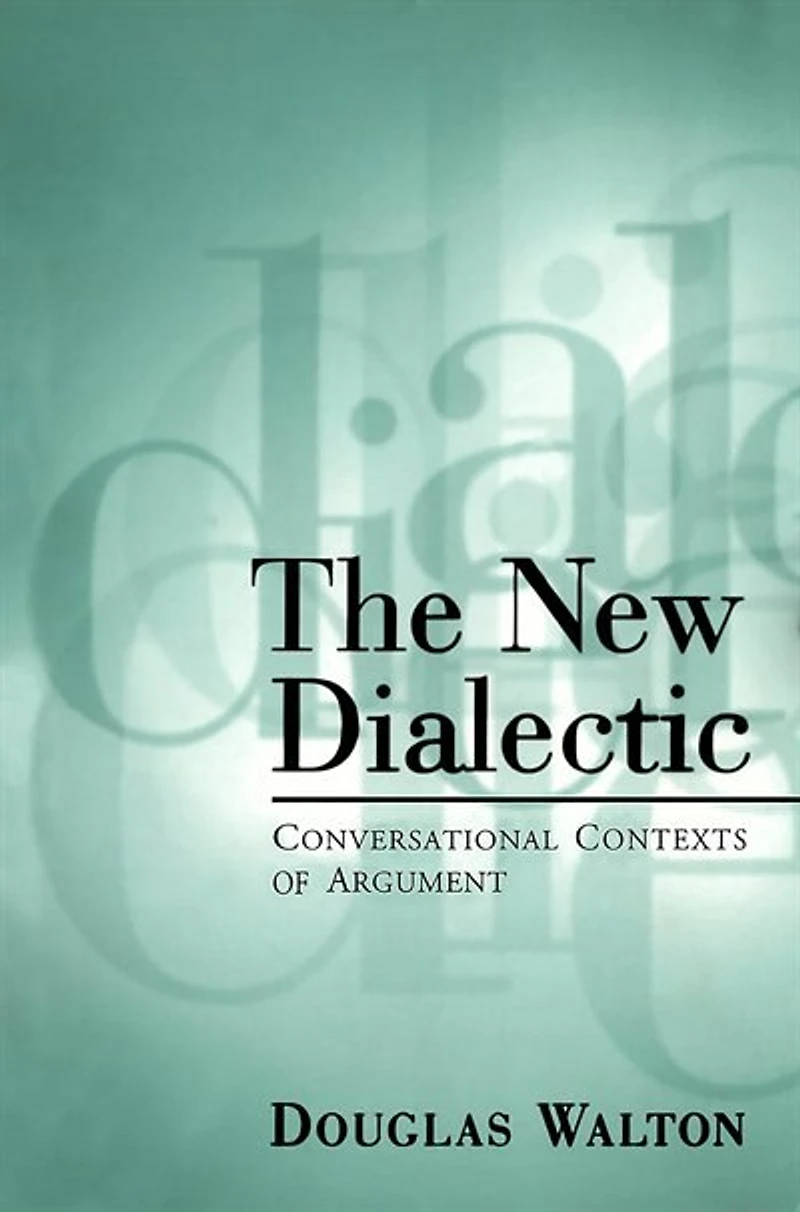
The New Dialectic: Conversational Contexts of Argument in Ottawa, ON
Current price: $49.95

The New Dialectic: Conversational Contexts of Argument in Ottawa, ON
Current price: $49.95
Loading Inventory...
Size: Paperback
*Product information may vary - to confirm product availability, pricing, shipping and return information please contact Coles
Because developments in informal logic have been based, for the most part, on idealized and abstract models, the tools available for argument analysis are not easily adapted to the needs of everyday argumentation. In this book Douglas Walton proposes a new and practical approach to argument analysis based on his theory that different standards for argument must apply in the case of different types of dialogue. By refining and extending the existing formal classifications of dialogue, Walton shows that each dialogue type, be it inquiry, negotiation, or critical discussion, has its own set of goals. He goes on to demonstrate that an argument can best be evaluated in terms of its contribution, positive or negative, to the goals of the particular dialogue it is meant to further. In this way he illustrates how argument can be brought into the service of many types of dialogue, and thus has valuable uses that go well beyond the mere settling of disputes and differences. By reaching back to the Aristotelian roots of logic as an applied, practical discipline and by formulating a new framework of rationality for evaluating arguments, Douglas Walton restores a much-needed balance to argument analysis. This book complements and extends his Argument Structure: A Pragmatic Theory (University of Toronto Press, 1996).
Because developments in informal logic have been based, for the most part, on idealized and abstract models, the tools available for argument analysis are not easily adapted to the needs of everyday argumentation. In this book Douglas Walton proposes a new and practical approach to argument analysis based on his theory that different standards for argument must apply in the case of different types of dialogue. By refining and extending the existing formal classifications of dialogue, Walton shows that each dialogue type, be it inquiry, negotiation, or critical discussion, has its own set of goals. He goes on to demonstrate that an argument can best be evaluated in terms of its contribution, positive or negative, to the goals of the particular dialogue it is meant to further. In this way he illustrates how argument can be brought into the service of many types of dialogue, and thus has valuable uses that go well beyond the mere settling of disputes and differences. By reaching back to the Aristotelian roots of logic as an applied, practical discipline and by formulating a new framework of rationality for evaluating arguments, Douglas Walton restores a much-needed balance to argument analysis. This book complements and extends his Argument Structure: A Pragmatic Theory (University of Toronto Press, 1996).
You May Also Like









More About Coles at Bayshore Shopping Centre
Coles is renowned for its outstanding customer service and great selection of books. Along with the vast array of magazines, stationary, audio-books, children's literature, fiction, non-fiction and reference books, you can find accessories to make your reading experience more pleasurable. We can recommend the very best in reading today. We will help you search our titles for exactly what you need, and if we do not have it in stock, we will order it for you.
100 Bayshore Dr, Nepean, ON K2B 8C1, Canada
Find Coles at Bayshore Shopping Centre in Ottawa, ON
Visit Coles at Bayshore Shopping Centre in Ottawa, ON