

Give the Gift of Choice!
Too many options? Treat your friends and family to their favourite stores with a Bayshore Shopping Centre gift card, redeemable at participating retailers throughout the centre. Click below to purchase yours today!Purchase HereHome
The Polyvagal Backpack: Classroom Activities for Focused, Joyful Learning
Coles
Loading Inventory...
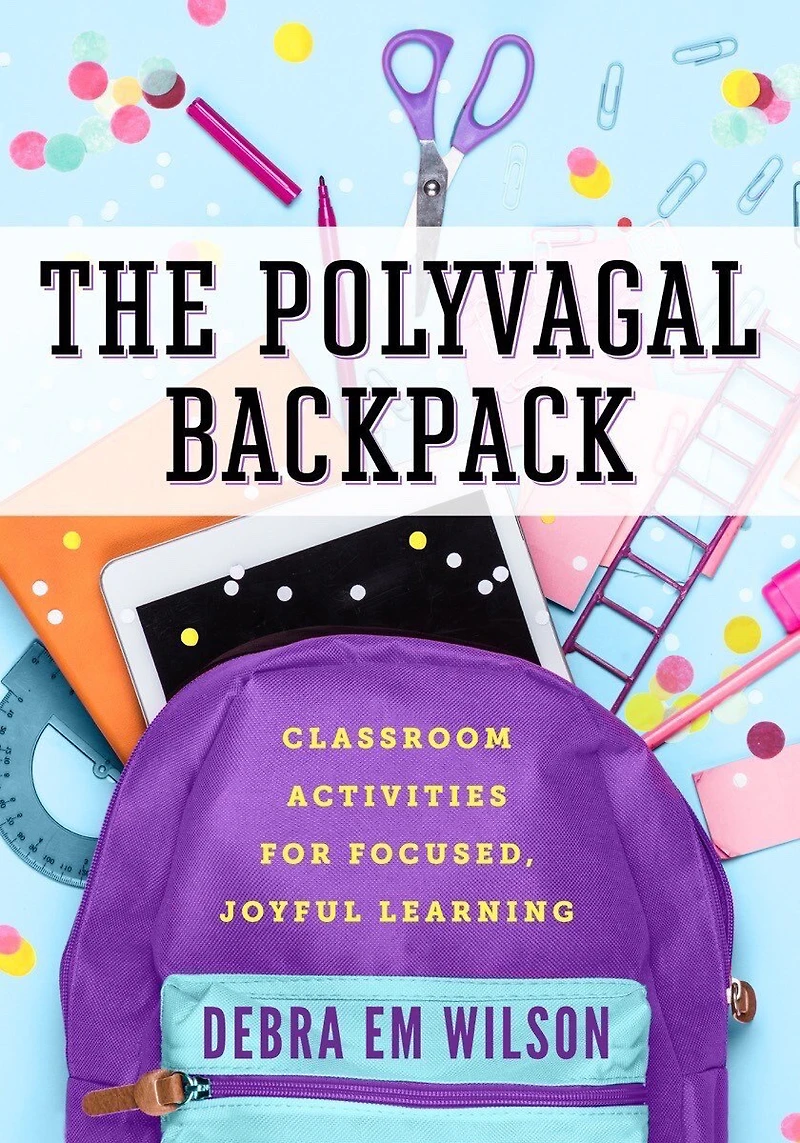
The Polyvagal Backpack: Classroom Activities for Focused, Joyful Learning in Ottawa, ON
Current price: $45.95

The Polyvagal Backpack: Classroom Activities for Focused, Joyful Learning in Ottawa, ON
Current price: $45.95
Loading Inventory...
Size: Paperback
*Product information may vary - to confirm product availability, pricing, shipping and return information please contact Coles
Students learn best when they understand their own nervous systems.
In The Polyvagal Path to Joyful Learning , Debra Em Wilson introduced educators to Polyvagal Theory (PVT) and explained how human nervous systems move between different states in response to changing situations. Teachers who can recognize the oscillating states of students’ (and their own) nervous systems—“safe and engaged,” “fight-or-flight,” or “shutdown”—are better prepared to create an optimal learning environment.
The Polyvagal Backpack picks up where Wilson’s first book left off by providing a plethora of classroom activities demonstrating how to implement PVT. The ease with which the principles of PVT can be applied becomes clear as Wilson draws one activity after another from her metaphorical backpack and shows how to help students co-regulate a classroom, for example, or repair a relationship. The opening true or false quiz, final FAQ section, and clear descriptions throughout make this an ideal book for teacher teams to read and use together.
Students learn best when they understand their own nervous systems.
In The Polyvagal Path to Joyful Learning , Debra Em Wilson introduced educators to Polyvagal Theory (PVT) and explained how human nervous systems move between different states in response to changing situations. Teachers who can recognize the oscillating states of students’ (and their own) nervous systems—“safe and engaged,” “fight-or-flight,” or “shutdown”—are better prepared to create an optimal learning environment.
The Polyvagal Backpack picks up where Wilson’s first book left off by providing a plethora of classroom activities demonstrating how to implement PVT. The ease with which the principles of PVT can be applied becomes clear as Wilson draws one activity after another from her metaphorical backpack and shows how to help students co-regulate a classroom, for example, or repair a relationship. The opening true or false quiz, final FAQ section, and clear descriptions throughout make this an ideal book for teacher teams to read and use together.
You May Also Like










More About Coles at Bayshore Shopping Centre
Coles is renowned for its outstanding customer service and great selection of books. Along with the vast array of magazines, stationary, audio-books, children's literature, fiction, non-fiction and reference books, you can find accessories to make your reading experience more pleasurable. We can recommend the very best in reading today. We will help you search our titles for exactly what you need, and if we do not have it in stock, we will order it for you.
100 Bayshore Dr, Nepean, ON K2B 8C1, Canada
Find Coles at Bayshore Shopping Centre in Ottawa, ON
Visit Coles at Bayshore Shopping Centre in Ottawa, ON