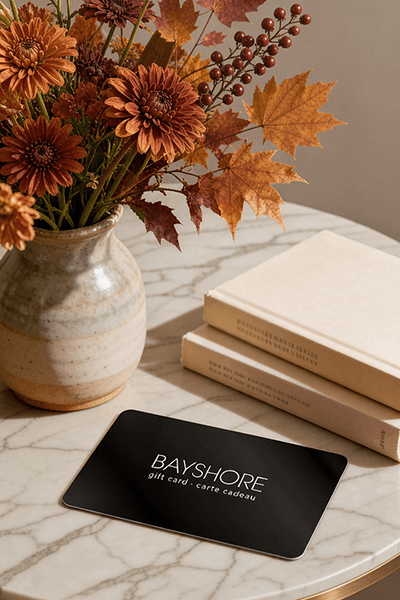
Too many options? Treat your friends and family to their favourite stores with a Bayshore Shopping Centre gift card, redeemable at participating retailers throughout the centre. Click below to purchase yours today!Purchase Here
Coles The Process of Psychotherapy: Causation and Chance at Bayshore Shopping Centre in Ottawa, ON
*Product information may vary - to confirm product availability, pricing, shipping and return information please contact Coles
This book describes an encompassing modeling approach to psychotherapy, created with the most recent research in the field. Therapeutic interventions are staged within a therapist-client relationship ('alliance'), and become effective by the interplay of deterministic ('causation') and stochastic ('chance') forces. The authors use a Fokker-Planck approach complemented by a structural-mathematical framework from complexity theory.
Chapters present statistical tools, which can be applied to analyze the differing time series that depict therapeutic processes. Chapters include examples of how to use these tools within research. The approach adopted in the book - contemporary psychotherapy terminology combined with a systems-theoretical model and algorithms for quantitative psychotherapy research - has the potential to become the new benchmark in psychotherapy.
The Process of Psychotherapy is an informative and sophisticated resource for all levels of students, from undergraduate through post-doctoral studies, in the fields of psychology, cognitive psychology, and psychotherapy.
This book describes an encompassing modeling approach to psychotherapy, created with the most recent research in the field. Therapeutic interventions are staged within a therapist-client relationship ('alliance'), and become effective by the interplay of deterministic ('causation') and stochastic ('chance') forces. The authors use a Fokker-Planck approach complemented by a structural-mathematical framework from complexity theory.
Chapters present statistical tools, which can be applied to analyze the differing time series that depict therapeutic processes. Chapters include examples of how to use these tools within research. The approach adopted in the book - contemporary psychotherapy terminology combined with a systems-theoretical model and algorithms for quantitative psychotherapy research - has the potential to become the new benchmark in psychotherapy.
The Process of Psychotherapy is an informative and sophisticated resource for all levels of students, from undergraduate through post-doctoral studies, in the fields of psychology, cognitive psychology, and psychotherapy.
Coles is renowned for its outstanding customer service and great selection of books. Along with the vast array of magazines, stationary, audio-books, children's literature, fiction, non-fiction and reference books, you can find accessories to make your reading experience more pleasurable. We can recommend the very best in reading today. We will help you search our titles for exactly what you need, and if we do not have it in stock, we will order it for you.