

Give the Gift of Choice!
Too many options? Treat your friends and family to their favourite stores with a Bayshore Shopping Centre gift card, redeemable at participating retailers throughout the centre. Click below to purchase yours today!Purchase HereHome
the Responsibility of Intellectuals Age Fascism and Genocide
Coles
Loading Inventory...
the Responsibility of Intellectuals Age Fascism and Genocide in Ottawa, ON
Current price: $22.39
Original price: $27.99

the Responsibility of Intellectuals Age Fascism and Genocide in Ottawa, ON
Current price: $22.39
Original price: $27.99
Loading Inventory...
Size: Kobo eBook
*Product information may vary - to confirm product availability, pricing, shipping and return information please contact Coles
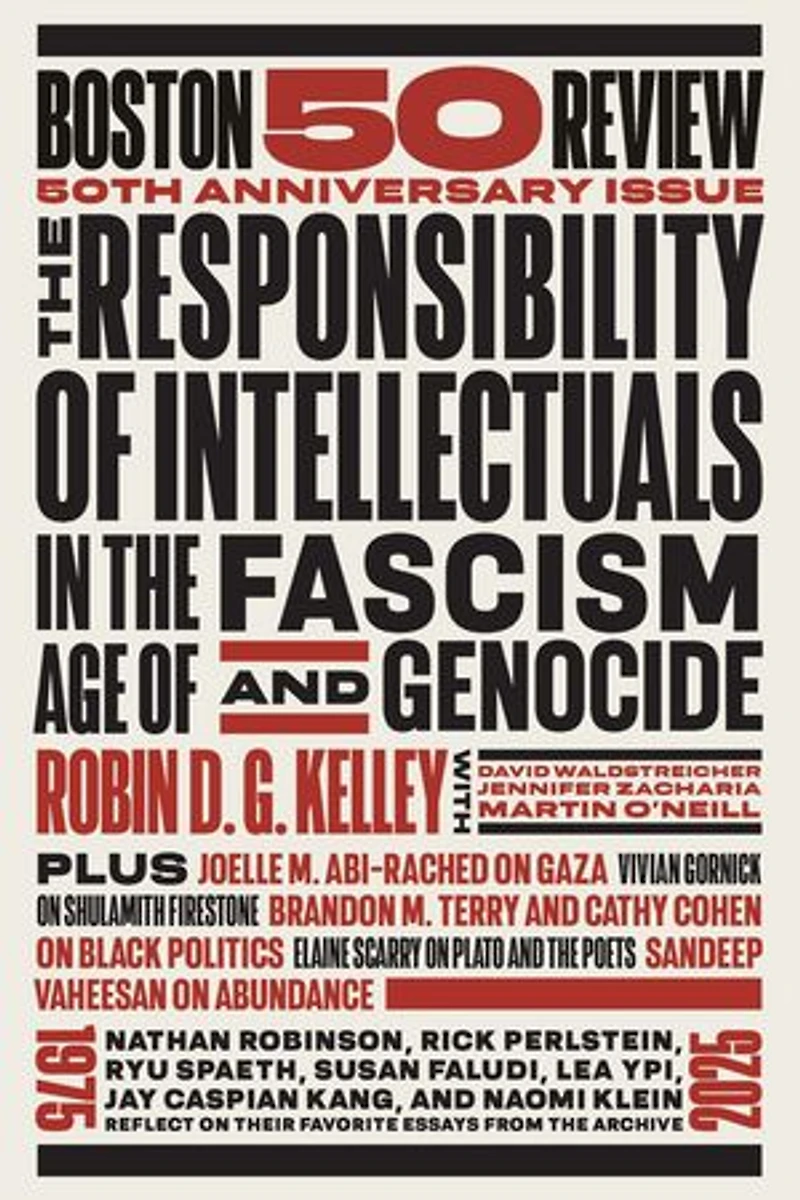
The Responsibility of Intellectuals in the Age of Fascism and Genocide is Boston Review ’s 50th anniversary issue. This milestone issue features many of our longtime contributors, including Robin D. G. Kelley, Vivian Gornick, and Elaine Scarry, and celebrates classics from our archive. In this issue, historian and Boston Review contributing editor Robin D. G. Kelley revisits Noam Chomsky’s landmark 1967 essay, “The Responsibility of Intellectuals,” published near the height of the Vietnam War. The essay’s dissident injunction—that those in privileged positions have a duty to “speak the truth and expose lies”—remains a powerful call to conscience, Kelley argues, but the anti-fascist and anti-colonial struggles of even earlier decades reveal its limits, and they show how to refuse and resist complicity in our own age of fascism and genocide. Political philosopher Martin O’Neill , Palestinian human rights lawyer Jennifer Zacharia , and historian David Waldstreicher expand on what this moment requires—of intellectuals, of journalists, and of us all.
Also in the issue, Vivian Gornick reviews Shulamith Firestone’s Airless Spaces , Elaine Scarry challenges the wisdom that Plato banished the poets, Brandon M. Terry interviews political scientist Cathy Cohen about social movements and the future of Black politics, Joelle M. Abi-Rached exposes the contradictions of the liberal international order over Gaza, Samuel Hayim Brody reviews three memoirs on the Arab Jewish world destroyed by colonialism, David Austin Walsh explains what Zohran Mamdani’s triumph means for the future of the Democratic Party, and Sandeep Vaheesan looks to the New Deal to assess the “abundance” agenda.
Plus, seven writers reflect on notable essays from our archive in a special anniversary feature:
Susan Faludi on Vivian Gornick and anti-feminism
Naomi Klein on William Callison + Quinn Slobodian and the global right
Jay Caspian Kang on Olúfẹ́mi O. Táíwò and identity politics
Ryu Spaeth on Merve Emre and the personal essay
Lea Ypi on Joseph Carens and amnesty
Nathan J. Robinson on Noam Chomsky and U.S. foreign policy
Rick Perlstein on Elaine Scarry and democracy after 9/11
The Responsibility of Intellectuals in the Age of Fascism and Genocide is Boston Review ’s 50th anniversary issue. This milestone issue features many of our longtime contributors, including Robin D. G. Kelley, Vivian Gornick, and Elaine Scarry, and celebrates classics from our archive. In this issue, historian and Boston Review contributing editor Robin D. G. Kelley revisits Noam Chomsky’s landmark 1967 essay, “The Responsibility of Intellectuals,” published near the height of the Vietnam War. The essay’s dissident injunction—that those in privileged positions have a duty to “speak the truth and expose lies”—remains a powerful call to conscience, Kelley argues, but the anti-fascist and anti-colonial struggles of even earlier decades reveal its limits, and they show how to refuse and resist complicity in our own age of fascism and genocide. Political philosopher Martin O’Neill , Palestinian human rights lawyer Jennifer Zacharia , and historian David Waldstreicher expand on what this moment requires—of intellectuals, of journalists, and of us all.
Also in the issue, Vivian Gornick reviews Shulamith Firestone’s Airless Spaces , Elaine Scarry challenges the wisdom that Plato banished the poets, Brandon M. Terry interviews political scientist Cathy Cohen about social movements and the future of Black politics, Joelle M. Abi-Rached exposes the contradictions of the liberal international order over Gaza, Samuel Hayim Brody reviews three memoirs on the Arab Jewish world destroyed by colonialism, David Austin Walsh explains what Zohran Mamdani’s triumph means for the future of the Democratic Party, and Sandeep Vaheesan looks to the New Deal to assess the “abundance” agenda.
Plus, seven writers reflect on notable essays from our archive in a special anniversary feature:
Susan Faludi on Vivian Gornick and anti-feminism
Naomi Klein on William Callison + Quinn Slobodian and the global right
Jay Caspian Kang on Olúfẹ́mi O. Táíwò and identity politics
Ryu Spaeth on Merve Emre and the personal essay
Lea Ypi on Joseph Carens and amnesty
Nathan J. Robinson on Noam Chomsky and U.S. foreign policy
Rick Perlstein on Elaine Scarry and democracy after 9/11










More About Coles at Bayshore Shopping Centre
Coles is renowned for its outstanding customer service and great selection of books. Along with the vast array of magazines, stationary, audio-books, children's literature, fiction, non-fiction and reference books, you can find accessories to make your reading experience more pleasurable. We can recommend the very best in reading today. We will help you search our titles for exactly what you need, and if we do not have it in stock, we will order it for you.
100 Bayshore Dr, Nepean, ON K2B 8C1, Canada
Find Coles at Bayshore Shopping Centre in Ottawa, ON
Visit Coles at Bayshore Shopping Centre in Ottawa, ON