

Give the Gift of Choice!
Too many options? Treat your friends and family to their favourite stores with a Bayshore Shopping Centre gift card, redeemable at participating retailers throughout the centre. Click below to purchase yours today!Purchase HereHome
the Rich Flee and Poor Take Bus: How Our Unequal Society Fails Us during Outbreaks
Coles
Loading Inventory...
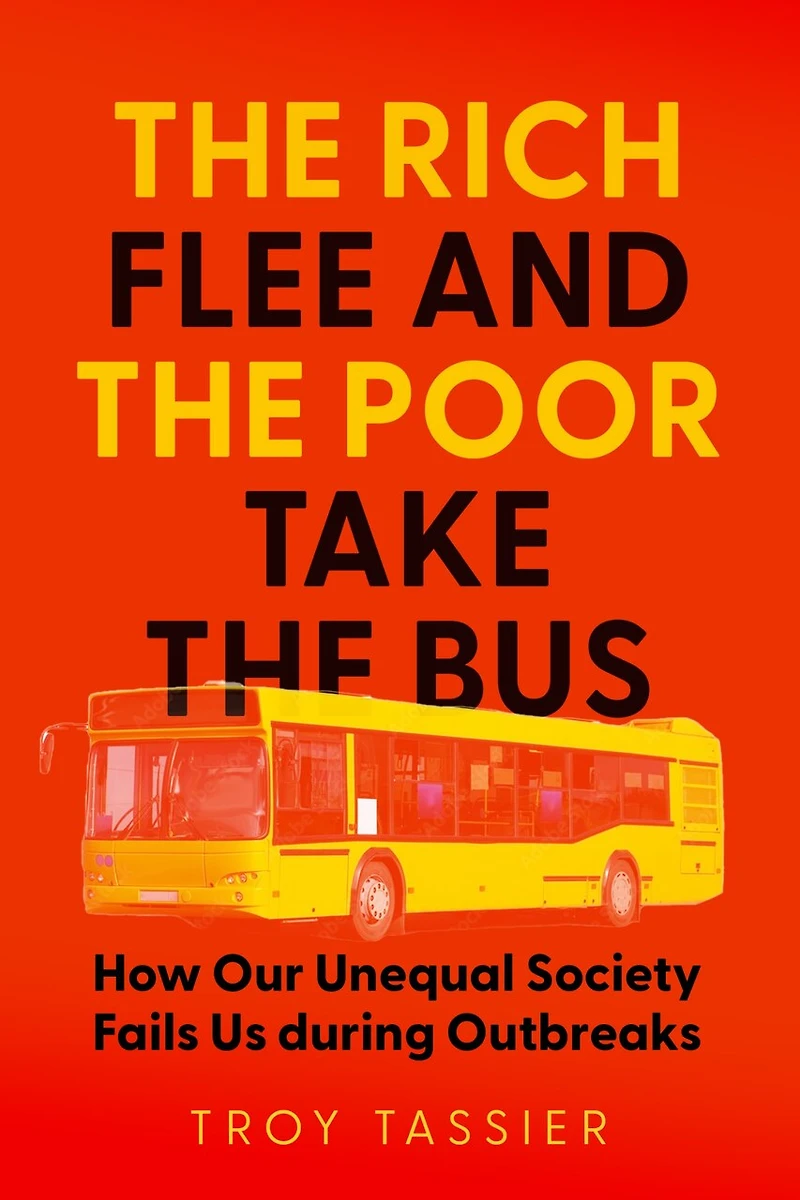
the Rich Flee and Poor Take Bus: How Our Unequal Society Fails Us during Outbreaks in Ottawa, ON
Current price: $42.95

the Rich Flee and Poor Take Bus: How Our Unequal Society Fails Us during Outbreaks in Ottawa, ON
Current price: $42.95
Loading Inventory...
Size: Hardcover
*Product information may vary - to confirm product availability, pricing, shipping and return information please contact Coles
How can we make society more resilient to outbreaks and avoid forcing the poor and working class to bear the brunt of their harm? When an epidemic outbreak occurs, the most physical and financial harm historically falls upon the people who can least afford it: the economically and socially marginalized. Where people live and work, how they commute and socialize, and more have a huge impact on the risks we bear during an outbreak. In The Rich Flee and the Poor Take the Bus , economist Troy Tassier examines examples ranging from the 430 BCE plague of Athens to the COVID-19 pandemic to demonstrate why marginalized groups bear the largest burden of epidemic costs—and how to avoid these systemic failures in the future. The links between epidemics and social issues—such as inequality, discrimination, and financial insecurity—are not always direct or clear. Tassier reveals truths hidden in plain sight, from the way population density statistics can be misleading to the often-misunderstood differences between risk and uncertainty. The disproportionate harm experienced by marginalized individuals is not the product of their own decisions; instead, the collective choices of society and the tangled web of interactions across people and communities leave these groups most exposed to the perils of epidemics. However, there is reason to hope. Utilizing a wealth of economic and population data, Tassier argues that we can leverage lessons learned from historic and recent outbreaks to design better economic and social policies and more just institutions to protect everyone in society when inevitable future epidemics arrive.
How can we make society more resilient to outbreaks and avoid forcing the poor and working class to bear the brunt of their harm? When an epidemic outbreak occurs, the most physical and financial harm historically falls upon the people who can least afford it: the economically and socially marginalized. Where people live and work, how they commute and socialize, and more have a huge impact on the risks we bear during an outbreak. In The Rich Flee and the Poor Take the Bus , economist Troy Tassier examines examples ranging from the 430 BCE plague of Athens to the COVID-19 pandemic to demonstrate why marginalized groups bear the largest burden of epidemic costs—and how to avoid these systemic failures in the future. The links between epidemics and social issues—such as inequality, discrimination, and financial insecurity—are not always direct or clear. Tassier reveals truths hidden in plain sight, from the way population density statistics can be misleading to the often-misunderstood differences between risk and uncertainty. The disproportionate harm experienced by marginalized individuals is not the product of their own decisions; instead, the collective choices of society and the tangled web of interactions across people and communities leave these groups most exposed to the perils of epidemics. However, there is reason to hope. Utilizing a wealth of economic and population data, Tassier argues that we can leverage lessons learned from historic and recent outbreaks to design better economic and social policies and more just institutions to protect everyone in society when inevitable future epidemics arrive.
You May Also Like









More About Coles at Bayshore Shopping Centre
Coles is renowned for its outstanding customer service and great selection of books. Along with the vast array of magazines, stationary, audio-books, children's literature, fiction, non-fiction and reference books, you can find accessories to make your reading experience more pleasurable. We can recommend the very best in reading today. We will help you search our titles for exactly what you need, and if we do not have it in stock, we will order it for you.
100 Bayshore Dr, Nepean, ON K2B 8C1, Canada
Find Coles at Bayshore Shopping Centre in Ottawa, ON
Visit Coles at Bayshore Shopping Centre in Ottawa, ON