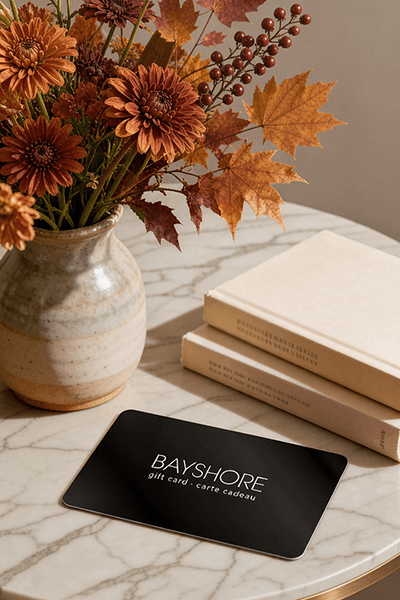
Too many options? Treat your friends and family to their favourite stores with a Bayshore Shopping Centre gift card, redeemable at participating retailers throughout the centre. Click below to purchase yours today!Purchase Here
Coles The Singularity of Being: Lacan and Immortal Within at Bayshore Shopping Centre in Ottawa, ON
*Product information may vary - to confirm product availability, pricing, shipping and return information please contact Coles
The Singularity of Being presents a Lacanian vision of what makes each of us an inimitable and irreplaceable creature. It argues that, unlike the “subject” (who comes into existence as a result of symbolic prohibition) or the “person” (who is aligned with the narcissistic conceits of the imaginary), the singular self emerges in response to a galvanizing directive arising from the real. This directive carries the force of an obligation that cannot be resisted and that summons the individual to a “character” beyond his or her social investments. Consequently, singularity expresses something about the individual’s non-negotiable distinctiveness, eccentricity, or idiosyncrasy at the same time it prevents both symbolic and imaginary closure. It opens to layers of rebelliousness, indicating that there are components of human life exceeding the realm of normative sociality.
Written with an unusual blend of rigor and clarity, The Singularity of Being combines incisive readings of Lacan with the best insights of recent Lacanian theory to reach beyond the dogmas of the field. Moving from what, thanks in part to Slavoj Žižek, has come to be known as the “ethics of the act” to a nuanced interpretation of Lacan’s “ethics of sublimation,” the book offers a sweeping overview of Lacan’s thought while making an original contribution to contemporary theory and ethics. Aimed at specialists and nonspecialists alike, the book manages to educate at the same time as it intervenes in current debates about subjectivity, agency, resistance, creativity, the self–other relationship, and effective political and ethical action. By focusing on the Lacanian real, Ruti honors the uniqueness of subjective experience without losing sight of the social and intersubjective components of human life.
The Singularity of Being presents a Lacanian vision of what makes each of us an inimitable and irreplaceable creature. It argues that, unlike the “subject” (who comes into existence as a result of symbolic prohibition) or the “person” (who is aligned with the narcissistic conceits of the imaginary), the singular self emerges in response to a galvanizing directive arising from the real. This directive carries the force of an obligation that cannot be resisted and that summons the individual to a “character” beyond his or her social investments. Consequently, singularity expresses something about the individual’s non-negotiable distinctiveness, eccentricity, or idiosyncrasy at the same time it prevents both symbolic and imaginary closure. It opens to layers of rebelliousness, indicating that there are components of human life exceeding the realm of normative sociality.
Written with an unusual blend of rigor and clarity, The Singularity of Being combines incisive readings of Lacan with the best insights of recent Lacanian theory to reach beyond the dogmas of the field. Moving from what, thanks in part to Slavoj Žižek, has come to be known as the “ethics of the act” to a nuanced interpretation of Lacan’s “ethics of sublimation,” the book offers a sweeping overview of Lacan’s thought while making an original contribution to contemporary theory and ethics. Aimed at specialists and nonspecialists alike, the book manages to educate at the same time as it intervenes in current debates about subjectivity, agency, resistance, creativity, the self–other relationship, and effective political and ethical action. By focusing on the Lacanian real, Ruti honors the uniqueness of subjective experience without losing sight of the social and intersubjective components of human life.
Coles is renowned for its outstanding customer service and great selection of books. Along with the vast array of magazines, stationary, audio-books, children's literature, fiction, non-fiction and reference books, you can find accessories to make your reading experience more pleasurable. We can recommend the very best in reading today. We will help you search our titles for exactly what you need, and if we do not have it in stock, we will order it for you.