

Give the Gift of Choice!
Too many options? Treat your friends and family to their favourite stores with a Bayshore Shopping Centre gift card, redeemable at participating retailers throughout the centre. Click below to purchase yours today!Purchase HereHome
The Temporal Dimension of Justice: From Post-Colonial Injustices to Climate Reparations
Coles
Loading Inventory...
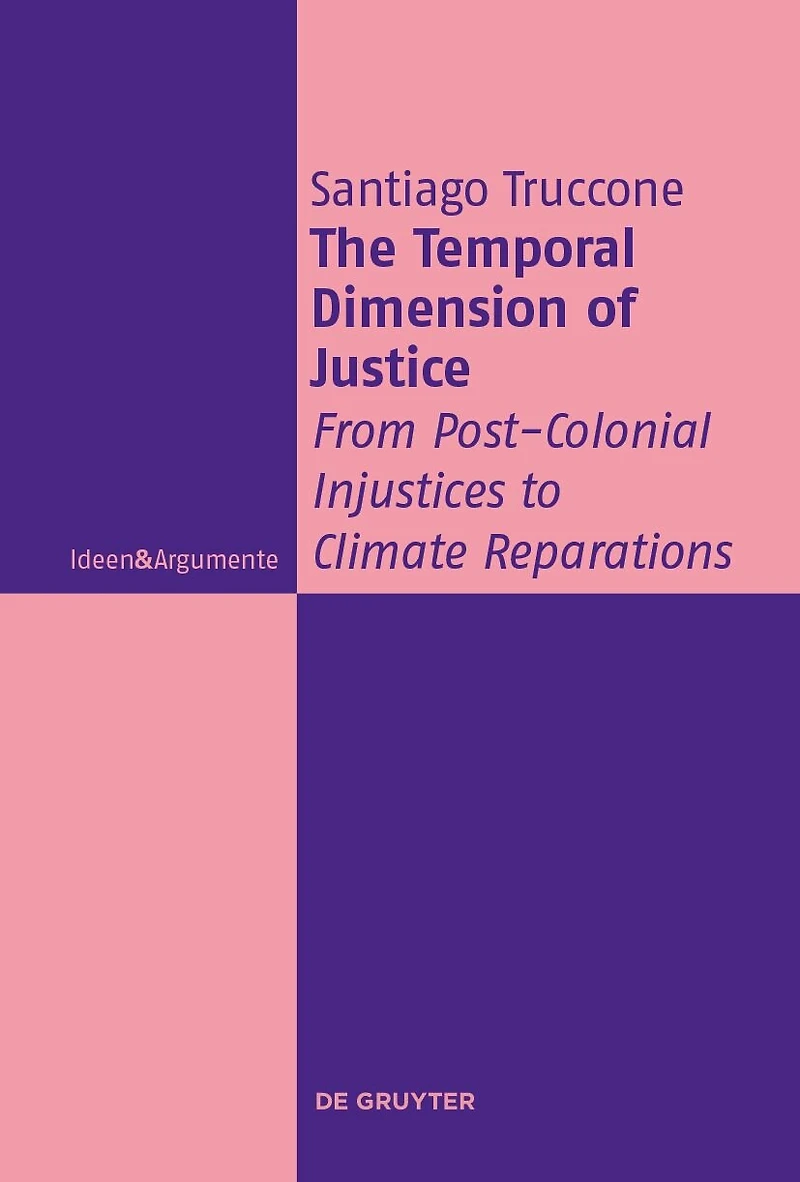
The Temporal Dimension of Justice: From Post-Colonial Injustices to Climate Reparations in Ottawa, ON
Current price: $151.99

The Temporal Dimension of Justice: From Post-Colonial Injustices to Climate Reparations in Ottawa, ON
Current price: $151.99
Loading Inventory...
Size: Hardcover
*Product information may vary - to confirm product availability, pricing, shipping and return information please contact Coles
Should historical injustices always be repaired? Upon scrutinising public institutions and present holdings, it becomes evident that many are partially the result of past injustices. Consequently, the imperative to rectify and repair historical injustices emerges. However, as circumstances change over time and these changes affect justice, the argument for repairing historical injustices becomes more intricate. The distributive and reparative aspects of justice may be in tension with each other. Possible tensions between these aspects of justice are assessed by discussing the thesis about the supersession of historical injustices. Different facets of the supersession thesis are evaluated in two contexts. The first context, explored in the initial part of the book, examines whether and, if so, under what conditions, post-colonial injustices against 19th-century Latin American indigenous peoples should be repaired. The second context, explored later in the book, assesses how climate burdens should be distributed globally and how to respond to potential injustices arising from departures from a fair climate transition towards net-zero CO 2 emissions societies. The book demonstrates that repairing historical injustices is compatible with the imperatives of distributive justice.
Should historical injustices always be repaired? Upon scrutinising public institutions and present holdings, it becomes evident that many are partially the result of past injustices. Consequently, the imperative to rectify and repair historical injustices emerges. However, as circumstances change over time and these changes affect justice, the argument for repairing historical injustices becomes more intricate. The distributive and reparative aspects of justice may be in tension with each other. Possible tensions between these aspects of justice are assessed by discussing the thesis about the supersession of historical injustices. Different facets of the supersession thesis are evaluated in two contexts. The first context, explored in the initial part of the book, examines whether and, if so, under what conditions, post-colonial injustices against 19th-century Latin American indigenous peoples should be repaired. The second context, explored later in the book, assesses how climate burdens should be distributed globally and how to respond to potential injustices arising from departures from a fair climate transition towards net-zero CO 2 emissions societies. The book demonstrates that repairing historical injustices is compatible with the imperatives of distributive justice.
You May Also Like
















More About Coles at Bayshore Shopping Centre
Coles is renowned for its outstanding customer service and great selection of books. Along with the vast array of magazines, stationary, audio-books, children's literature, fiction, non-fiction and reference books, you can find accessories to make your reading experience more pleasurable. We can recommend the very best in reading today. We will help you search our titles for exactly what you need, and if we do not have it in stock, we will order it for you.
100 Bayshore Dr, Nepean, ON K2B 8C1, Canada
Find Coles at Bayshore Shopping Centre in Ottawa, ON
Visit Coles at Bayshore Shopping Centre in Ottawa, ON