

Give the Gift of Choice!
Too many options? Treat your friends and family to their favourite stores with a Bayshore Shopping Centre gift card, redeemable at participating retailers throughout the centre. Click below to purchase yours today!Purchase HereHome
The Urban History of Tarquinia based on Geomagnetic Surveys
Coles
Loading Inventory...
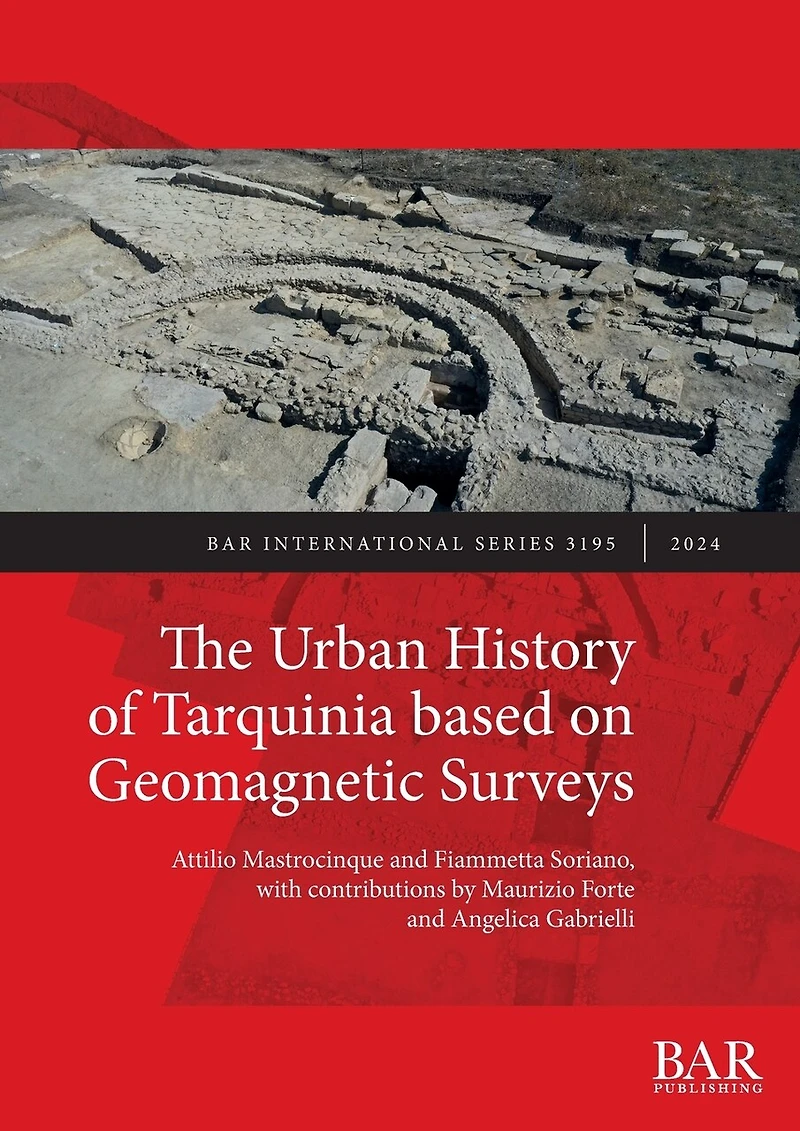
The Urban History of Tarquinia based on Geomagnetic Surveys in Ottawa, ON
Current price: $68.00

The Urban History of Tarquinia based on Geomagnetic Surveys in Ottawa, ON
Current price: $68.00
Loading Inventory...
Size: Paperback
*Product information may vary - to confirm product availability, pricing, shipping and return information please contact Coles
This book presents results from a series of large-scale geomagnetic surveys undertaken across the entire area of ancient Tarquinia - an area of 104 hectares. These results allow a better understanding of the road network, city gates, insulae, the orientation of neighborhoods, as well as other features. Monuments and structures identified include the Roman forum, the basilica, the macellum, the likely horrea, and a semicircular plaza. A sparsely built-up area in the eastern part of the city allows for historical considerations on the 6th century urban plan, when the circuit of walls was conceived with the idea of accommodating more people than those who actually settled in Tarquinia. Geophysical surveys indicate that the urban layout was not radically changed until the end of antiquity, while the phenomenon of Romanization can be recognized in the creation of structures such as the forum or the macellum, in the restructuring of buildings, like the "domus of the Mithraeum," or in the paving of pre-existing roads. Overall, this book provides important new insights into the ancient city of Tarquinia, as well as a case study for the use of geomagnetic survey as an archaeological tool.
This book presents results from a series of large-scale geomagnetic surveys undertaken across the entire area of ancient Tarquinia - an area of 104 hectares. These results allow a better understanding of the road network, city gates, insulae, the orientation of neighborhoods, as well as other features. Monuments and structures identified include the Roman forum, the basilica, the macellum, the likely horrea, and a semicircular plaza. A sparsely built-up area in the eastern part of the city allows for historical considerations on the 6th century urban plan, when the circuit of walls was conceived with the idea of accommodating more people than those who actually settled in Tarquinia. Geophysical surveys indicate that the urban layout was not radically changed until the end of antiquity, while the phenomenon of Romanization can be recognized in the creation of structures such as the forum or the macellum, in the restructuring of buildings, like the "domus of the Mithraeum," or in the paving of pre-existing roads. Overall, this book provides important new insights into the ancient city of Tarquinia, as well as a case study for the use of geomagnetic survey as an archaeological tool.
You May Also Like







More About Coles at Bayshore Shopping Centre
Coles is renowned for its outstanding customer service and great selection of books. Along with the vast array of magazines, stationary, audio-books, children's literature, fiction, non-fiction and reference books, you can find accessories to make your reading experience more pleasurable. We can recommend the very best in reading today. We will help you search our titles for exactly what you need, and if we do not have it in stock, we will order it for you.
100 Bayshore Dr, Nepean, ON K2B 8C1, Canada
Find Coles at Bayshore Shopping Centre in Ottawa, ON
Visit Coles at Bayshore Shopping Centre in Ottawa, ON