

Give the Gift of Choice!
Too many options? Treat your friends and family to their favourite stores with a Bayshore Shopping Centre gift card, redeemable at participating retailers throughout the centre. Click below to purchase yours today!Purchase HereHome
The Use and Abuse of EFL Dictionaries: How learners of English as a foreign language read and interpret dictionary entries
Coles
Loading Inventory...
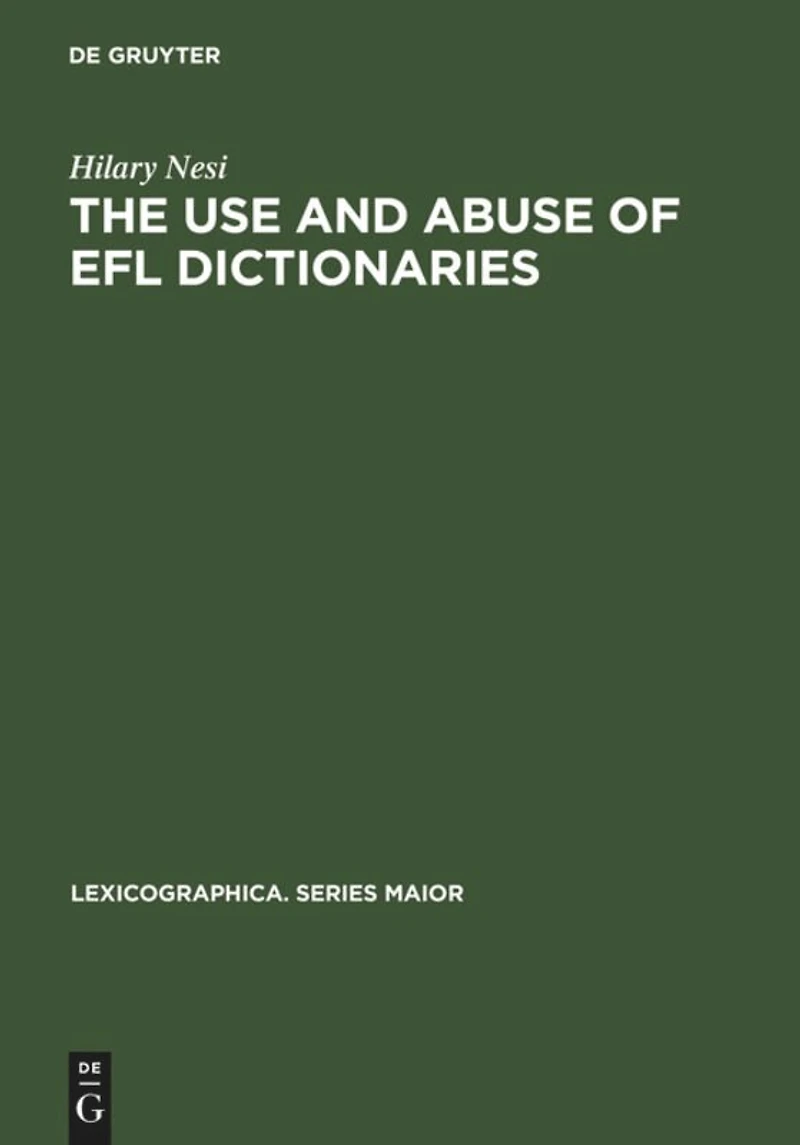
The Use and Abuse of EFL Dictionaries: How learners of English as a foreign language read and interpret dictionary entries in Ottawa, ON
Current price: $221.99

The Use and Abuse of EFL Dictionaries: How learners of English as a foreign language read and interpret dictionary entries in Ottawa, ON
Current price: $221.99
Loading Inventory...
Size: Hardcover
*Product information may vary - to confirm product availability, pricing, shipping and return information please contact Coles
The book begins with a review of research into dictionary use. A number of experimental design problems are discussed, in particular the unreliability of questionnaire responses, and the need for detailed accounts of individual dictionary consultations whilst sampling in numbers sufficient to represent specified populations. The experiments reported in subsequent chapters investigate issues raised in the review. The first two studies find that dictionary use during a reading comprehension test affected completion speed but not test scores. The apparent failure of dictionary use to improve comprehension is attributed to the test itself, the dictionaries, and the users' choice of look-up words. The ability of users to interpret dictionary entries is investigated in three further studies which use computers to gather data on large numbers of individual consultations. The findings indicate that there is little difference between three major EFL dictionaries in terms of speed of consultation and overall productive success. They also indicate that Malaysian ESL subjects, who have higher vocabulary scores, are slower in their reading and less successfull in their interpretation of entries than Portuguese EFL subjects. Finally, the findings suggest that overall productive success is unaffected by the presence or absence of examples. The experimental findings lead to the conclusion that dictionary consultation is a process in which users match pre-existing beliefs about word meaning and behaviour against segments in the dictionary entry. Such segments are often selected because they are familiar-sounding and conceptually accessible, but may contain only incomplete or non-essential information. Where pre-existing beliefs and dictionary information conflict, dictionary information is sometimes overridden. Thus word knowledge acquired from a single consultation is often insufficient to ensure productive success. Although it is probably inevitable that word knowledge will be acquired slowly, through multiple encounters, modifications to the dictionary entry and the training of users might help to avoid serious misinterpretation of dictionary information.
The book begins with a review of research into dictionary use. A number of experimental design problems are discussed, in particular the unreliability of questionnaire responses, and the need for detailed accounts of individual dictionary consultations whilst sampling in numbers sufficient to represent specified populations. The experiments reported in subsequent chapters investigate issues raised in the review. The first two studies find that dictionary use during a reading comprehension test affected completion speed but not test scores. The apparent failure of dictionary use to improve comprehension is attributed to the test itself, the dictionaries, and the users' choice of look-up words. The ability of users to interpret dictionary entries is investigated in three further studies which use computers to gather data on large numbers of individual consultations. The findings indicate that there is little difference between three major EFL dictionaries in terms of speed of consultation and overall productive success. They also indicate that Malaysian ESL subjects, who have higher vocabulary scores, are slower in their reading and less successfull in their interpretation of entries than Portuguese EFL subjects. Finally, the findings suggest that overall productive success is unaffected by the presence or absence of examples. The experimental findings lead to the conclusion that dictionary consultation is a process in which users match pre-existing beliefs about word meaning and behaviour against segments in the dictionary entry. Such segments are often selected because they are familiar-sounding and conceptually accessible, but may contain only incomplete or non-essential information. Where pre-existing beliefs and dictionary information conflict, dictionary information is sometimes overridden. Thus word knowledge acquired from a single consultation is often insufficient to ensure productive success. Although it is probably inevitable that word knowledge will be acquired slowly, through multiple encounters, modifications to the dictionary entry and the training of users might help to avoid serious misinterpretation of dictionary information.
You May Also Like












More About Coles at Bayshore Shopping Centre
Coles is renowned for its outstanding customer service and great selection of books. Along with the vast array of magazines, stationary, audio-books, children's literature, fiction, non-fiction and reference books, you can find accessories to make your reading experience more pleasurable. We can recommend the very best in reading today. We will help you search our titles for exactly what you need, and if we do not have it in stock, we will order it for you.
100 Bayshore Dr, Nepean, ON K2B 8C1, Canada
Find Coles at Bayshore Shopping Centre in Ottawa, ON
Visit Coles at Bayshore Shopping Centre in Ottawa, ON